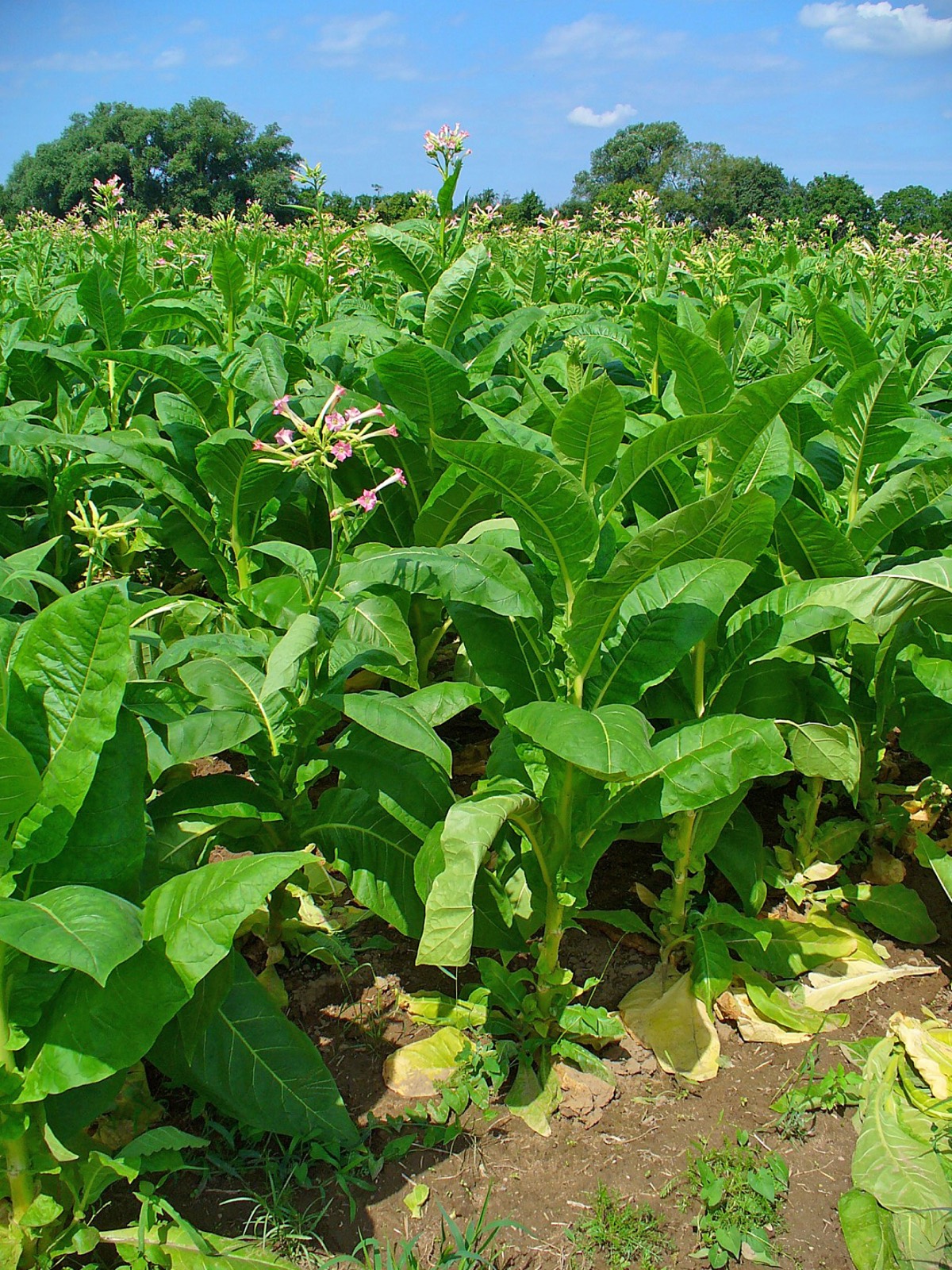
Nicotiana tabacum. Public domain. For long stretches of the seventeenth century, this leaf settled debts in Virginia.
England did not send the colonies enough coin. Virginia made tobacco do the work of coin, and then spent decades fighting the consequences.
England did not send the colonies enough coin. Virginia made tobacco do the work of coin, and then spent decades fighting the consequences.
Money is whatever people will accept in payment because they trust the next person will accept it too. In colonial Virginia, that thing was often tobacco. Not because leaf is a good currency. Because it was the thing the colony actually had.
English policy and English trade drained coin out of the colonies. Settlers bought manufactured goods from London merchants and paid, sooner or later, in crop. Silver and gold moved toward England. A county court in Virginia could not pay a clerk in coins it did not possess. It paid him in tobacco, at a rate the assembly set. Taxes, fees, and private debts were quoted the same way: so many pounds of tobacco.
Coin does not mold. Tobacco does. Coin is the same in every pocket. Tobacco is not. A planter with a bad crop, or a dishonest one, could try to pass trash leaf at the official rate. The colony answered with inspection laws, warehouses, and stamped notes later in the eighteenth century, once the system was old enough to need paper claims on leaf stored in a public barn. Those notes were an improvement. They were still a claim on a plant.
The official rate was a political fight wearing an economic coat. If the assembly said a pound of tobacco counted for more in taxes, debtors cheered and creditors howled. If it said the opposite, the cheers reversed. People who owed tobacco wanted the rate high and the quality rules loose. People who were owed it wanted the reverse. That argument is the same argument as any argument about a weak currency. Who is allowed to pay with the worse stuff?
Long before the Continental Congress printed dollars, Virginians lived with a currency they could watch fail. They knew a unit of account could be decreed. They knew quality could be faked. They knew London would not reliably supply coin, because London preferred the coin to stay in London. When the Revolution came, the suspicion of distant money was already a habit. It had been learned one tobacco note at a time.
The leaf was money because the empire organized the trade that way. That is a decision, not a curiosity. A different trade policy would have left more coin in the colony, and the courts would have paid their clerks in silver. They paid them in smoke.
Sources · Virginia statutes on tobacco debts and inspection, collected in William Waller Hening, The Statutes at Large; John J. McCusker on colonial money and exchange; the later tobacco-note warehouses are described in the inspection acts of the 1730s.