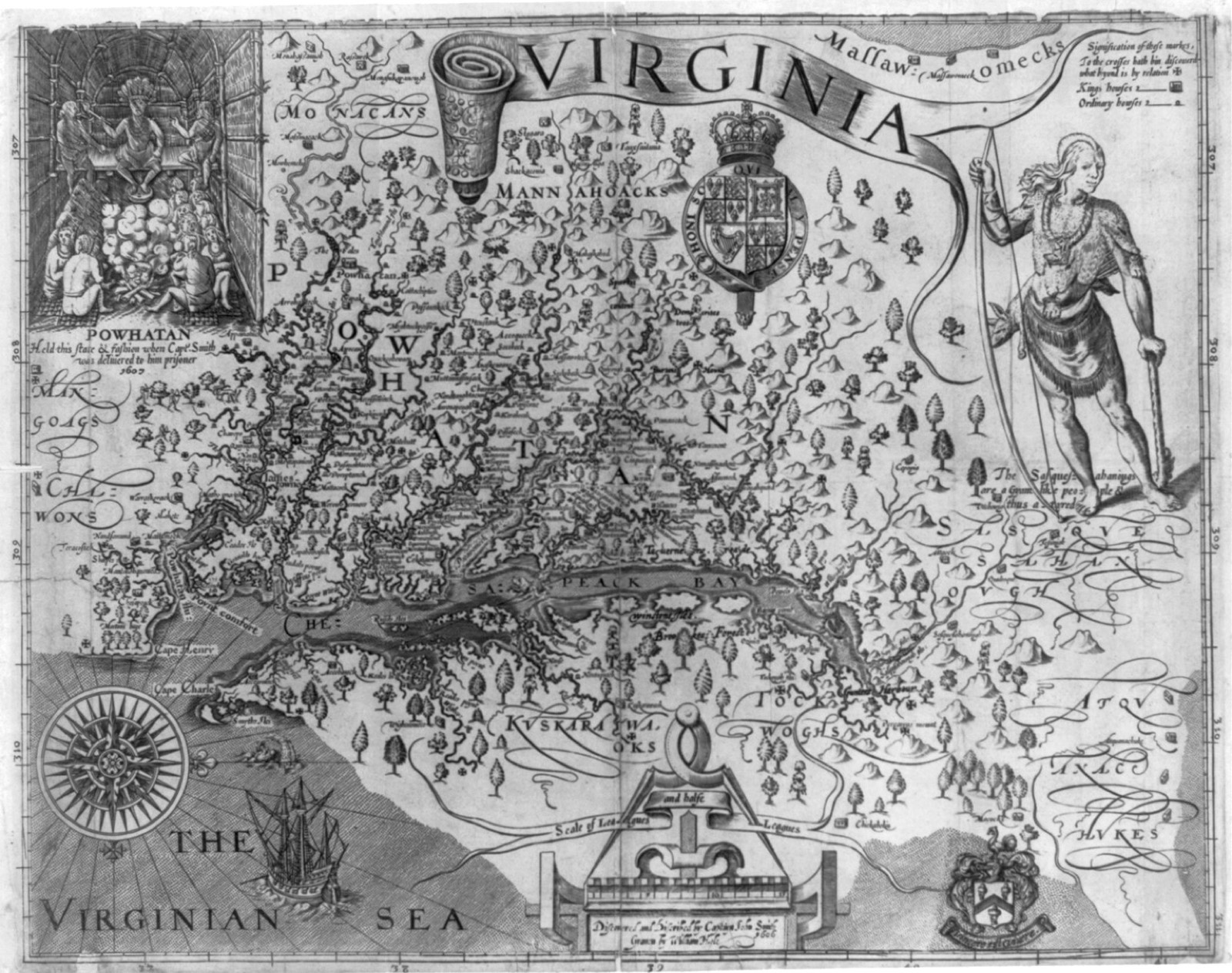
John Smith’s map of Virginia, engraved by William Hole and published in 1612. Public domain.
Whoever paid a passage to Virginia received fifty acres, so a servant’s work became his master’s land.
A servant who owned nothing worked his years on another man’s acres, and those years did not earn him the fifty-acre grant.
A small farmer who could pay one extra passage could claim another fifty acres and the labor that came with them.
A London backer who shipped a dozen people could patent a tract he had never seen, then rent it or sell it.
In November 1618 the Virginia Company ordered that anyone who paid to bring a person to Virginia could take fifty acres for that person.
The rule turned imported labor into a land title, so the largest patents went to those who could ship the most people.
Servants worked their time on land that belonged to the men who had bought their passage.
Instructions to George Yeardley, 18 November 1618; Edmund S. Morgan, American Slavery, American Freedom (1975)