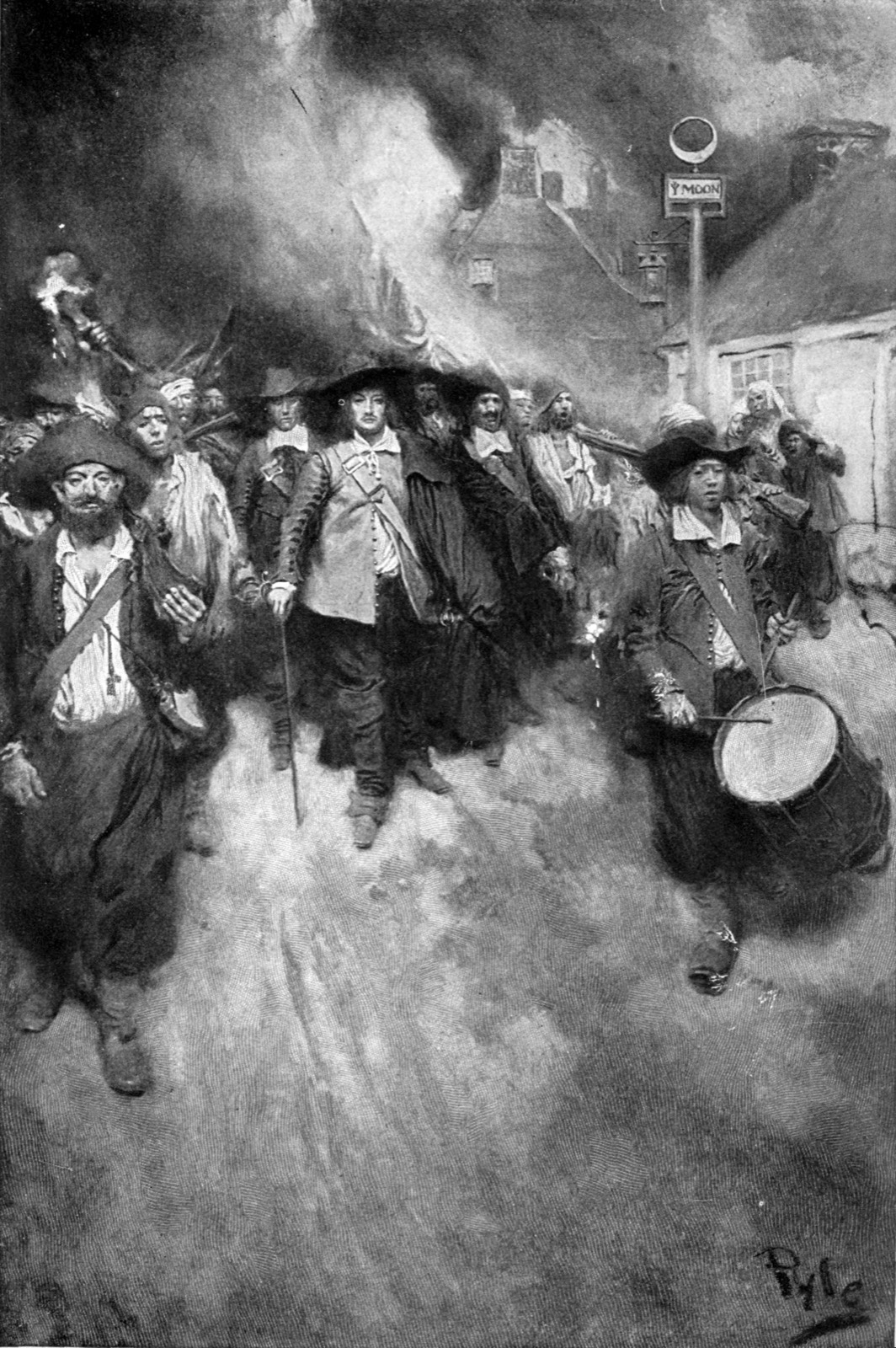
Howard Pyle, The Burning of Jamestown, an early-twentieth-century illustration, not an eyewitness view. Public domain.
Opechancanough’s forces killed hundreds of colonists, and the company answered with a war it could not afford.
A family that survived lost the spring planting and had nothing stored that it could sell.
A planter who had just cleared a patent spent the next year inside a fort instead of in his crop.
Investors in London were asked for more money to pay for a war that made their shares even harder to sell.
On 22 March 1622 warriors organized by Opechancanough struck settlements along the James and killed about a quarter of the colonists.
The company in London treated the deaths as cause to seize Native corn and to widen the war rather than restore a trading peace.
The cost of that war, and the news of the killings, used up what confidence the company still had.
Edward Waterhouse, A Declaration of the State of the Colony and Affaires in Virginia (1622)