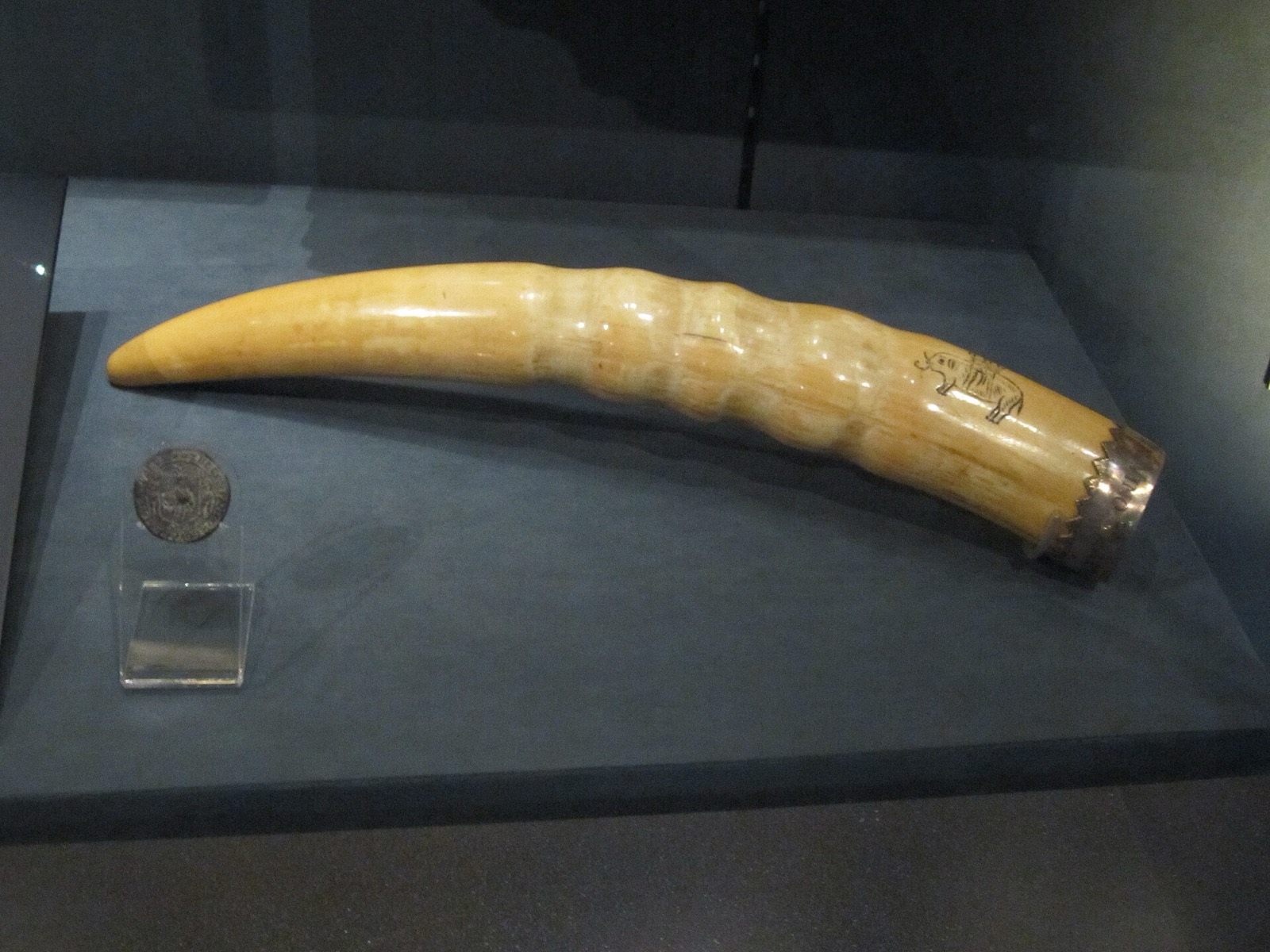
Ivory marked by the Royal African Company. International Slavery Museum, Liverpool. Wikimedia Commons.
The king took Virginia’s government away from the company that had held the charter, and private land titles stayed in place.
A servant’s unexpired years did not vanish with the company, and the work was still owed to a master.
A small planter kept the acres he already held and now lived under a royal governor instead of a company in London.
Shareholders in London lost the government their stock had bought, and with it any claim that the company still ran the colony.
In May 1624 an English court vacated the Virginia Company’s charter after years of debt, faction, and the losses of 1622.
The crown appointed the governors from then on.
People who already held land generally kept it, but the shareholder experiment in colonial government was finished.
Quo warranto judgment against the Virginia Company (1624); Wesley Frank Craven, The Dissolution of the Virginia Company (1932)