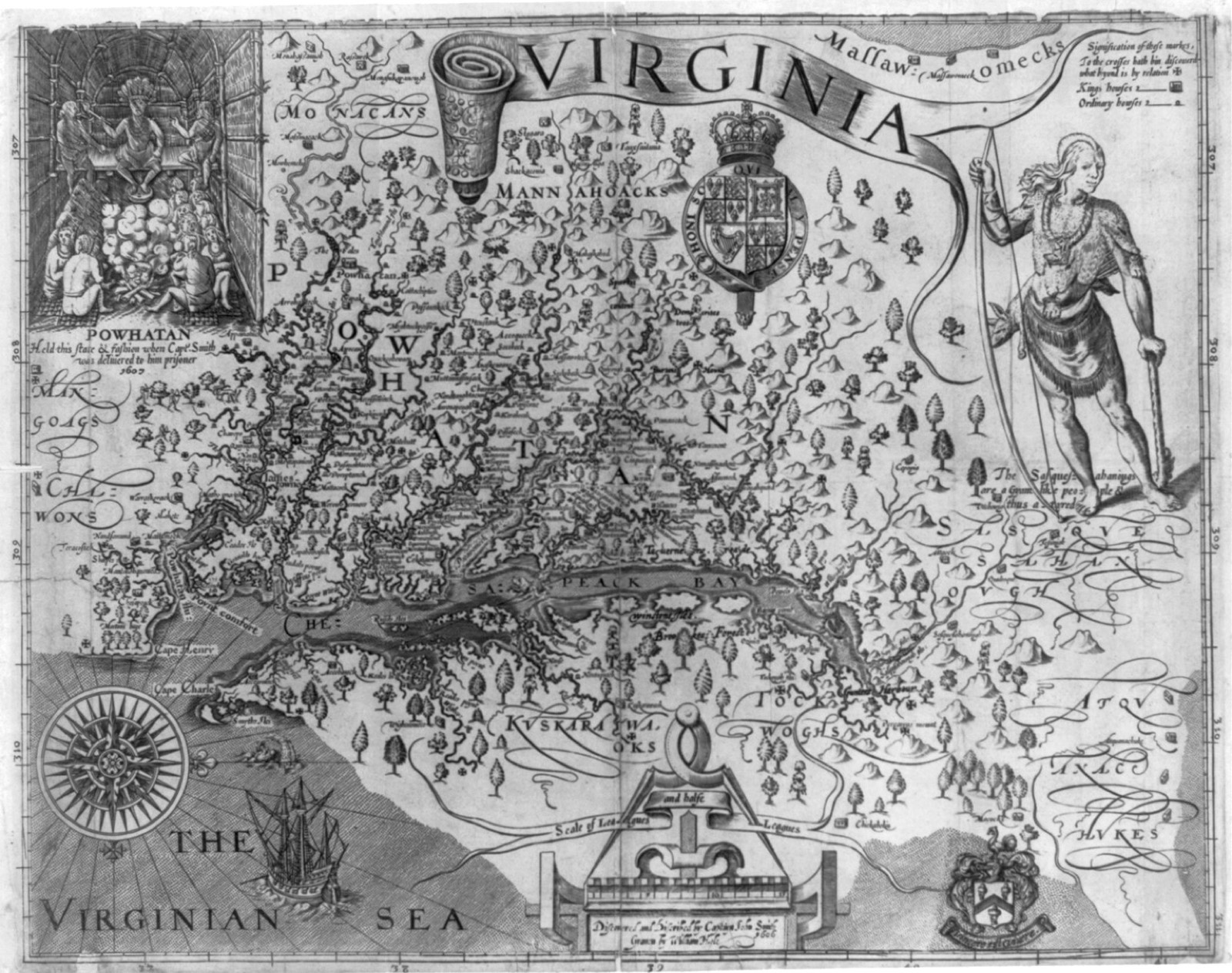
John Smith’s map of Virginia, engraved by William Hole and published in 1612. Public domain.
The king gave Maryland to the Calvert family, and that family expected rent from the people who farmed it.
A newcomer who wanted acres took them on the proprietor’s terms and still had to grow a crop that would sell.
A tobacco planter could claim land for the people he brought over and then owed a yearly quitrent to Lord Baltimore.
Lord Baltimore owned the land and the government, and the family’s income was supposed to be rent on that land.
Charles I chartered Maryland to Cecilius Calvert in 1632, and the first settlers landed in 1634.
The charter made the proprietor both landlord and ruler, with quitrents as the family’s claim on every grant.
The plan for great manors never really held, and Maryland became another tobacco colony, but titles and rents still ran back to one English family.
Charter of Maryland (1632)