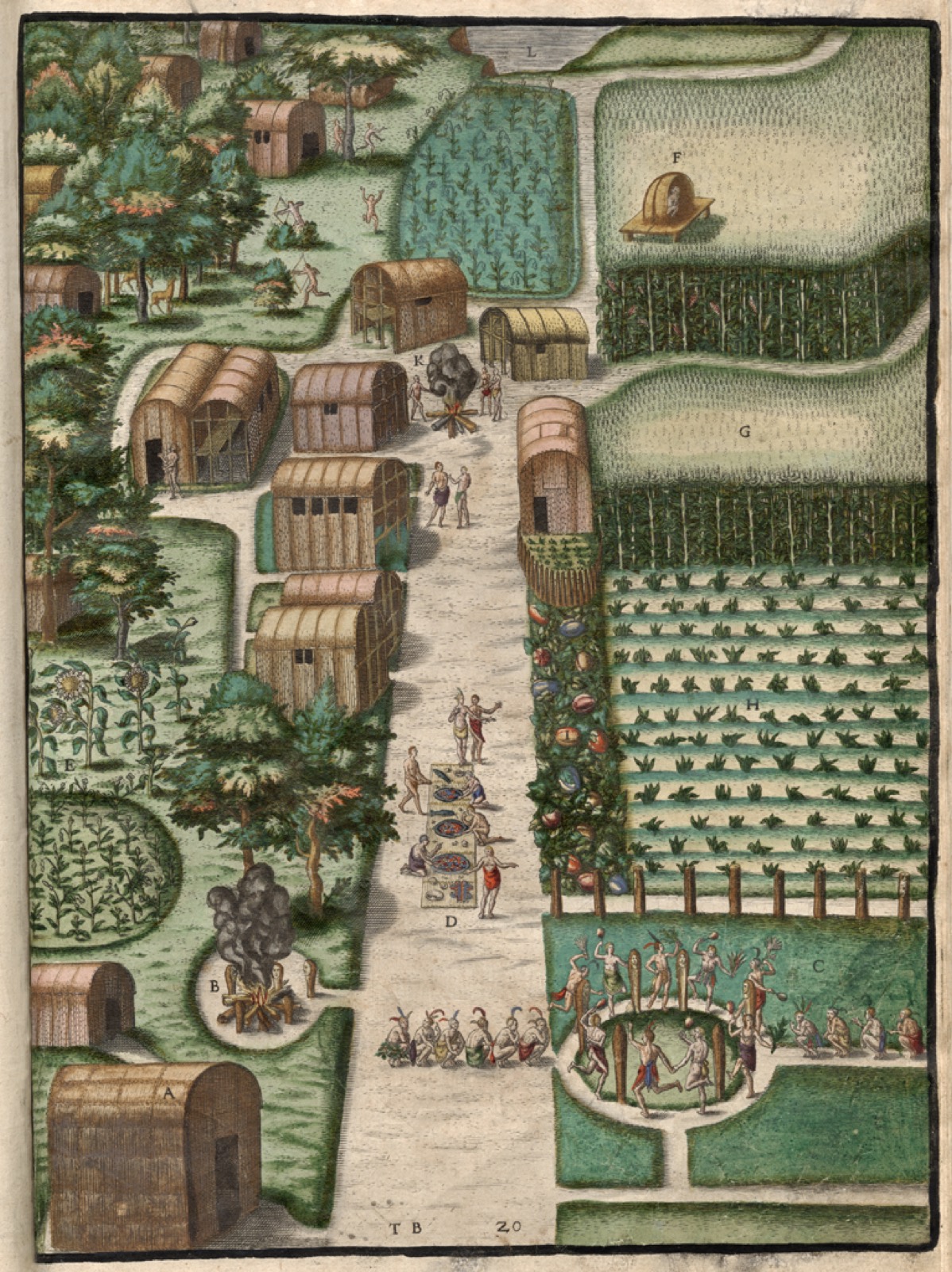
Theodor de Bry’s 1590 engraving of Secoton, from John White’s watercolors. Public domain.
In New England a town, not a company in London, decided who received land and who could use the common.
A latecomer with no grant worked for wages or moved on, because the first lots were already assigned.
A household the town admitted received a house lot, planting ground, and a share of meadow and woods.
The first proprietors and their heirs controlled land not yet divided, and they could sell rights when later divisions were laid out.
The Massachusetts General Court granted townships to groups of settlers, who then laid out house lots, fields, and a common.
Dedham’s covenant of 1636 shows the pattern at its clearest: membership was a vote, and land followed membership.
The system built compact towns that could tax their own people, and it pushed those who were refused a share out to start another town.
Kenneth A. Lockridge, A New England Town (1970)