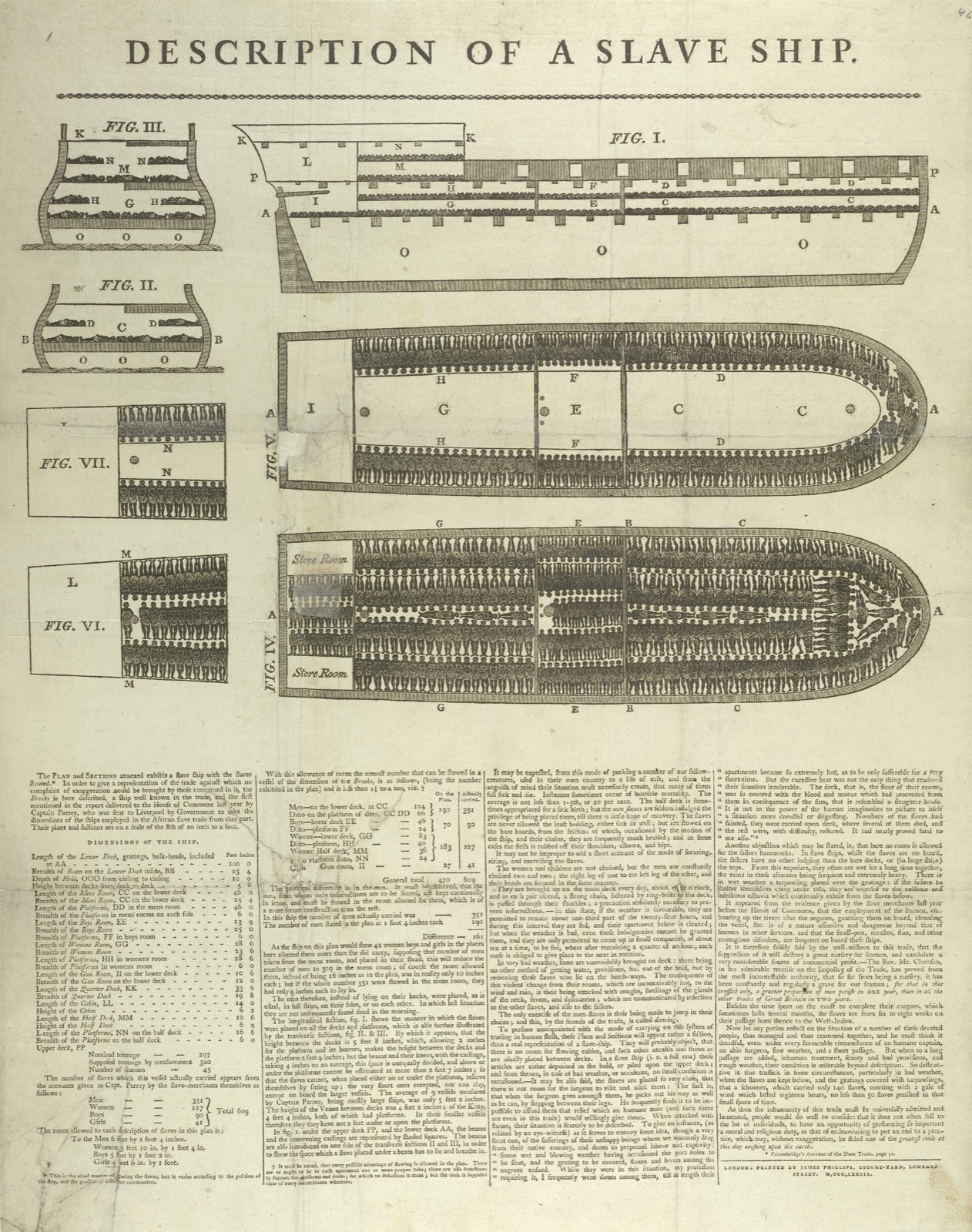
Diagram of the British slave ship Brookes, published in 1788. Public domain, British Library.
Massachusetts minted its own silver coins because English money did not stay in the colony.
A household paid the shop in produce, wampum, or pieces of Spanish silver, and the shopkeeper set the rate.
A tradesman who was owed coin often had to take goods or wait, because his customers did not hold sterling.
Merchants who bought English cloth and tools shipped silver back to London, and they judged what a local coin was worth.
Trade with England drained silver out to pay for manufactures, so in 1652 Massachusetts ordered a mint, and John Hull struck shillings stamped with a pine tree from Spanish-American silver.
A colony was trying to keep small change at home.
London treated that mint as a trespass on the crown’s coinage, and it closed under the royal pressure of the 1680s.
Massachusetts mint order (1652); Sylvester S. Crosby, The Early Coins of America (1875)