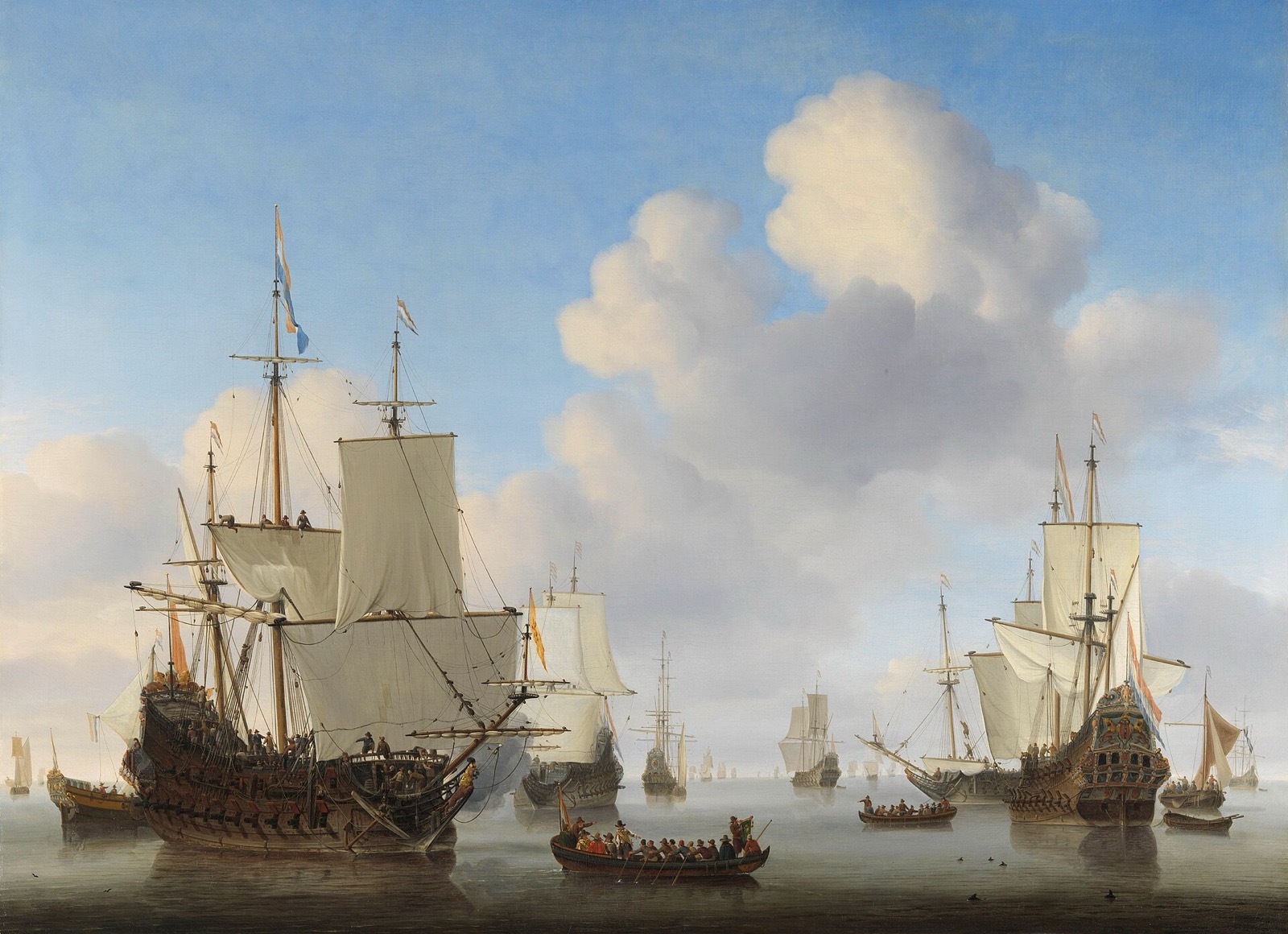
Willem van de Velde the Younger, Dutch ships in a calm. Public domain.
From 1663, most European goods headed for the colonies had to be loaded in England first.
A family buying cloth or tools from Europe paid for an extra stop in an English port, whether it wanted that stop or not.
A coastal merchant who wanted European stock had to order it through English factors and English duties.
English merchants and the customs took a charge on trade that might otherwise have gone straight to the colonies.
The Act for the Encouragement of Trade in 1663 required most European goods bound for the colonies to be shipped from England.
Colonial buyers paid the extra freight, the English duty, and the English merchant’s margin.
Goods from the cheapest seller in Europe became harder to obtain by a legal route.
Act for the Encouragement of Trade, 15 Charles II c. 7 (1663)