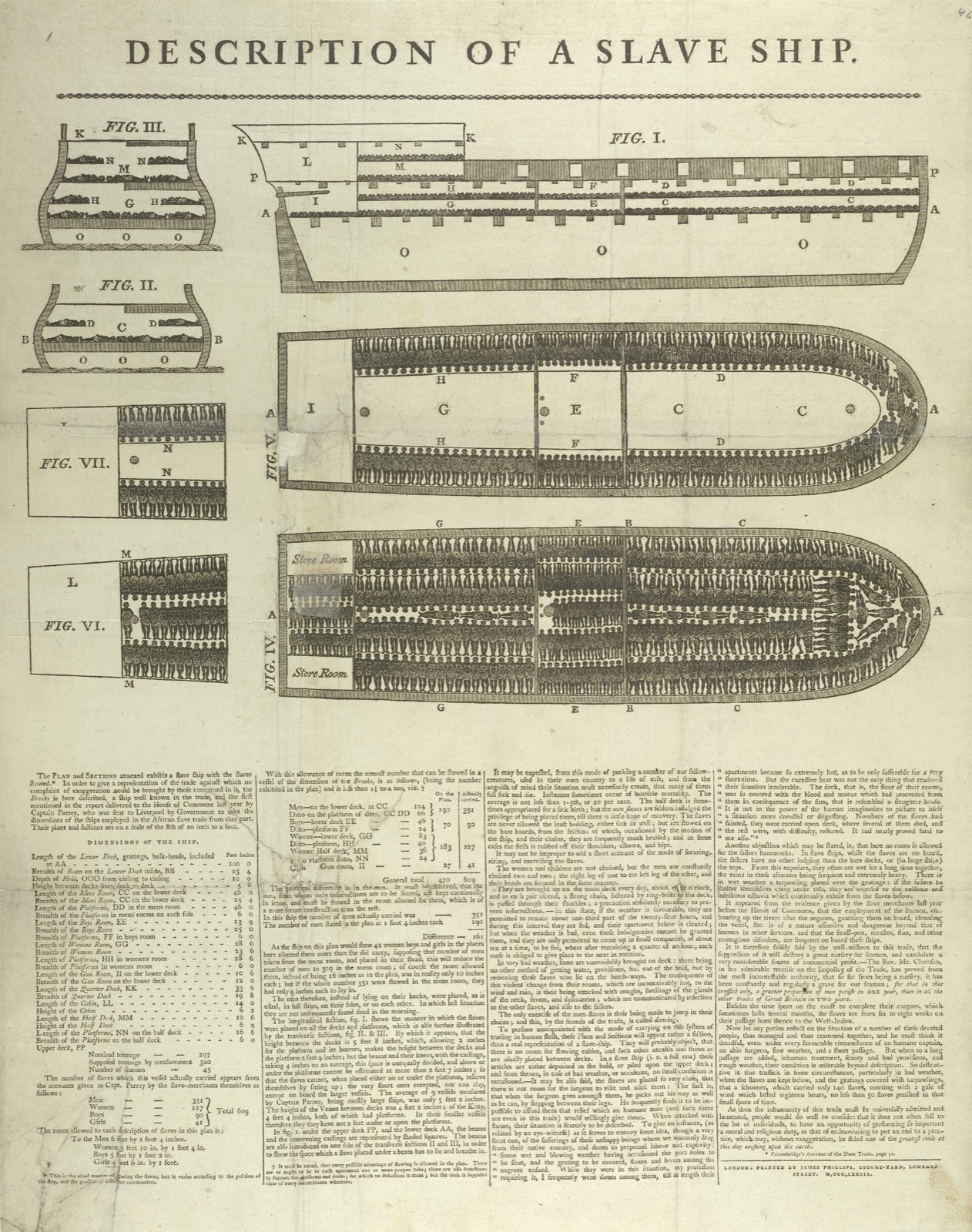
Diagram of the British slave ship Brookes, published in 1788. Public domain, British Library.
English policy cast the colonies as suppliers of raw goods and as customers for English manufactures.
A household paid for cloth and tools that were supposed to come from England rather than from the cheapest seller.
A shopkeeper stocked British goods and had little legal room to export a manufacture of his own.
English merchants and the Treasury were meant to keep the trading profit and the customs, which was the point of the policy.
Thomas Mun’s England’s Treasure by Forraign Trade, published in 1664, stated the doctrine in a form officials used.
A nation, on this view, grows richer when it sells abroad more than it buys, and colonies were assigned the part of supplier and customer.
For a household in the colonies, cloth and tools were supposed to arrive through English merchants, and the profit of that arrangement was supposed to settle in England.
Thomas Mun, England’s Treasure by Forraign Trade (1664)