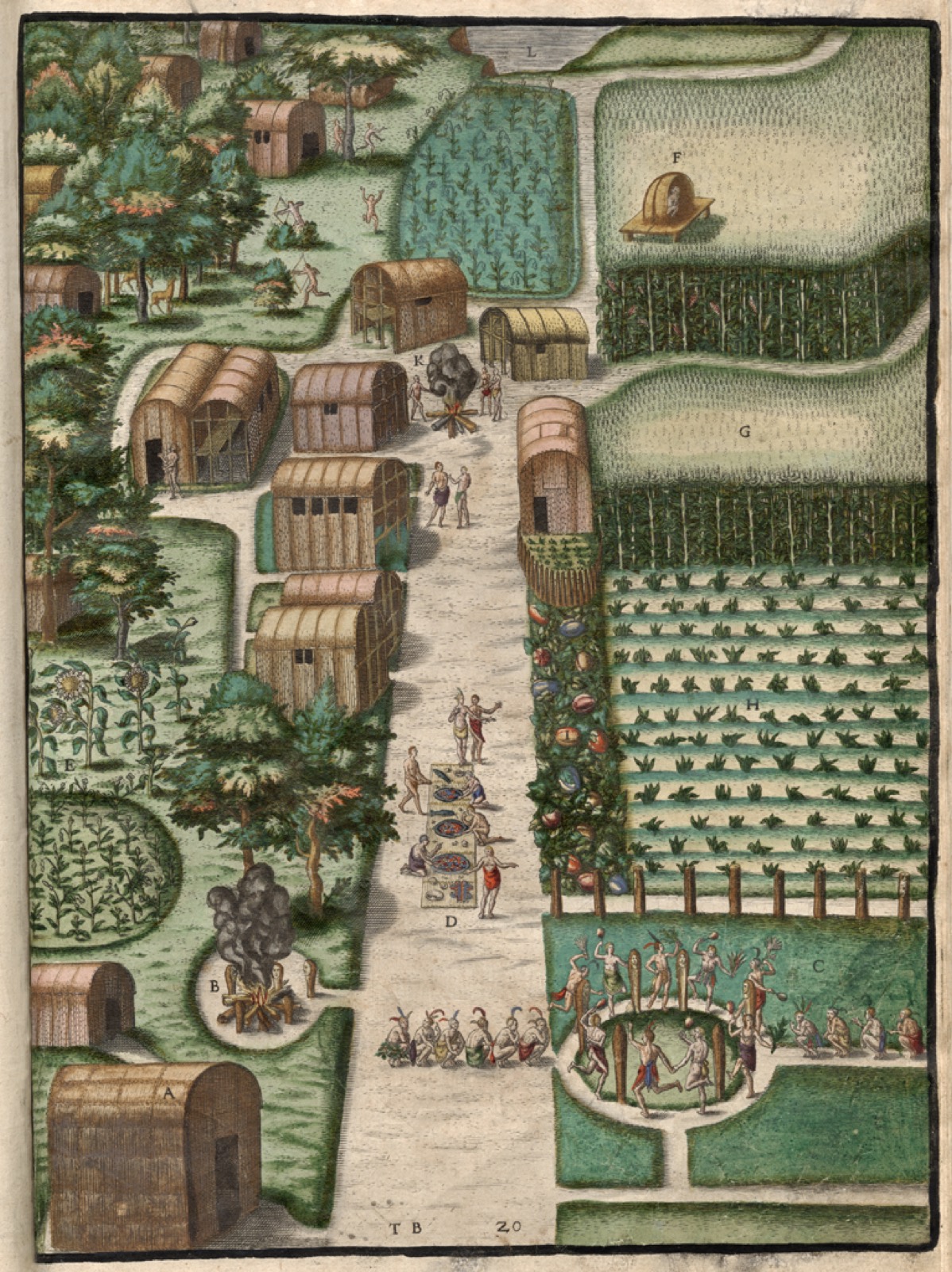
Theodor de Bry’s 1590 engraving of Secoton, from John White’s watercolors. Public domain.
James II folded New England into one government and set aside the assemblies that had voted the taxes.
A town taxpayer was assessed by officials he did not elect, and an old land paper could be called into question.
A freeholder who had bought a lot from his town could be told he needed a new patent and might owe a quitrent.
Men with large unconfirmed claims had the most to lose from a review of titles, and royal officials had a new way to make them pay.
In 1686 James II created the Dominion of New England under Edmund Andros, joining several charter colonies under one royal government and dispensing with their assemblies.
Andros taxed without a colonial legislature, pressed landholders for new patents, and enforced the trade laws.
Boston overthrew him in 1689 when news arrived that William of Orange had landed in England.
Commission for the Dominion of New England (1686); Viola F. Barnes, The Dominion of New England (1923)