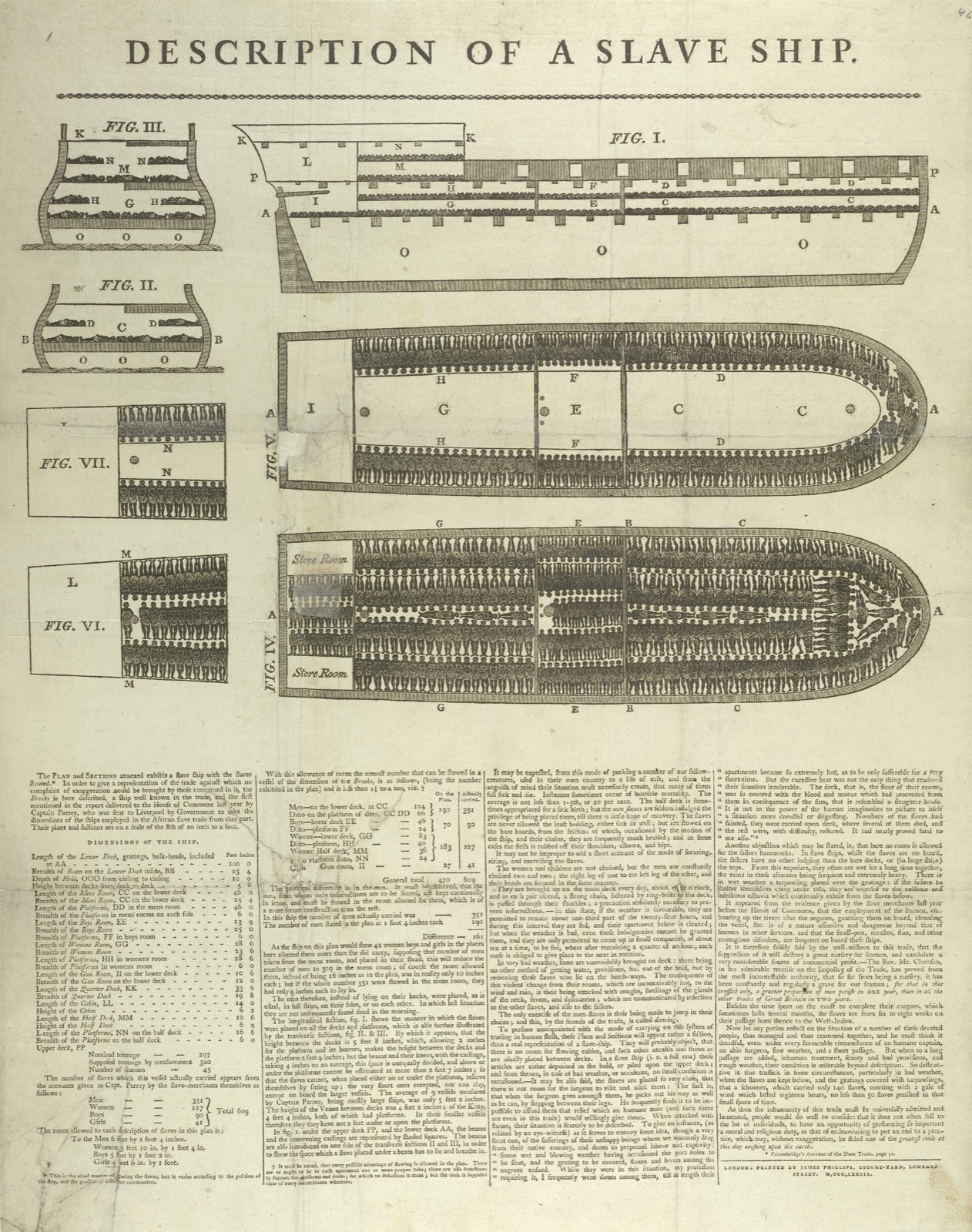
Diagram of the British slave ship Brookes, published in 1788. Public domain, British Library.
Massachusetts paid its soldiers with paper bills because it did not have the silver to pay them in coin.
A veteran paid in bills could find the shop asking more of them for the same flour as the months passed.
A farmer who owed taxes could use the bills to pay the tax, which was what gave the paper any standing.
Merchants and lenders who were owed silver watched a legislature issue paper that might be offered back in place of coin.
In 1690 a Massachusetts expedition against Quebec failed, and the colony had no specie to pay the troops who came home.
It issued paper bills of credit and promised to accept them later for taxes.
Other colonies copied the device, and a long fight followed over whether such paper could be forced on creditors who had lent in coin.
Massachusetts bills of credit (1690); John J. McCusker, Money and Exchange in Europe and America, 1600-1775 (1978)