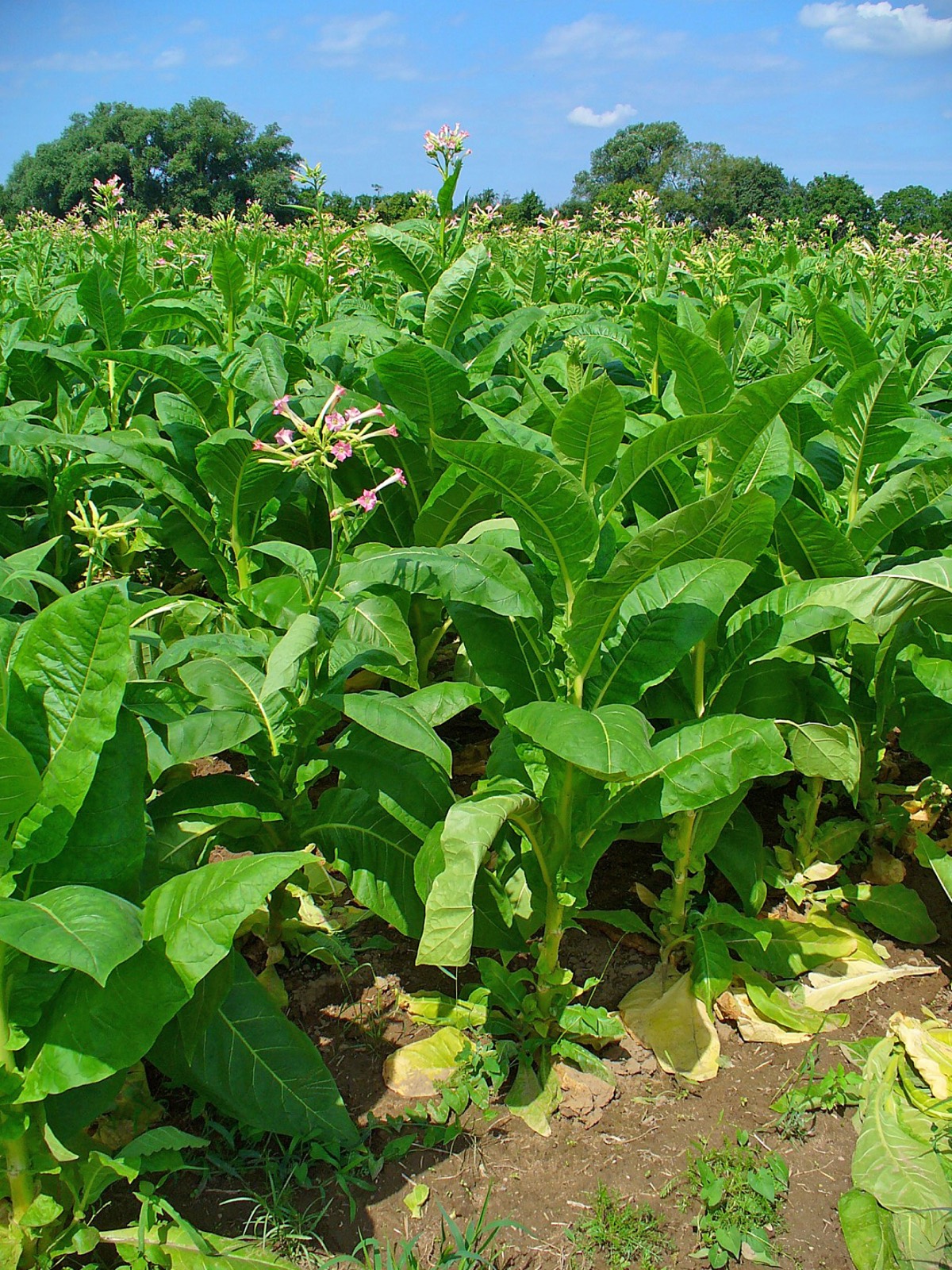
The tobacco plant, Nicotiana tabacum. Public-domain photograph.
Rice grown by enslaved people in coastal swamps made a small group of South Carolina planters rich.
A white household without slaves and without swamp land did not share that wealth, and many such households moved to the backcountry.
A small planter might sell food to the rice estates and still owe the Charleston merchant who marketed his crop.
Planters and Charleston merchants who controlled tidal land and enslaved labor sold rice abroad and used the money to buy more of both.
Around 1700 rice became South Carolina’s main export, grown first in inland swamps and then in tidal fields that could be flooded and drained from the rivers.
Enslaved Africans, many from rice-growing coasts of West Africa, did the labor and carried much of the skill.
Parliament put rice under English trade control, and a thin strip of lowcountry planters became some of the wealthiest colonists on the mainland.
Peter H. Wood, Black Majority (1974); Judith A. Carney, Black Rice (2001)