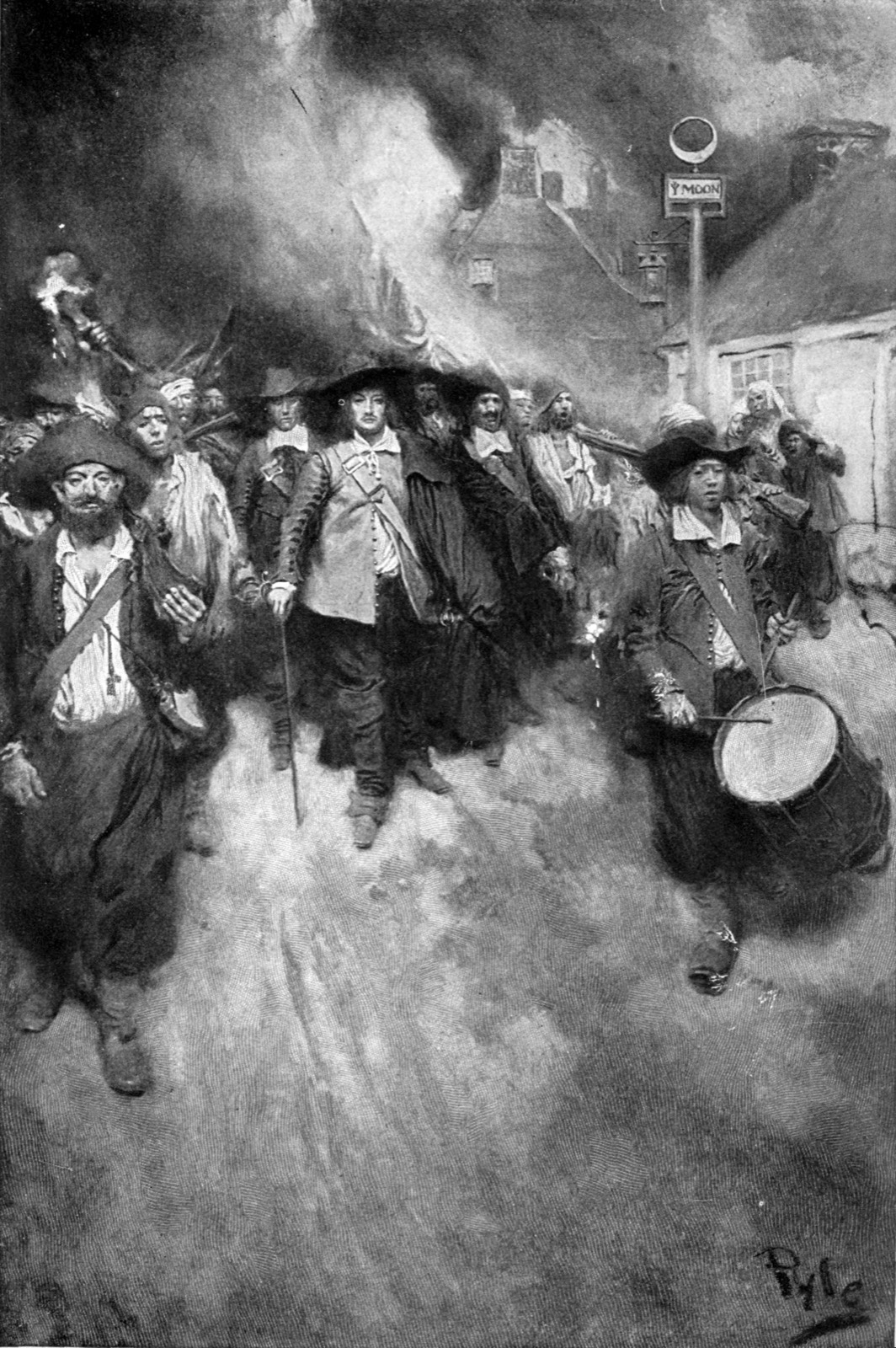
Howard Pyle, The Burning of Jamestown, an early-twentieth-century illustration, not an eyewitness view. Public domain.
South Carolina’s trade in deerskins and Native captives collapsed in a war the traders’ conduct had helped bring on.
A frontier family lost the post where it swapped corn and skins, and spent the fighting inside a fort.
A small trader who had advanced goods on credit lost the debts owed him, and lost his life if he was at an outpost that April.
Charleston merchants who had financed the skin and captive trade lost that business, and larger planters put more money into rice.
On 15 April 1715 the Yamasee and allied nations attacked South Carolina’s traders and settlements after years of rigged accounts, seizures of people for debt, and encroachment on land.
The colony nearly lost its outer settlements, and the old trade did not return in the same form.
Planters and merchants who survived shifted further toward rice and toward African labor.
William L. Ramsey, The Yamasee War (2008)