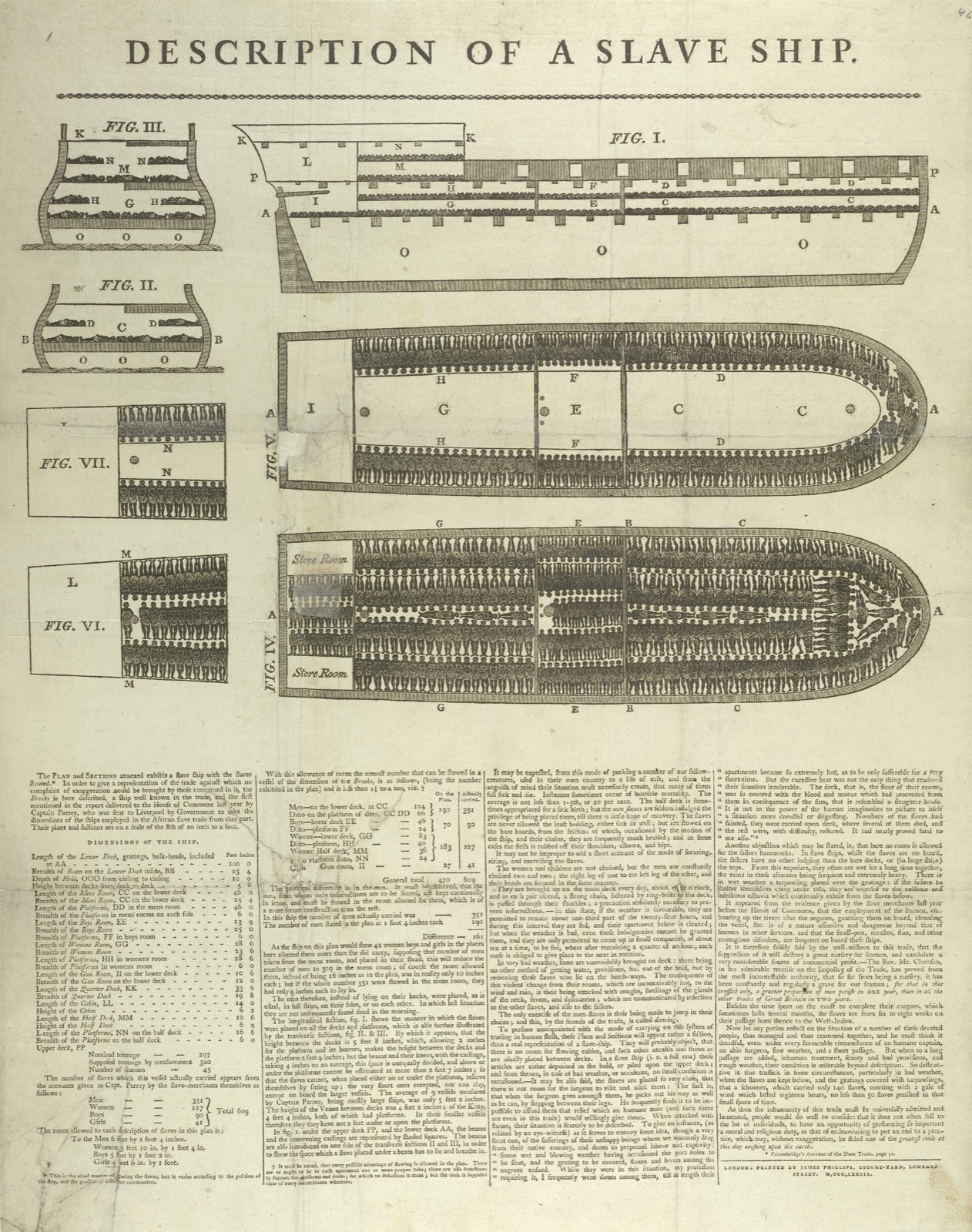
Diagram of the British slave ship Brookes, published in 1788. Public domain, British Library.
For a long stretch after 1721, British ministries left colonial trade laws on the books and put little effort into collecting them.
A family buying imported goods rarely met a serious attempt to collect every duty the statute named.
A merchant ordered cargo and hired ships on the assumption that London would go on leaving his trade alone.
Officials and West Indian planters who wanted strict collection did not, in these years, have a ministry ready to fight colonial assemblies over it.
From 1721, while Robert Walpole led the British ministry, the colonial trade laws were loosely enforced, a habit Edmund Burke later called a salutary neglect.
Customs posts were often filled by deputies, and London preferred quiet to a standing quarrel with colonial legislatures.
The statutes stayed in force, so when a later ministry collected them after 1763, colonists met an old law as a new burden.
Edmund Burke, Speech on Conciliation with America, 22 March 1775