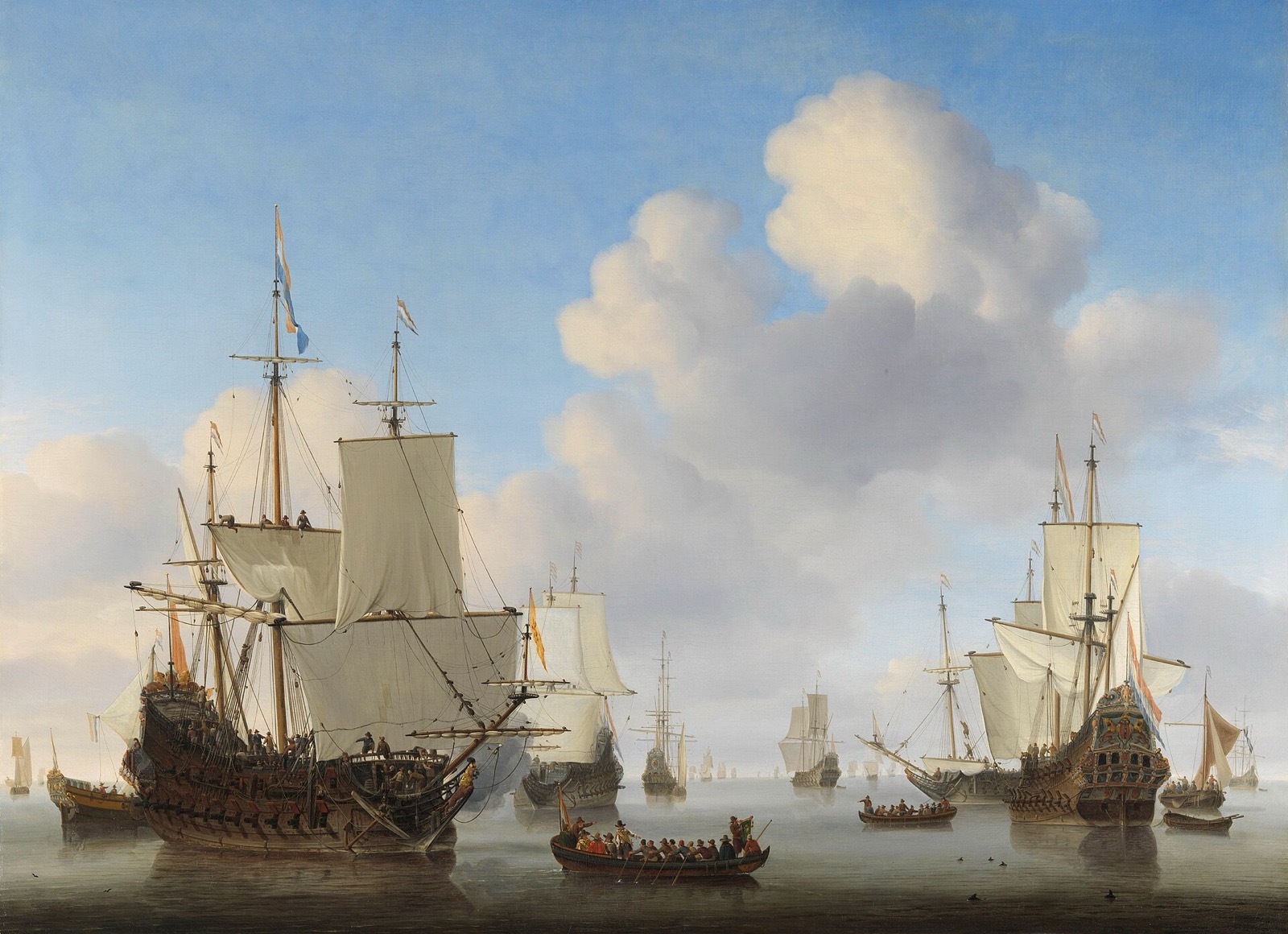
Willem van de Velde the Younger, Dutch ships in a calm. Public domain.
A slave ship was a business that sold the people who survived the ocean crossing.
A sailor on that ship drew wages, or a small right to carry goods of his own, and could die of the same sickness as the people locked below.
A small planter who wanted one or two workers bought them on credit from a merchant and owed that debt at the next harvest.
Merchants in Liverpool, Bristol, London, and Rhode Island split the cost of ship, trade goods, insurance, and captain, and they took the profit if the survivors sold high.
Once private merchants were admitted to the African trade in the late 1690s, a slave voyage was organized like any other risky syndicate.
Trade goods were bartered on the African coast, people were forced into the hold, and deaths at sea were written into the cost.
The price a Carolina or Chesapeake buyer paid on the dock was the last price in that chain, and the people sold received none of it.
Stephanie E. Smallwood, Saltwater Slavery (2007)