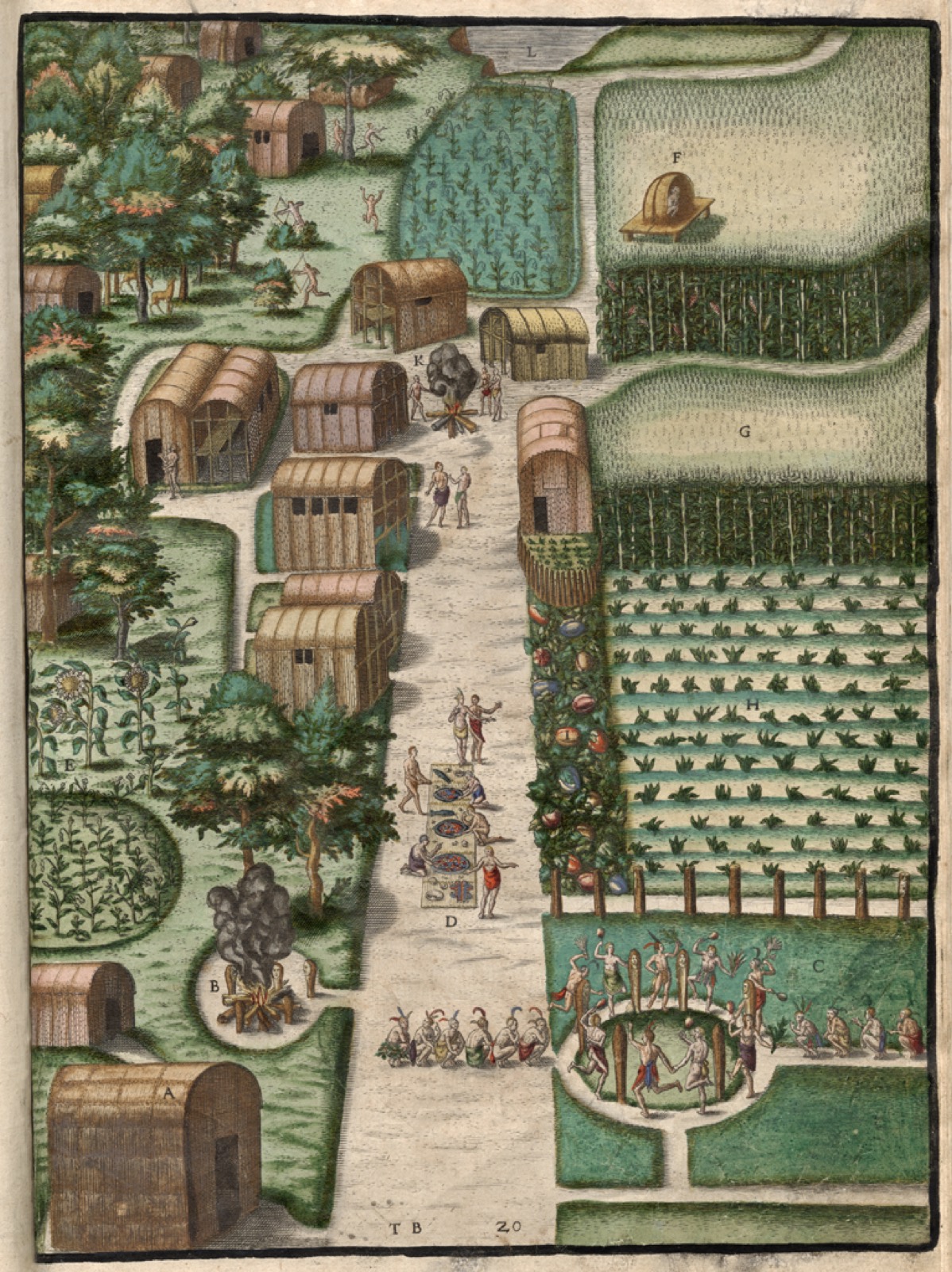
Theodor de Bry’s 1590 engraving of Secoton, from John White’s watercolors. Public domain.
Colonial hatters could sell hats at home, and Parliament forbade them to export the hats.
A journeyman hatter could work for local customers and could not follow the trade into a larger market.
A master with a busy shop still could not legally keep the apprentices he would need to become an exporter.
London hatters, who had asked for the law, kept the export trade and the larger workshops.
The Hat Act of 1732 barred the export of American-made hats and limited how many apprentices a colonial shop could keep.
It belonged with other laws of the same aim, including the Wool Act of 1699 and the Iron Act of 1750, which steered the colonies toward raw materials and away from finished goods that competed with England.
A craft could supply a town and was not allowed to grow into an export business.
Hat Act, 5 George II c. 22 (1732)