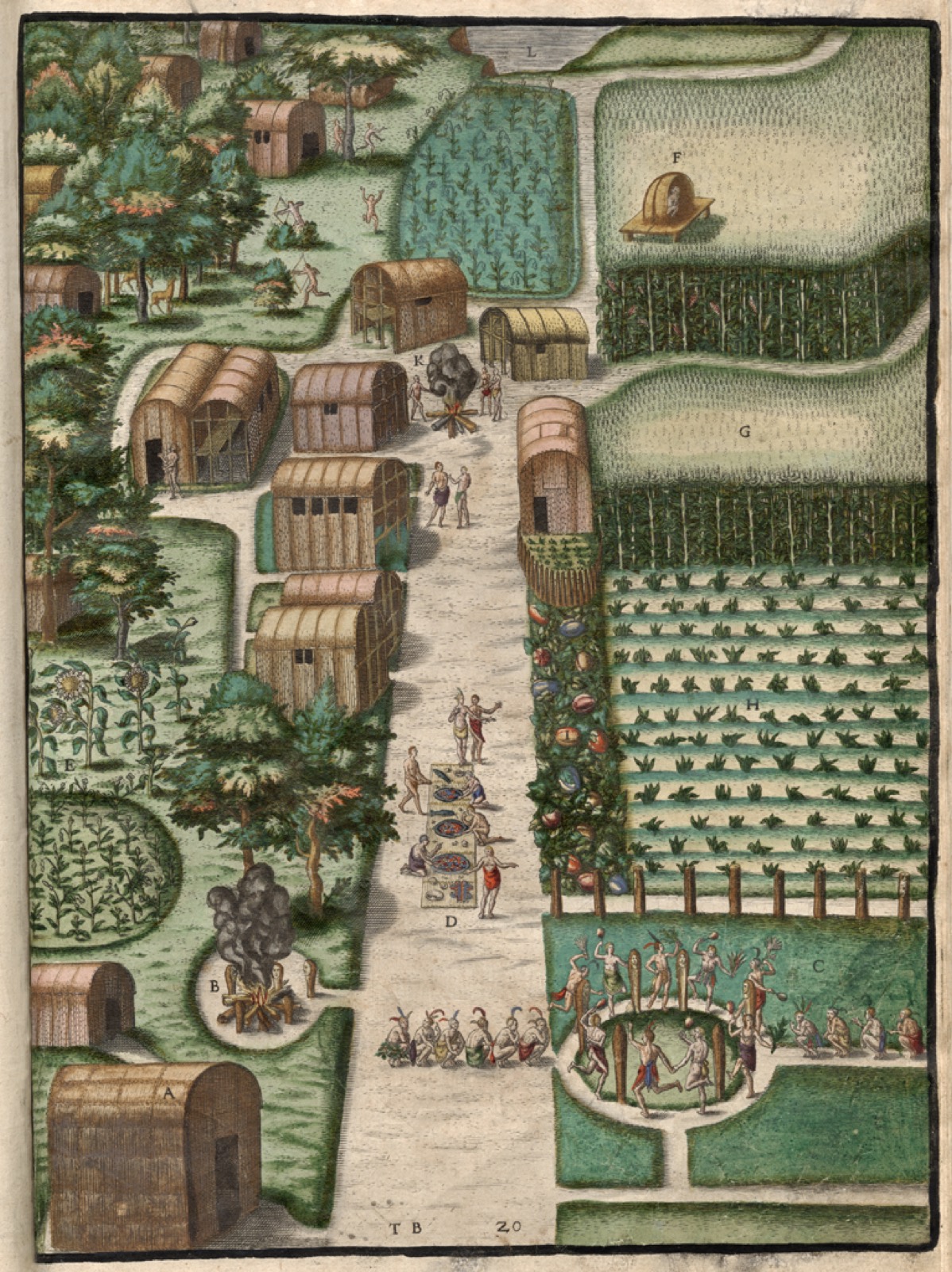
Theodor de Bry’s 1590 engraving of Secoton, from John White’s watercolors. Public domain.
Massachusetts farmers opened a land bank to borrow on their acres, and Parliament shut it down.
A farmer who had taken the bank’s paper held bills that shops stopped wanting, and he still owed the mortgage he had pledged.
A freeholder who had mortgaged land to get those bills needed them to pass as money, or the mortgage was a trap.
Boston merchants who dealt in silver and in bills on London opposed the bank, and Parliament’s ban protected the money they already trusted.
In 1740 a land bank in Massachusetts issued paper backed by mortgages, because farmers could not borrow from merchants who preferred silver.
In 1741 Parliament extended the Bubble Act to the colonies, which destroyed the bank and made its directors personally liable for the bills.
A colonial attempt at cheaper credit was stopped from London, on the side of the creditors.
Act extending the Bubble Act to the colonies, 14 George II c. 37 (1741); Margaret E. Newell, From Dependency to Independence (1998)