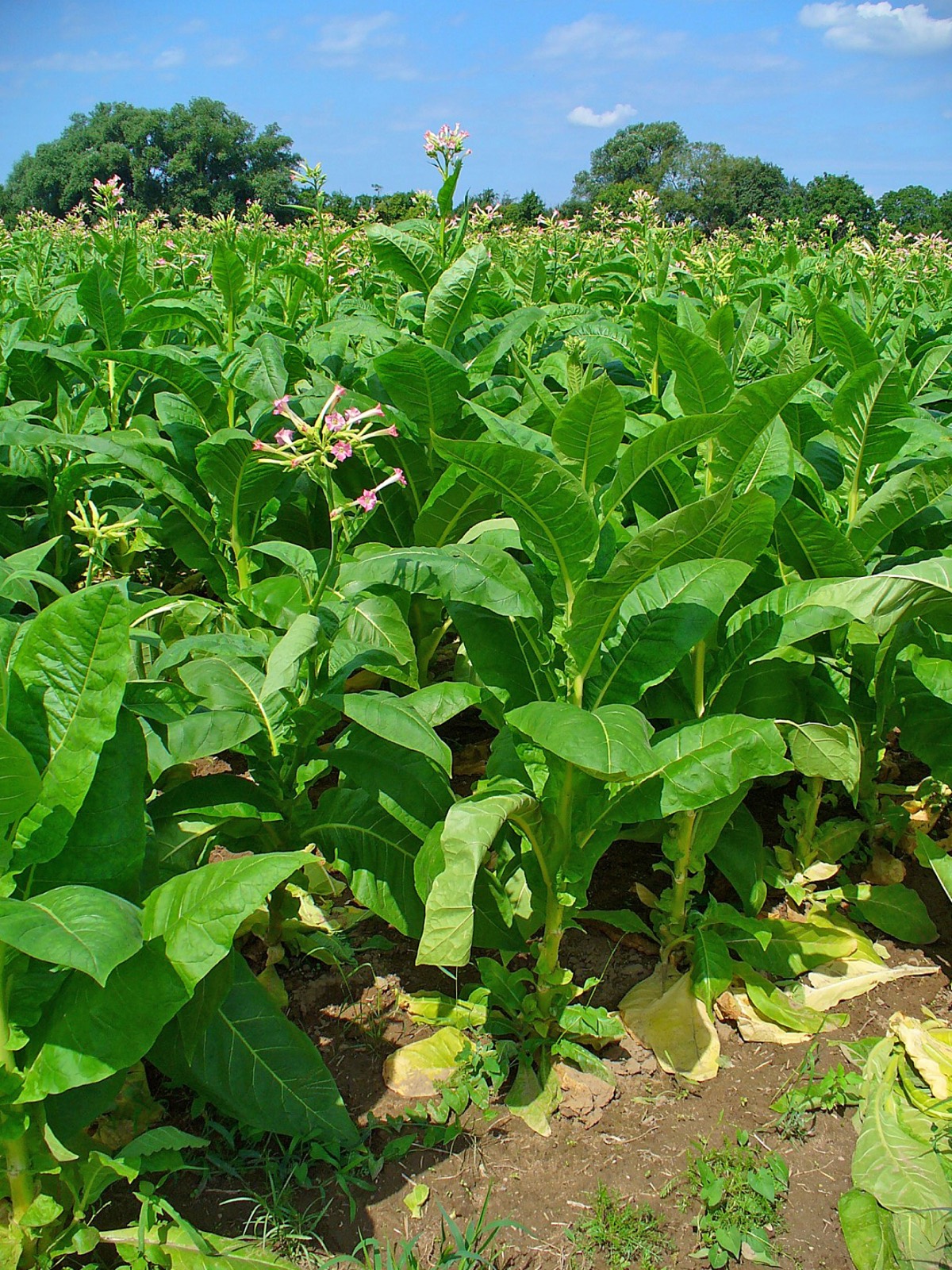
The tobacco plant, Nicotiana tabacum. Public-domain photograph.
Parliament paid a cash bounty on American indigo, and South Carolina planters added the dye crop beside rice.
A household that did not command enslaved labor did not collect the bounty, and met the crop as extra work a neighbor demanded.
A small planter who tried a few acres still depended on a factor to reach the market that paid the bounty.
Planters who already had land, enslaved workers, and Charleston credit added indigo to the rice year and collected a British subsidy for it.
Eliza Lucas Pinckney showed that indigo could be grown in South Carolina in the 1740s, and in 1748 Parliament granted a bounty because Britain wanted a blue dye that did not come from French or Spanish colonies.
The work fit the months when rice needed less labor, so the same enslaved people raised both crops.
A subsidy voted in London became a second export on the lowcountry rivers.
Act granting a bounty on colonial indigo (1748)