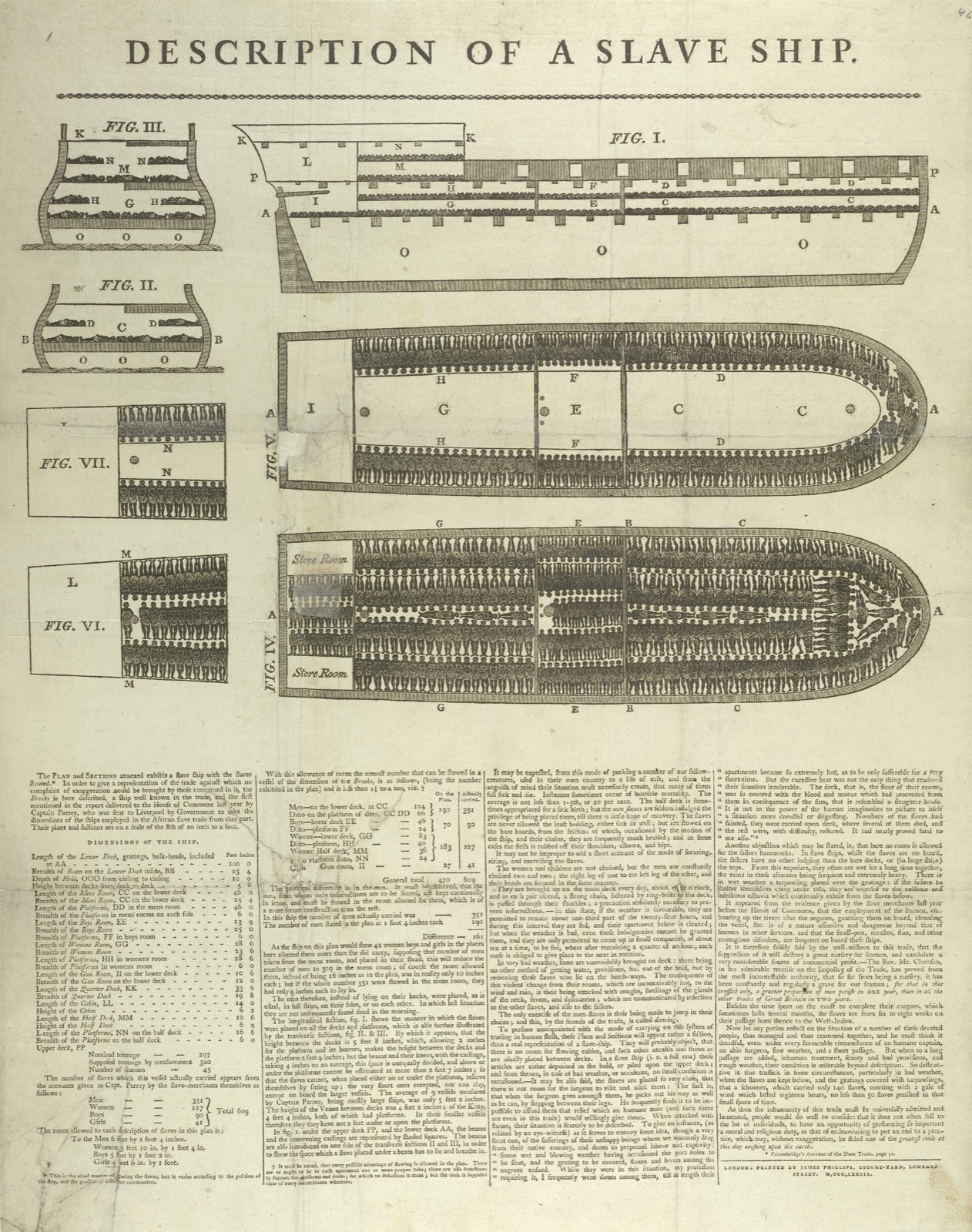
Diagram of the British slave ship Brookes, published in 1788. Public domain, British Library.
Parliament told New England that its new paper bills could not be forced on people as payment for private debts.
A debtor who had expected to pay in local bills had to find silver or goods the creditor would take.
A shopkeeper standing between farmers and British suppliers needed coin or a bill on London, and the act made local paper harder to use.
British merchants who were owed sterling had pressed for the law so they would not be paid in depreciated colonial bills.
The Currency Act of 1751 restricted new bills of credit in New England and barred making them legal tender for private debts.
London was siding with creditors who dealt in silver and sterling.
A further Currency Act in 1764 spread that limit to the other colonies, in the same years Parliament was looking for new colonial taxes.
Currency Act, 24 George II c. 53 (1751)