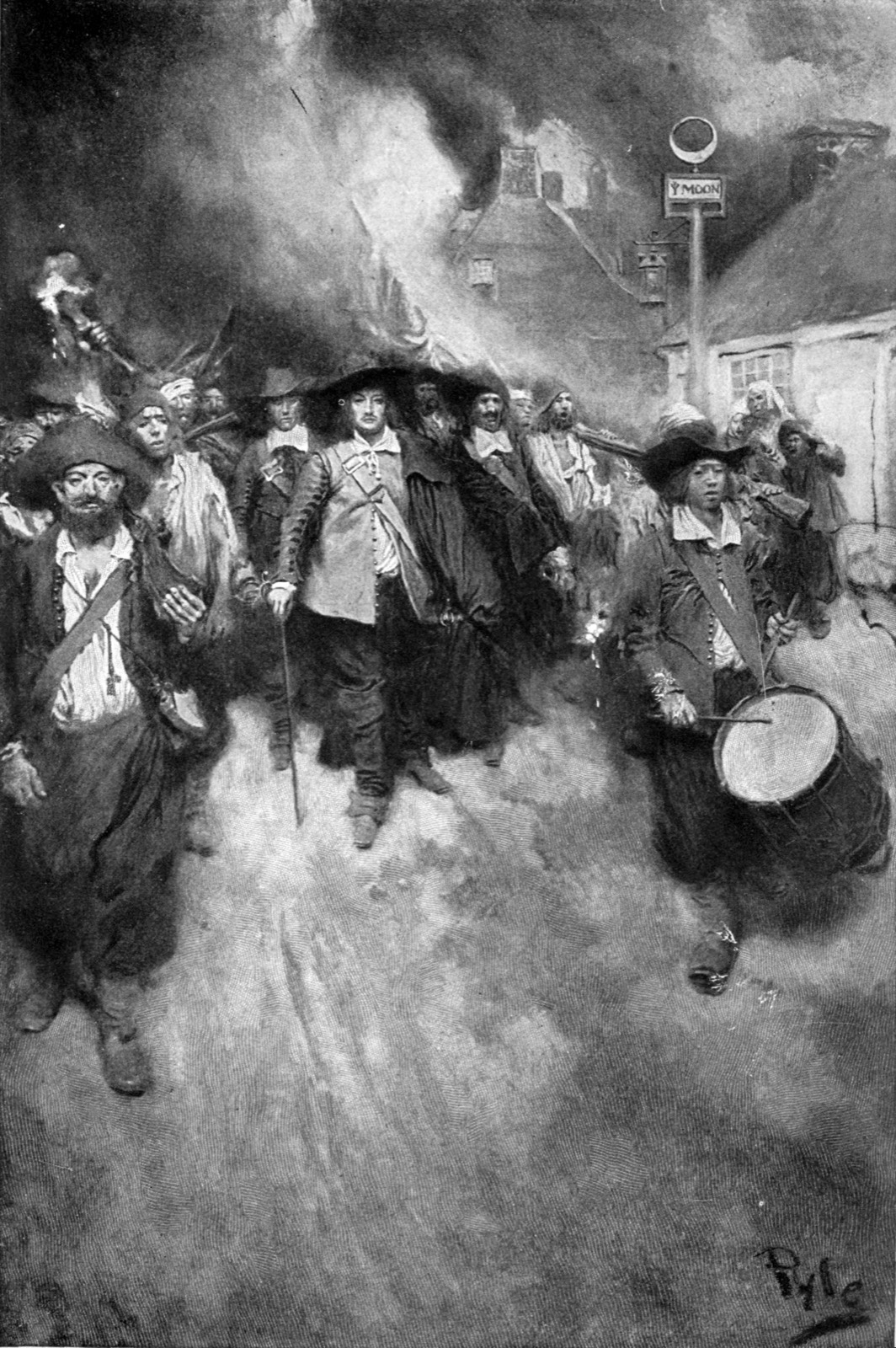
Howard Pyle, The Burning of Jamestown, an early-twentieth-century illustration, not an eyewitness view. Public domain.
Britain finished the Seven Years’ War deep in debt, and the ministry decided the colonies should help pay.
A household that had already quartered soldiers and taken wartime paper now faced taxes written in London to carry Britain’s debt.
A farmer who had supplied the army for certificates wanted those certificates honored, and instead met a Parliament hunting revenue of its own.
Holders of British government stock wanted relief, and duties collected in the colonies were the ministry’s way of seeking it.
The Seven Years’ War ended in 1763 with Britain holding Canada and most of the continent east of the Mississippi, and with a national debt swollen by a world war.
George Grenville’s ministry chose to raise money in the colonies to help carry that debt and to pay for garrisons in America.
The tax laws of the next twelve years were that bill sent across the ocean.
Treaty of Paris (1763); Fred Anderson, Crucible of War (2000)