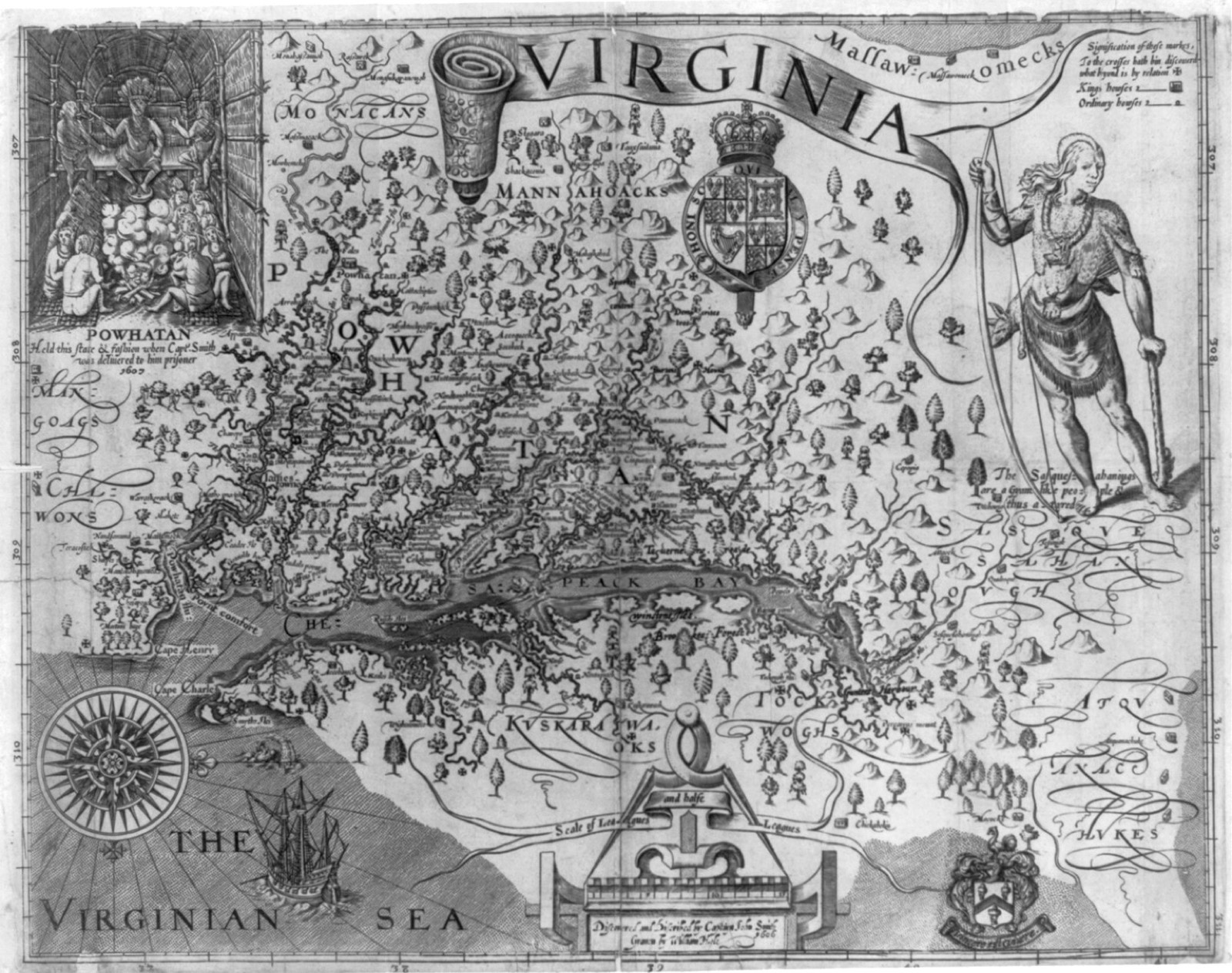
John Smith’s map of Virginia, engraved by William Hole and published in 1612. Public domain.
The king drew a line along the Appalachians and closed the land west of it to colonial settlement.
A family already past the ridge was, on paper, told to come back, and it had no legal title it could sell.
A farmer who had planned to move west and sell his old place found the proclamation did not grant him that permission.
Speculators with surveys and old grants, including the Ohio Company, found a royal order standing between them and land they meant to sell.
The Royal Proclamation of 7 October 1763 reserved land west of the Appalachian watershed for Native nations, forbade private purchases from them, and told settlers already west of the line to withdraw.
After Pontiac’s War, the ministry did not want to pay for another frontier war, and it wanted the west kept as a royal asset.
Settlers and land companies treated the line as a lock on ground they believed the war had won.
Royal Proclamation of 7 October 1763