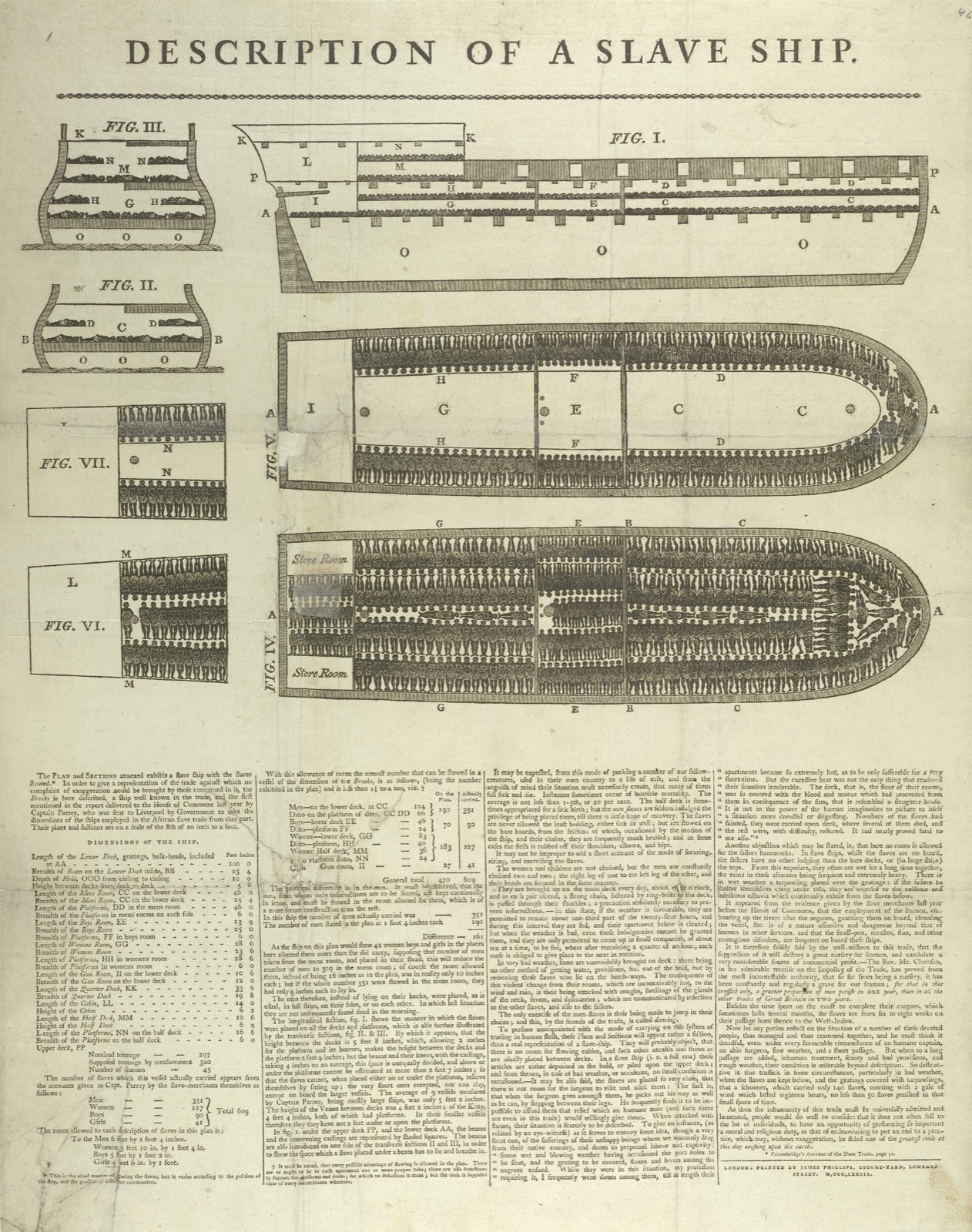
Diagram of the British slave ship Brookes, published in 1788. Public domain, British Library.
Townshend taxed a list of imports and used the money to pay governors, so assemblies could not control them by holding back salaries.
A household buying paper, paint, glass, or tea paid a duty it had not voted, folded into the price.
A merchant who imported those goods paid the duty at the custom house and tried to pass it on, while customers organized not to buy.
Royal officials gained a salary that did not depend on a colonial assembly, which was the political point of the money.
The Revenue Act of 1767 laid duties on glass, lead, painters’ colors, paper, and tea, and reserved the proceeds for colonial civil officers.
Parliament presented the duties as taxes collected at the port.
Colonists answered by refusing imports, most of the duties were repealed in 1770, and the duty on tea was kept so the claim of power would not be dropped.
Revenue Act, 7 George III c. 46 (1767)