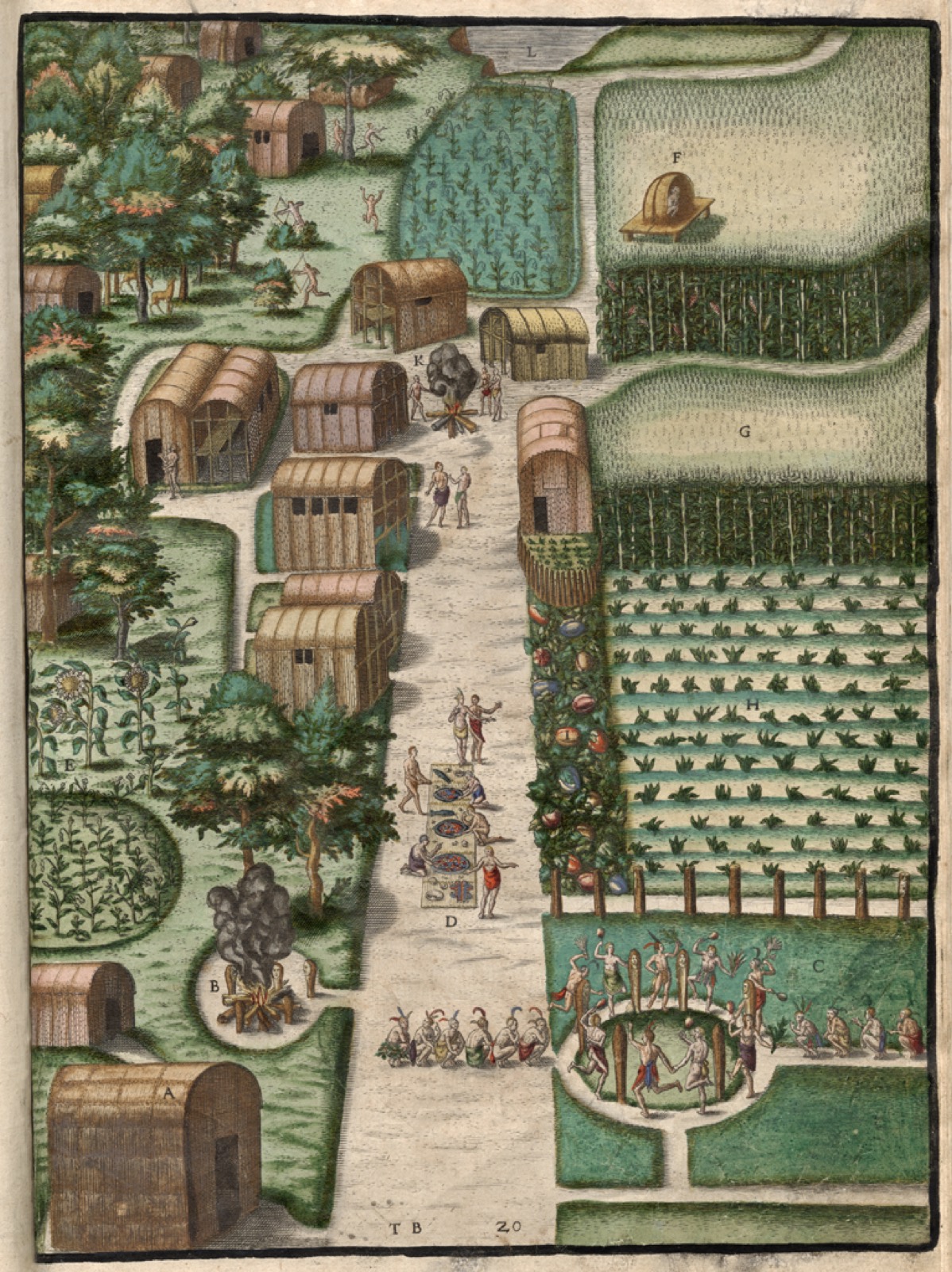
Theodor de Bry’s 1590 engraving of Secoton, from John White’s watercolors. Public domain.
Colonial merchants agreed to stop importing British goods, and manufacturers in Britain felt the loss.
A family that honored the agreement went without familiar cloth and tea, or bought from someone willing to be named in the newspaper.
A shopkeeper had to choose between empty shelves and a public listing as a man who broke the agreement.
Large merchants who signed early could last a season without new orders, and the agreements squeezed smaller traders who could not.
In 1768 and 1769 merchant associations in Boston, New York, and Philadelphia agreed not to import listed British goods while the Townshend duties lasted.
Committees published the names of people who broke the agreements.
The loss reached British manufacturers, most of the duties came off in 1770, and in 1774 the Continental Association spread nonimportation and nonconsumption across the colonies.
Continental Association, 20 October 1774; Arthur M. Schlesinger, The Colonial Merchants and the American Revolution (1918)