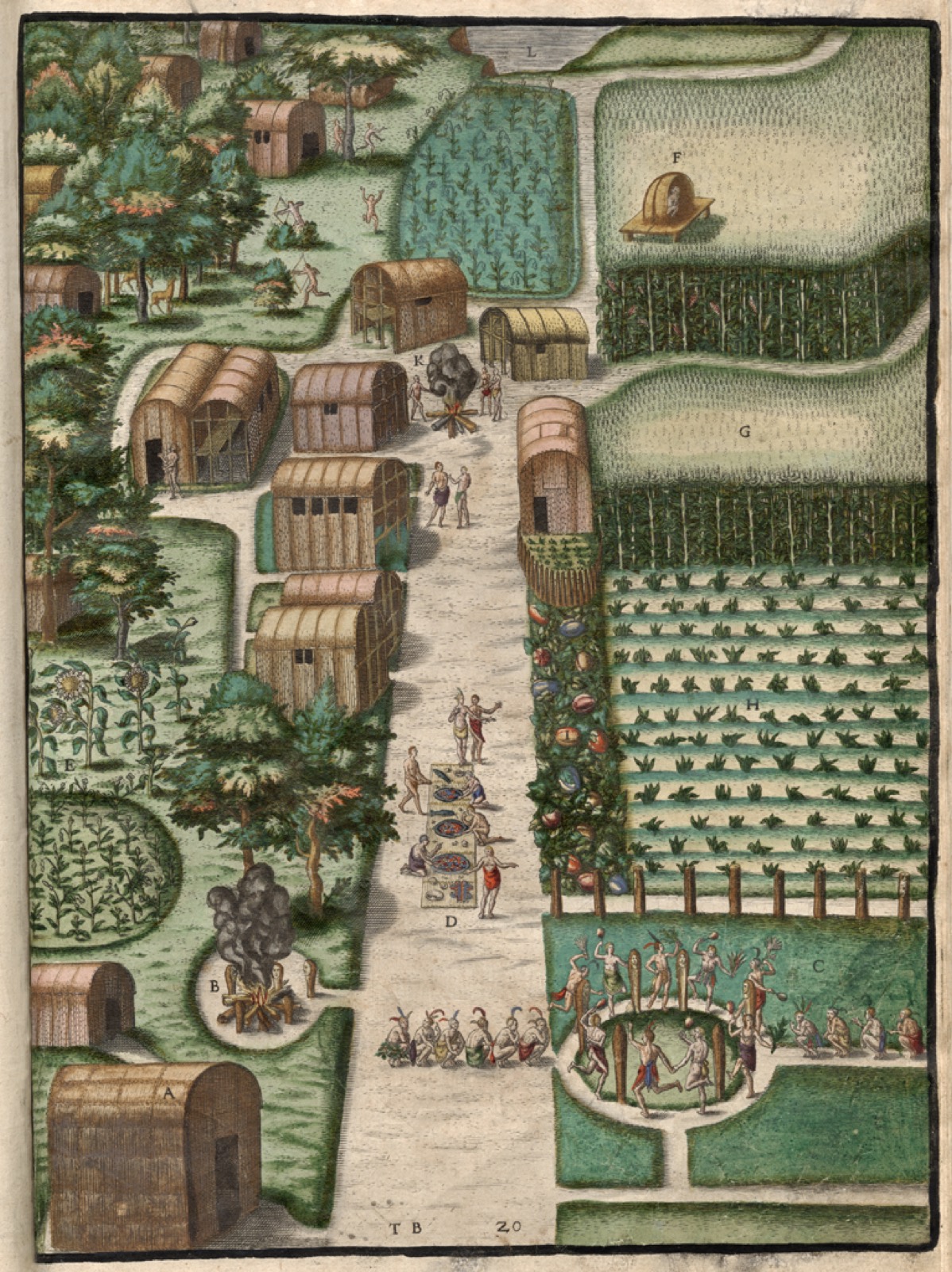
Theodor de Bry’s 1590 engraving of Secoton, from John White’s watercolors. Public domain.
Homespun was the extra work, mostly women’s, that let a boycott of British cloth go on.
A poor family already spun and patched, and the boycott added hours at the wheel without adding land or coin.
A household that used to buy British cloth set daughters and hired women to spinning, and wore the result where neighbors could see it.
Merchants who had pledged not to import needed houses to produce a substitute, or the pledge would break as soon as someone wanted a decent coat.
In the late 1760s, spinning gatherings and homespun cloth became the household side of the agreements against British textiles.
Women produced yarn and cloth the boycott refused to buy, and wearing that cloth was a public statement.
The added labor stayed in the house, and when the agreements weakened, many houses went back to British cloth.
Laurel Thatcher Ulrich, The Age of Homespun (2001)