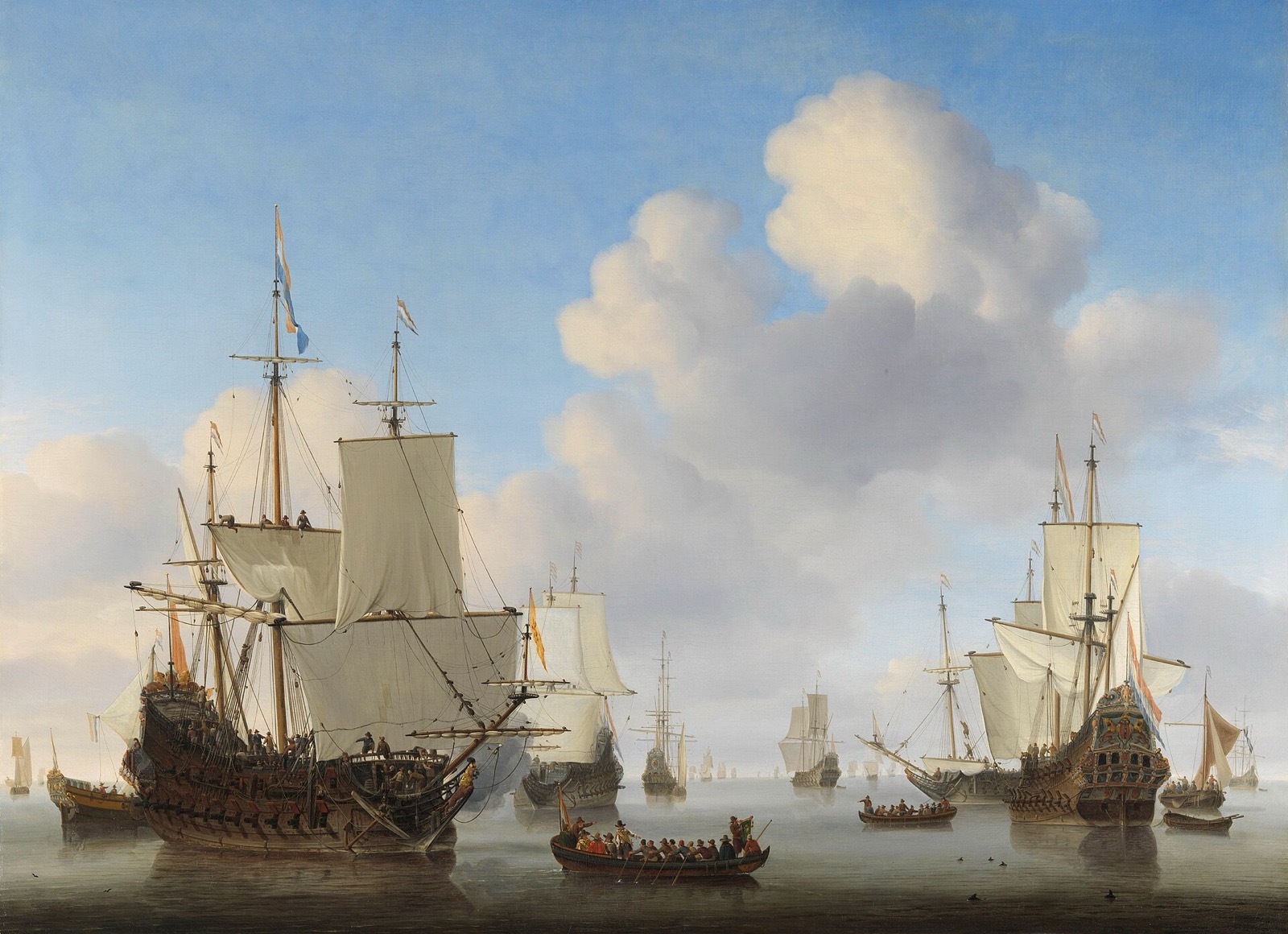
Willem van de Velde the Younger, Dutch ships in a calm. Public domain.
The Tea Act made East India Company tea cheaper and left the disputed duty on it.
A family that drank tea was offered a lower price that still paid the duty, and refusing the bargain meant going without.
A shopkeeper who was not a chosen agent stood to lose tea sales to the men the company had named.
The East India Company, holding unsold tea and deep in debt, gained a direct route to colonial buyers, and its agents stood to take the trade.
The Tea Act of 1773 let the East India Company ship tea to the colonies on its own account and skip much of the English duty, while the colonial duty of three pence a pound remained.
The tea could undersell merchants already in that trade and still make the buyer pay the tax Parliament had refused to repeal.
In Boston the company’s agents would not resign, and on 16 December 1773 men destroyed the tea on the ships.
Tea Act, 13 George III c. 44 (1773); Benjamin W. Labaree, The Boston Tea Party (1964)