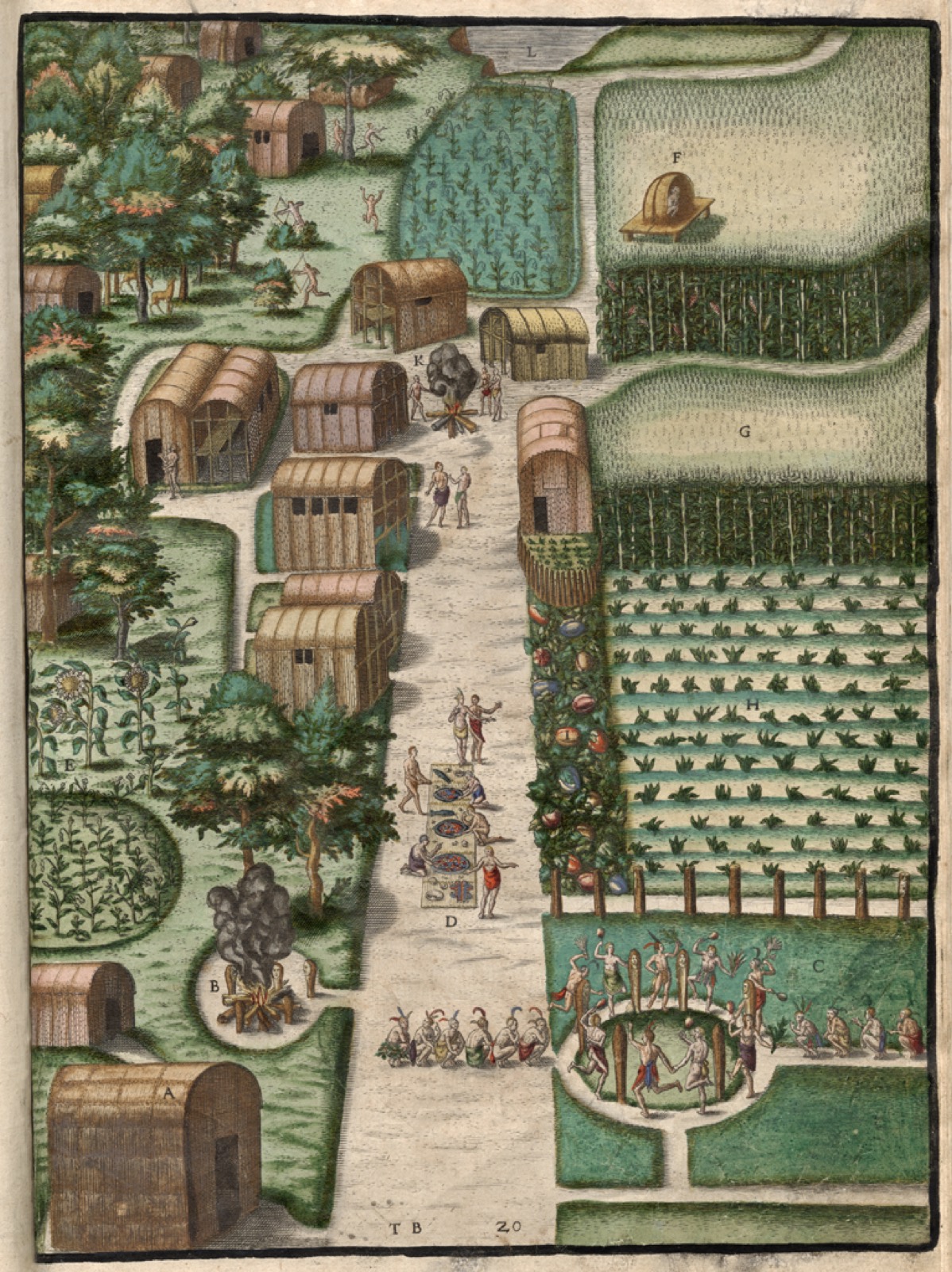
Theodor de Bry’s 1590 engraving of Secoton, from John White’s watercolors. Public domain.
Parliament closed Boston’s port until the town paid for the tea that had been destroyed.
A dockworker, a sailor, or a washerwoman who lived on harbor wages lost that pay when June began.
A shopkeeper or a market gardener who sold to the port lost customers even if he had never touched the tea.
The East India Company was the creditor the act named, and merchants in other towns had to choose between supplying Boston and taking its trade.
The Boston Port Act closed the harbor on 1 June 1774 until the East India Company was paid for the tea destroyed the previous December.
The custom house was moved to Salem.
Wages tied to the port stopped, other colonies sent food, and every other seaport could see the same punishment being prepared for it.
Boston Port Act, 14 George III c. 19 (1774)