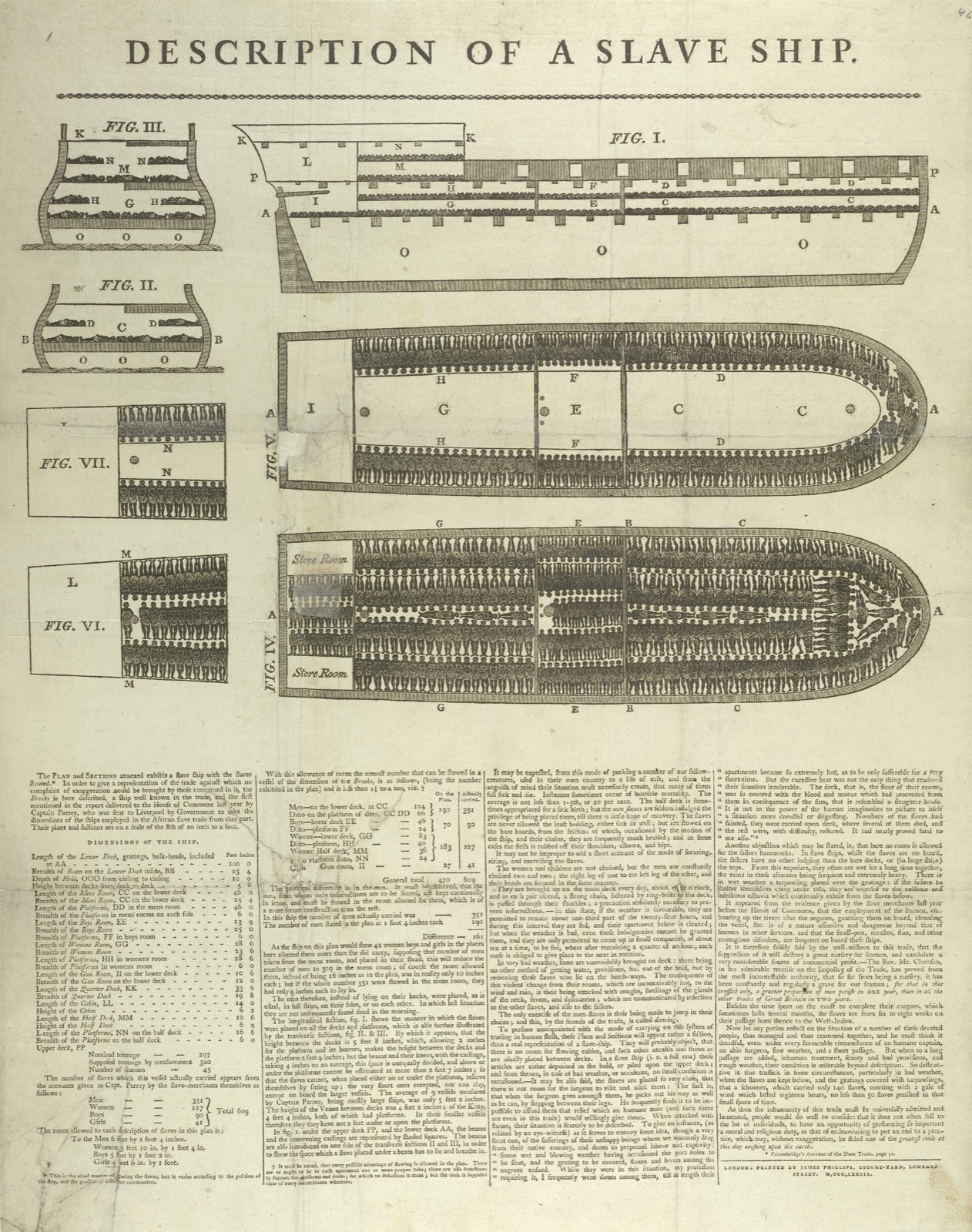
Diagram of the British slave ship Brookes, published in 1788. Public domain, British Library.
Congress printed paper money for the war before it had any power to tax that money back in.
A soldier or a farmer paid in continental bills watched them buy less flour as more bills were printed.
A household forced to take the bills at their printed amount lost on every sale to anyone who could demand coin.
Merchants who could hold goods, or insist on hard money, gained what the paper lost, and they bought bills from people who could not wait.
In June 1775 the Continental Congress authorized two million dollars in paper, pledged against taxes the states were only requested to levy.
Further issues followed, because Congress had an army to pay and no tax of its own.
The bills sank until they were a byword for worthlessness, and anyone compelled to take them at face value was handing his goods to anyone who was not.
Continental Congress currency resolution, 22 June 1775; E. James Ferguson, The Power of the Purse (1961)