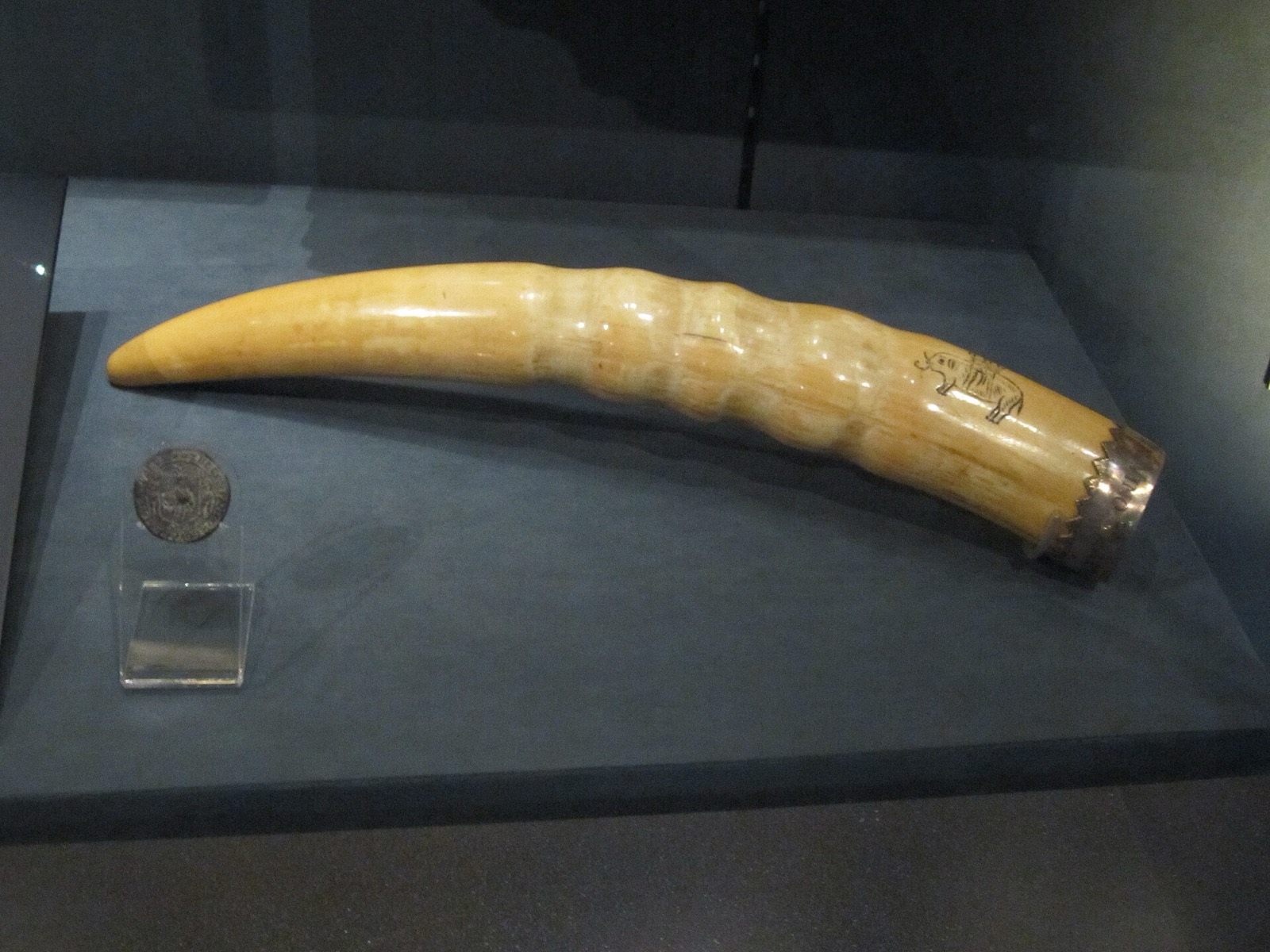
Ivory marked by the Royal African Company. International Slavery Museum, Liverpool. Wikimedia Commons.
Under the Articles of Confederation, Congress could ask the states for money and could not tax anyone itself.
A household owed taxes to its own state, if that state chose to levy them, and the unpaid army was the proof that Congress could not collect.
A farmer who had sold grain to the army held a certificate from a government that could not force a tax to honor it.
Lenders in France and the Netherlands, and Americans who bought debt paper, held promises that thirteen legislatures would have to choose to pay.
The Articles of Confederation, ratified in 1781, let Congress requisition money from the states in proportion to land values and gave it no power to tax people or goods.
A state that ignored a requisition could not be compelled.
Interest, soldiers’ pay, and the foreign loans all waited on those requests.
Articles of Confederation, Article VIII