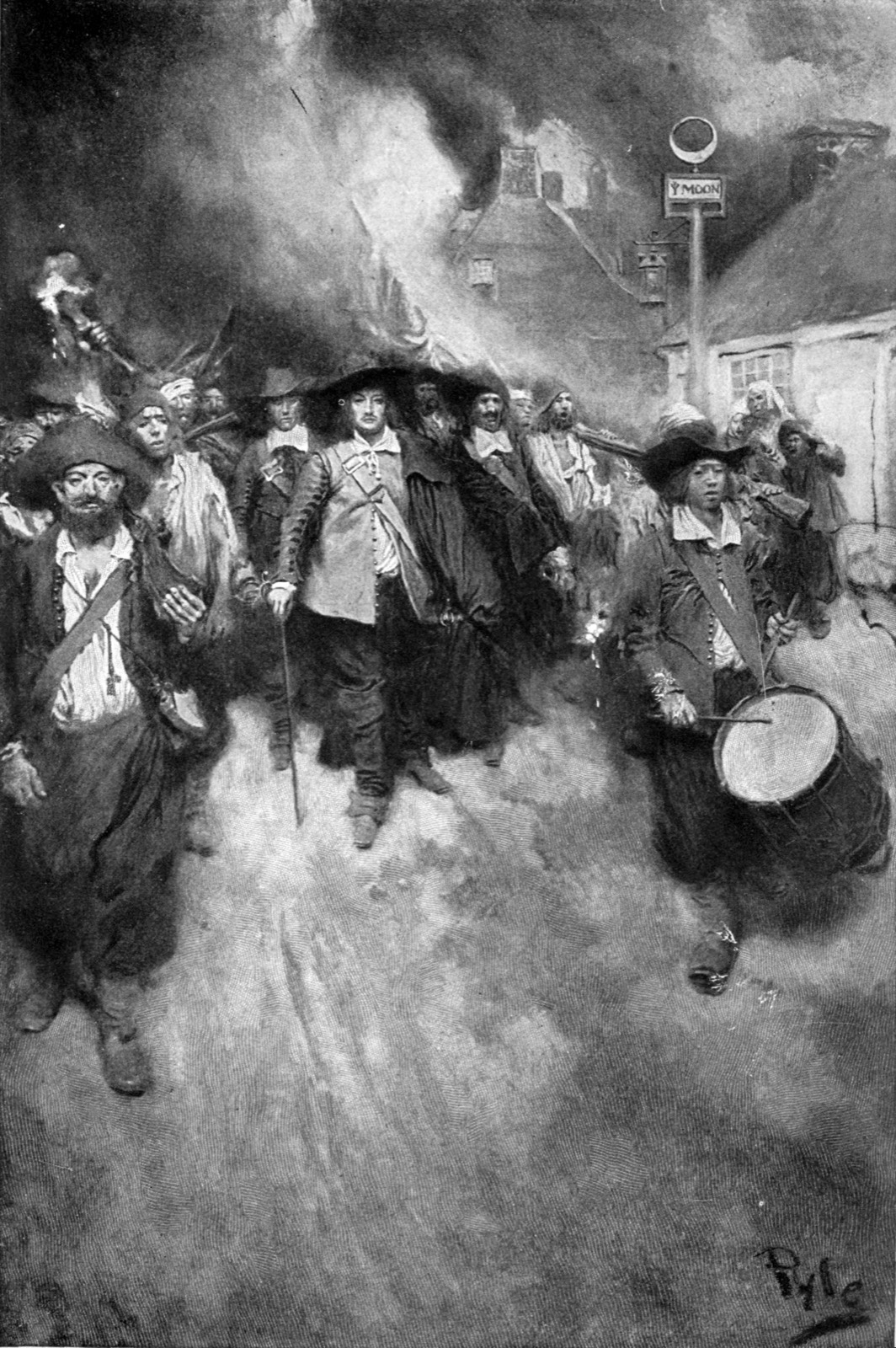
Howard Pyle, The Burning of Jamestown, an early-twentieth-century illustration, not an eyewitness view. Public domain.
People who could not wait sold their war certificates for much less than the amount printed on them.
A veteran with a pay certificate often sold it far below face, because he needed coin for taxes and seed and the government was not paying.
A farmer who had supplied the army and kept the paper was betting that some later tax would make it good.
Men with cash to spare bought soldiers’ and suppliers’ certificates at a discount, and then wanted a government that would pay the full amount.
The United States owed its soldiers and suppliers at home, and it owed France and Dutch bankers abroad.
Robert Morris, as Superintendent of Finance, could not fund that debt without a federal tax, and Congress had no power to lay one.
At Newburgh in March 1783, unpaid officers came close to turning the army into pressure on Congress, George Washington talked them out of it, and the paper remained unpaid.
George Washington, Newburgh Address, 15 March 1783; E. James Ferguson, The Power of the Purse (1961)