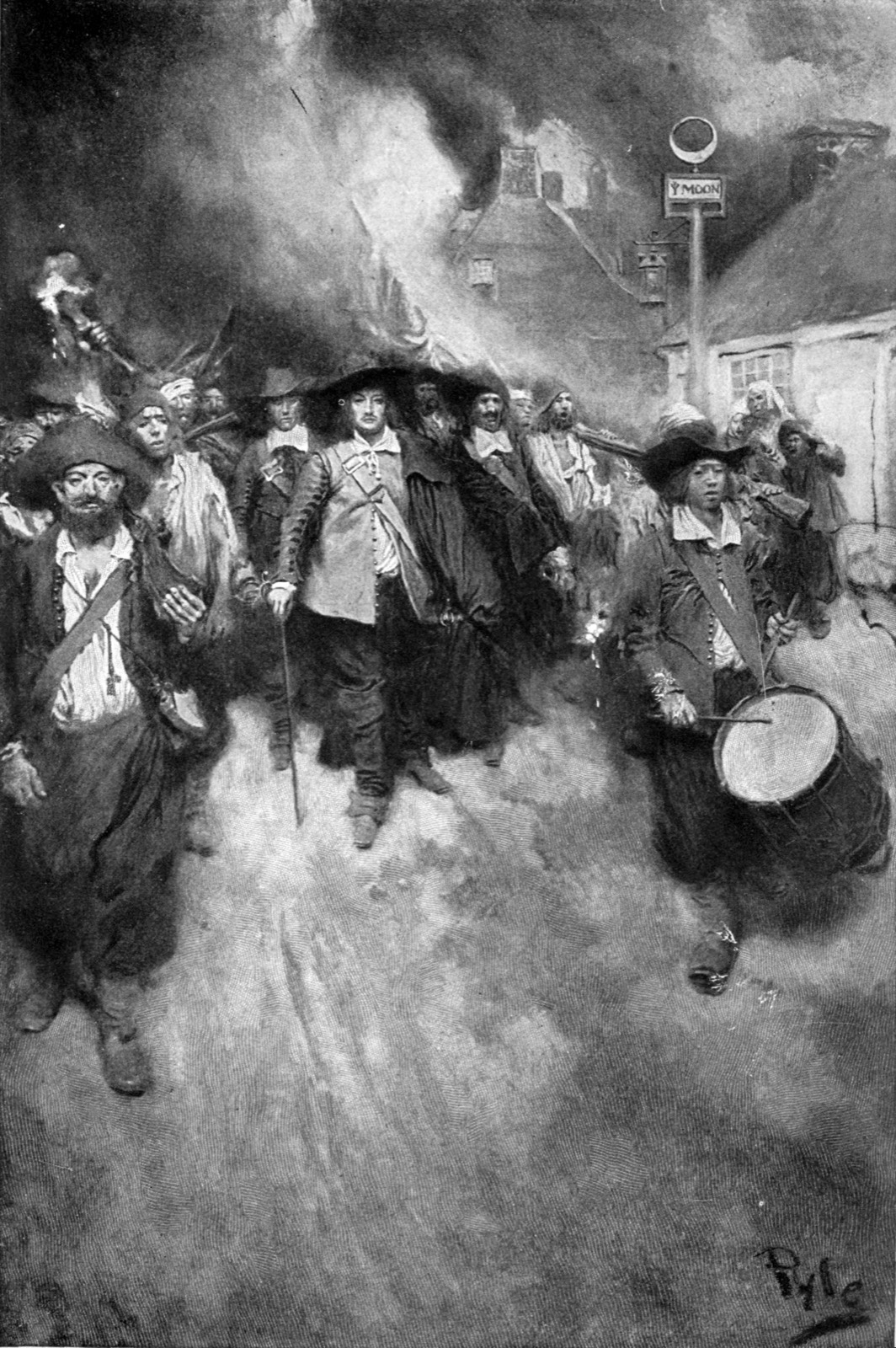
Howard Pyle, The Burning of Jamestown, an early-twentieth-century illustration, not an eyewitness view. Public domain.
Massachusetts demanded taxes in scarce coin, and farmers shut the courts that were taking their farms for debt.
A farm family short of silver could lose tools and land at a court sale for a tax it had no cash to pay.
A freeholder who had served in the war and still held a little land had to find coin or stand with his neighbors in front of the courthouse.
Boston merchants who held the state debt wanted the taxes in specie, and they helped pay the force that scattered the protesters.
In 1786 Massachusetts laid heavy taxes, payable in coin, to service its own war debt, and county courts moved against rural debtors.
Crowds of farmers, many of them veterans, stopped the courts from sitting.
Daniel Shays gave his name to a chain of town actions, and a militia financed by eastern creditors scattered it in the winter of 1787.
Leonard L. Richards, Shays’s Rebellion (2002)