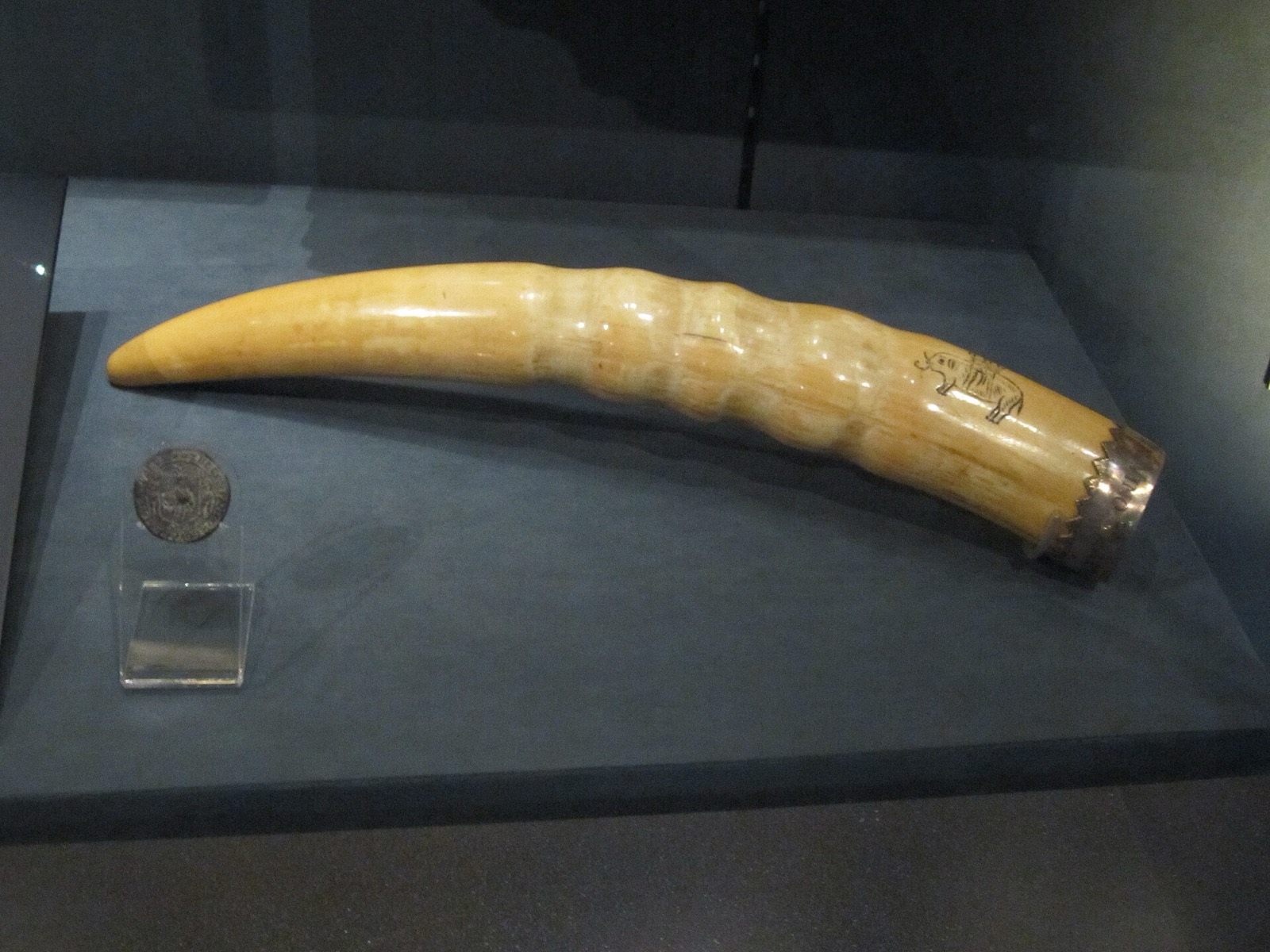
Ivory marked by the Royal African Company. International Slavery Museum, Liverpool. Wikimedia Commons.
The first Bank of the United States held the government’s money and gave the new federal bonds a working market.
A farmer never entered the bank, yet the notes and the taxes around it were why his payments were expected in money that held up.
A port merchant could discount a bill and hold a note that traveled farther than most state-bank paper.
Stockholders, allowed to pay for much of their shares in government bonds, drew dividends from a bank Washington chartered over Jefferson’s objection.
Congress chartered the Bank of the United States in February 1791 for twenty years, with a capital of ten million dollars, a fifth of it taken by the government.
The bank held federal deposits, issued notes, and dealt in the new bonds, which tied public creditors to the new government.
Jefferson and Madison called the charter unconstitutional, and Hamilton persuaded Washington that the powers to tax and to borrow included this means of using them.
Act to incorporate the Bank of the United States, 25 February 1791