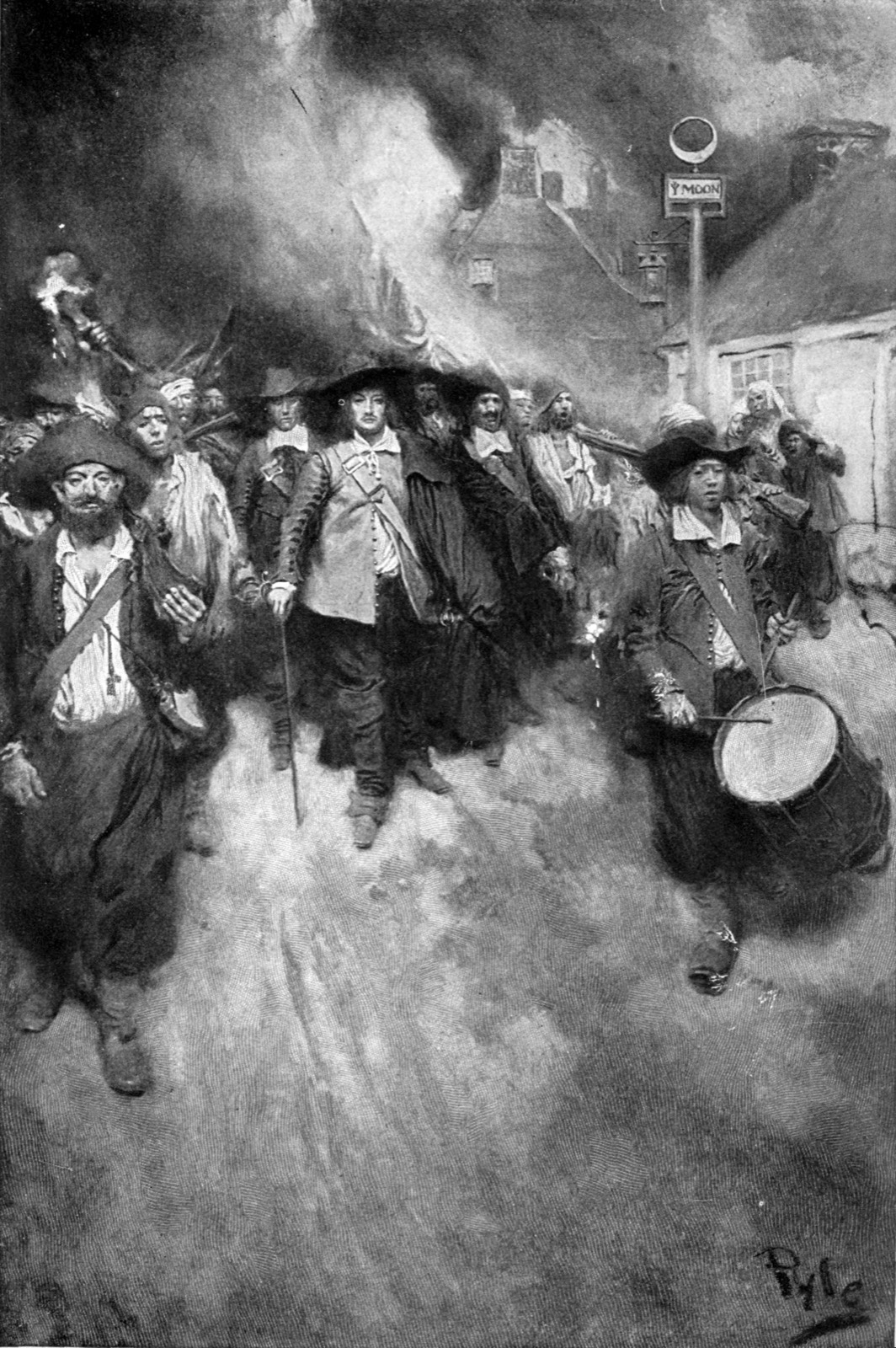
Howard Pyle, The Burning of Jamestown, an early-twentieth-century illustration, not an eyewitness view. Public domain.
The government taxed whiskey, the form in which many western farmers turned grain into something they could haul and spend.
A western family that distilled a few barrels to pay the store had to find coin for the tax where coin was scarce.
A farmer farther east, who sold grain without distilling it, mostly escaped the excise.
Large eastern distillers could pass the tax on more easily, and holders of the new federal bonds were why the revenue was wanted.
In March 1791 Congress laid an excise on distilled spirits to help pay interest on the funded debt.
West of the mountains, a barrel of whiskey survived a trip that a wagon of corn did not, so the tax hit the cash crop of the frontier.
Protests grew into the Whiskey Rebellion of 1794, Washington called out a militia army, and the resistance dispersed.
Act of 3 March 1791 on distilled spirits; Thomas P. Slaughter, The Whiskey Rebellion (1986)