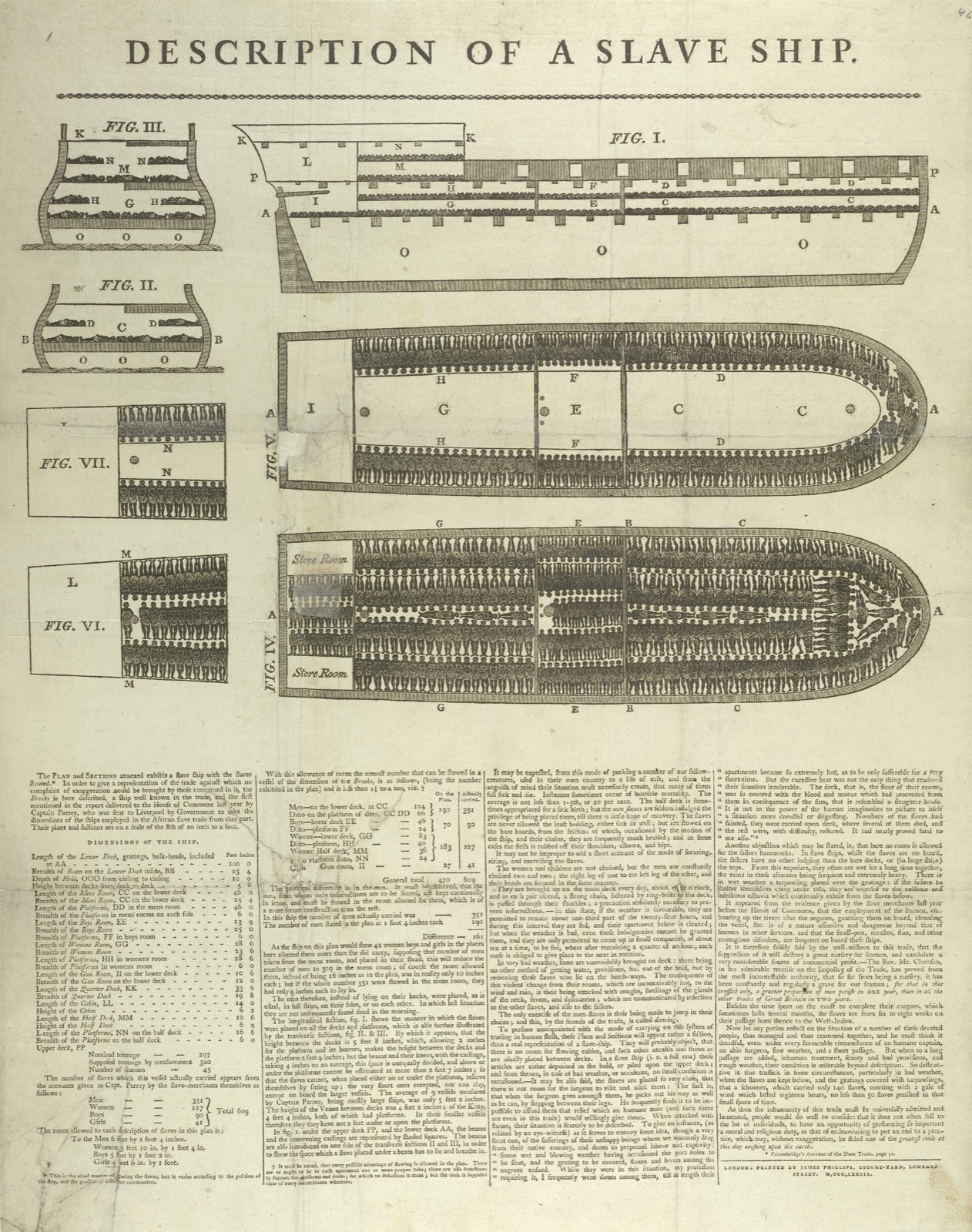
Diagram of the British slave ship Brookes, published in 1788. Public domain, British Library.
Twenty-four New York brokers agreed to deal in public securities with one another and to charge a set commission.
A household that owned no bonds was outside the pact, and it still lived through the crash in bank stock and government debt that spring.
A merchant with a little federal paper now dealt in a market the brokers had closed to an open auction.
The men who signed kept the commissions, and they were writing rules for the debt Hamilton had just made worth trading.
On 17 May 1792, after a panic driven by William Duer’s speculation in bank shares and federal debt, twenty-four brokers signed a compact to prefer one another and to charge at least one quarter of one percent.
Tradition places the signing under a buttonwood tree on Wall Street.
The compact is the root of the New York Stock Exchange, a private rule for a market in public securities.
Buttonwood Agreement, 17 May 1792