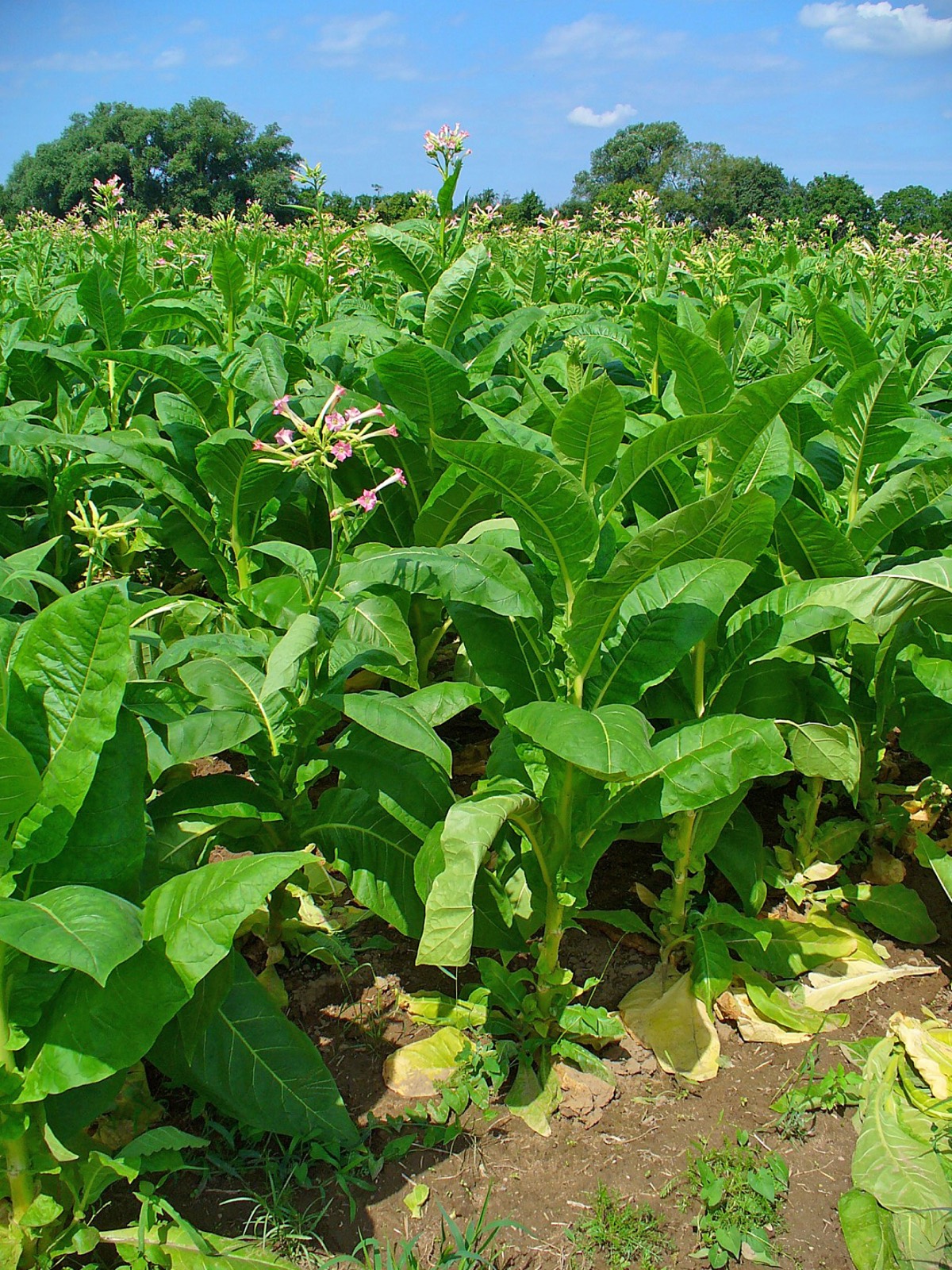
The tobacco plant, Nicotiana tabacum. Public-domain photograph.
Whitney’s gin made short-staple cotton fast to clean, so planters wanted more land and more enslaved labor to grow it.
A poor white family in the uplands did not own the machine or the profit, and the cotton system offered it little paid work beyond overseeing or renting.
A small farmer who grew a bale or two could have it ginned, but the price and the credit still ran through the merchant who sold it.
Planters who already held land and enslaved people carried short-staple cotton into the interior, and the gin made those acres worth the outlay.
In 1793 Eli Whitney devised a gin that stripped seeds from short-staple cotton, the variety that would grow across the inland South, and he patented it the next year.
Long-staple cotton from the sea islands was already being cleaned.
The machine made common upland cotton a commercial crop, patent fights kept Whitney from capturing the business, and the demand for enslaved labor rose as the planting spread.
Eli Whitney cotton gin patent, 14 March 1794; Angela Lakwete, Inventing the Cotton Gin (2003)