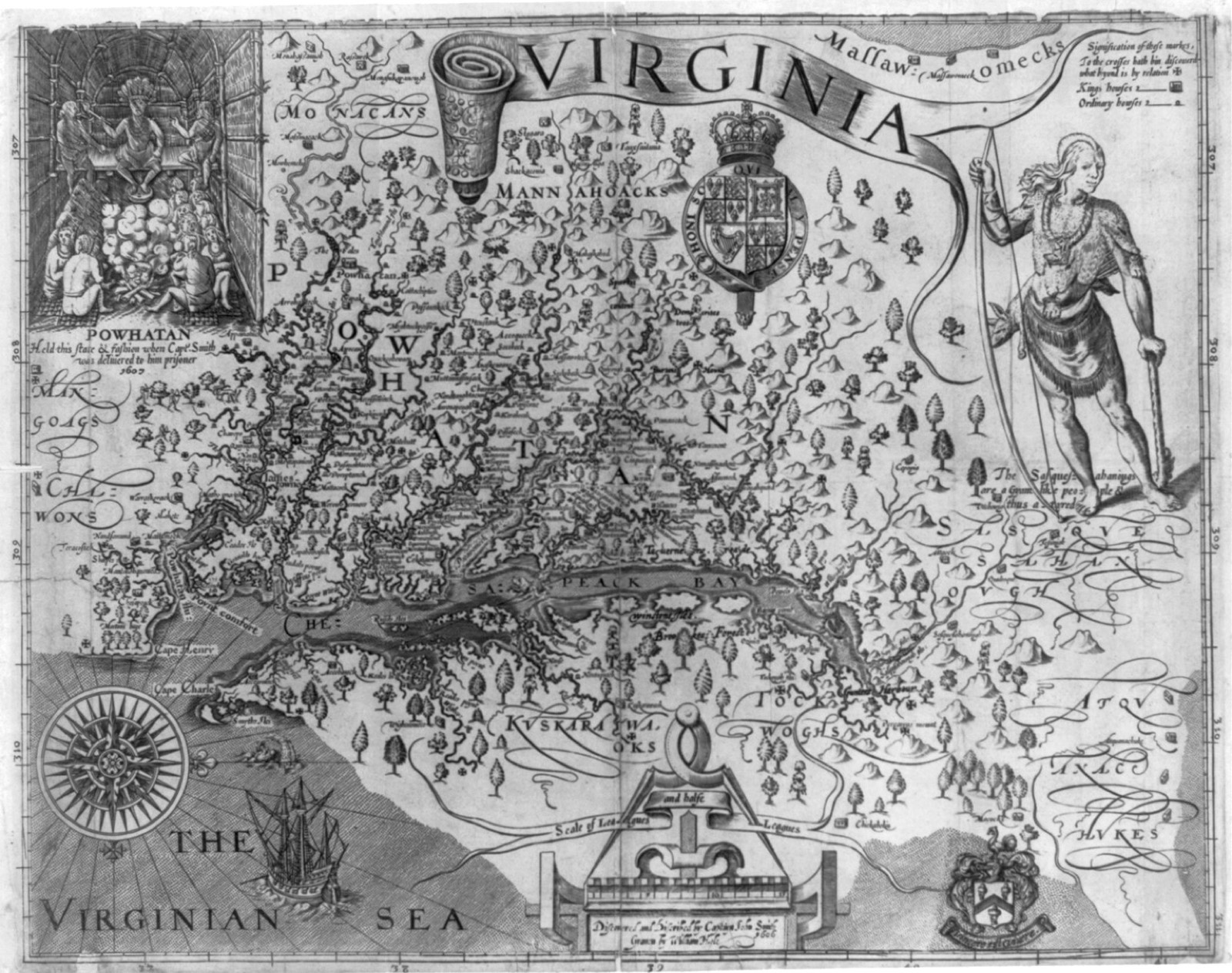
John Smith’s map of Virginia, engraved by William Hole and published in 1612. Public domain.
The United States bought Louisiana from France for fifteen million dollars and gained control of the Mississippi’s mouth.
A farm family that sent flour or pork down to New Orleans no longer depended on a foreign officer to keep the port open.
A western farmer gained a steadier outlet for his crop and, later, public land that could be surveyed into tracts a household might buy.
Men with capital gained a vast public domain to speculate in, and American claimants gained payment of debts France agreed to cover.
In April 1803 ministers sent to buy New Orleans were offered all of Louisiana, because Napoleon needed money and had failed to retake Saint-Domingue.
The price was fifteen million dollars, part of it an assumption of American claims against France.
Jefferson doubted the Constitution gave him the power and sent the treaty to the Senate anyway, while the Native nations and the residents of New Orleans were not parties to the sale.
Louisiana Purchase Treaty, 30 April 1803