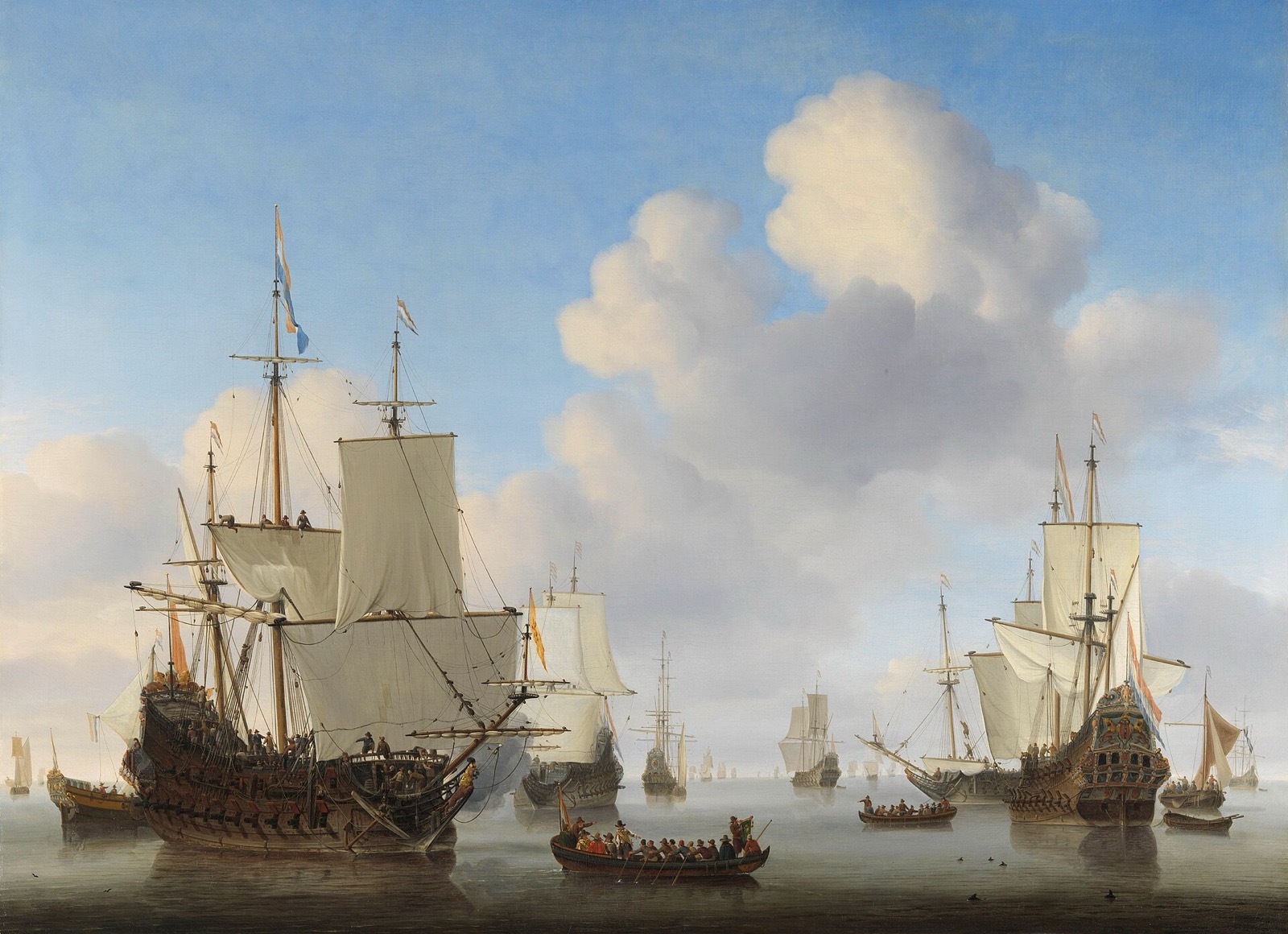
Willem van de Velde the Younger, Dutch ships in a calm. Public domain.
Jefferson’s embargo kept American ships from foreign ports, and American harbors felt it before Britain or France did.
A sailor or a dockhand lost the voyage and the wage, and a family that lived on harbor work lost the season.
A coastal farmer who sold food to outgoing ships lost his buyer even though the fields were unchanged.
Merchants with ships idle and warehouses full watched a legal export trade made illegal, and those with credit outlasted those without it.
The Embargo Act of December 1807 answered seizures of American ships by Britain and France by forbidding American vessels to clear for foreign ports.
The aim was to withhold food, timber, and shipping until both powers respected neutral trade.
They did not yield quickly, Congress repealed the embargo in March 1809, and the export towns had already borne the loss.
Embargo Act, 22 December 1807