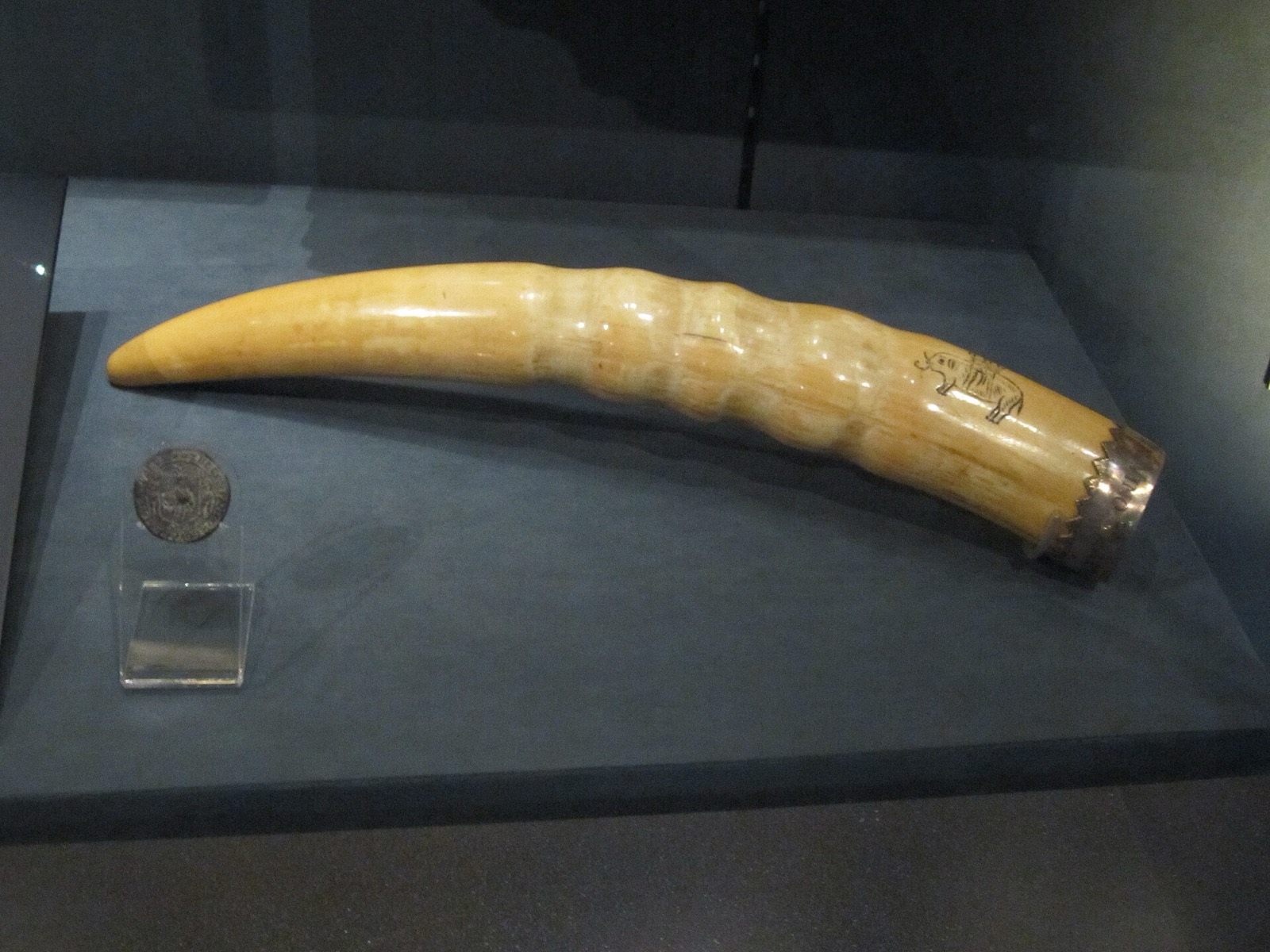
Ivory marked by the Royal African Company. International Slavery Museum, Liverpool. Wikimedia Commons.
Congress refused to renew the first national bank, and the next year the country went to war without it.
A household using local notes lost the paper that had passed most readily from one state to another.
A merchant who had discounted bills at the bank’s branches had to rely on state banks that answered to no single cashier.
State bankers who wanted the federal deposits, and congressmen who still denied the bank was constitutional, carried the vote.
The charter of 1791 ran twenty years and expired in 1811, when renewal failed by a narrow margin.
The opposition mixed an old constitutional objection with the interest of state banks.
In 1812 the Treasury had no national bank through which to borrow or to move public funds, and it had to bargain with a crowd of separate institutions.
Congressional rejection of the bank renewal (1811); Bray Hammond, Banks and Politics in America (1957)