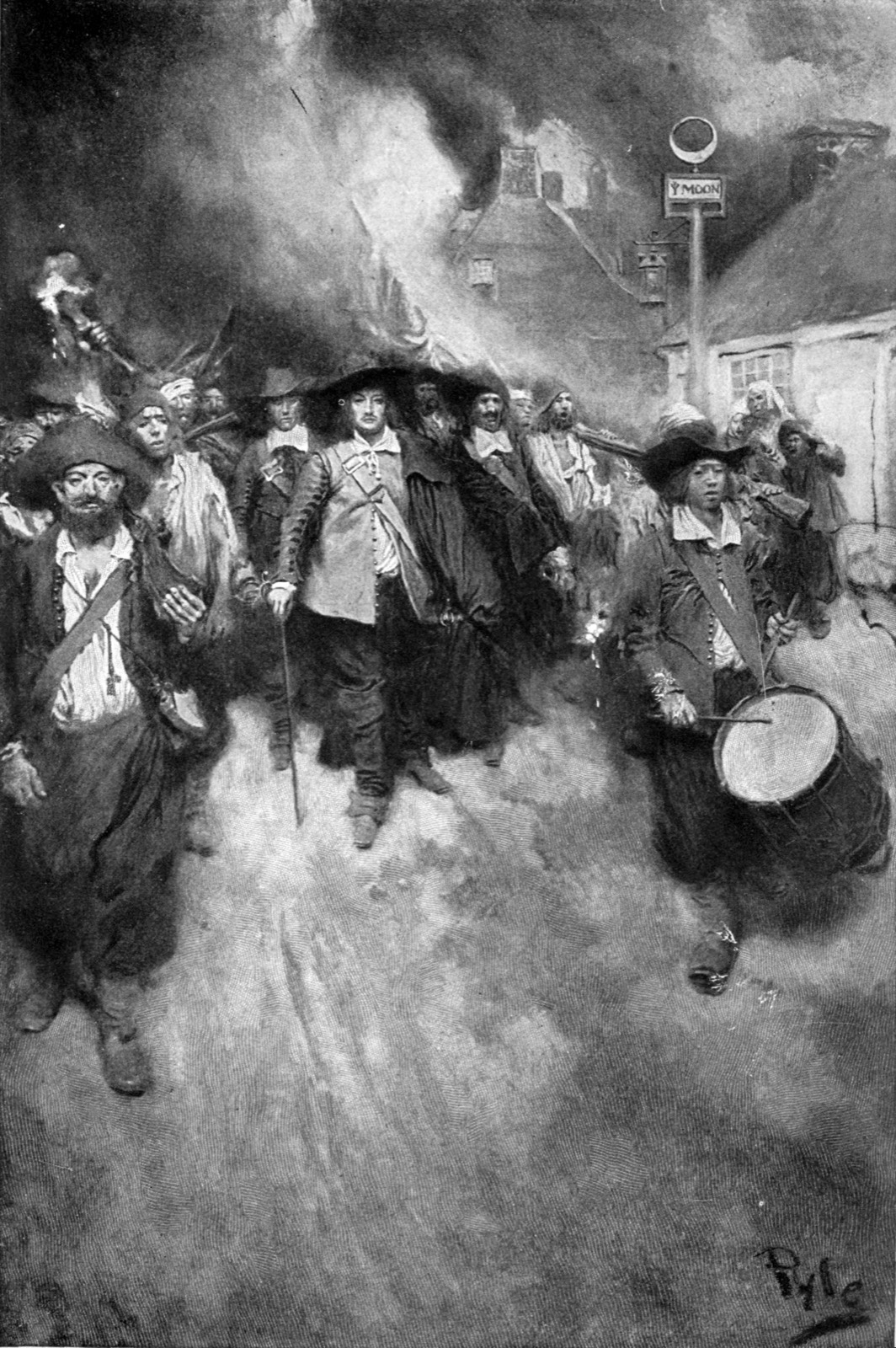
Howard Pyle, The Burning of Jamestown, an early-twentieth-century illustration, not an eyewitness view. Public domain.
The War of 1812 was financed by hard-to-place loans and by Treasury notes, and in 1814 most banks stopped paying silver.
A soldier or a supplier paid in notes found them refused when he tried to get coin.
A household in a port town paid higher prices in paper whose value depended on which bank had issued it.
New England merchants who held specie were reluctant to lend for a war many of them opposed, and anyone with silver could name his price.
Congress declared war in 1812 with no national bank and without taxes large enough to pay for the fighting.
Loans were difficult to place, Treasury notes filled part of the gap, and in 1814 banks outside New England suspended specie payment, so the government could not move its own money around the country at one value.
Peace in 1815 left a damaged currency and a majority in Congress ready for a new bank and a protective tariff.
Reports of the Secretary of the Treasury, 1812-1814; Donald R. Hickey, The War of 1812 (1989)