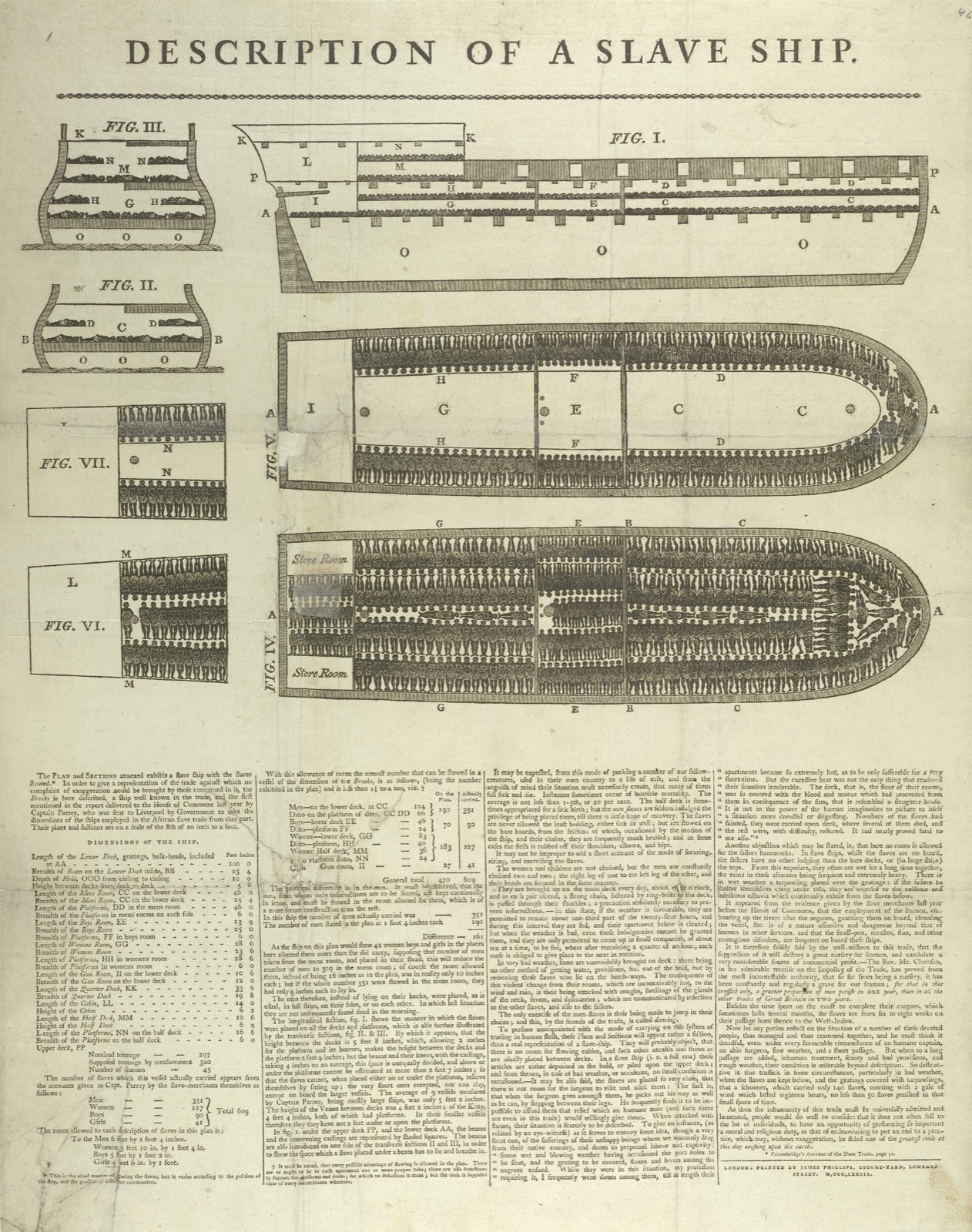
Diagram of the British slave ship Brookes, published in 1788. Public domain, British Library.
The Second Bank of the United States was chartered to hold federal cash and to make state banks honor their notes in coin.
A household far from Philadelphia spent state-bank notes whose value depended on whether this new bank would accept them.
A merchant who needed paper that would pass in another city was supposed to get that from the bank’s branches.
Stockholders of a bank capitalized at thirty-five million dollars, with the government taking a fifth, gained the federal deposits and a lever over other banks.
Congress chartered the Second Bank in April 1816 for twenty years, after the wartime suspension of specie payments.
It was to hold government money and to present state-bank notes for silver, pushing the country back toward notes of more equal value.
Early lending was loose, and the contraction that followed helped set off the Panic of 1819.
Act to incorporate the Second Bank of the United States, 10 April 1816; Bray Hammond, Banks and Politics in America (1957)