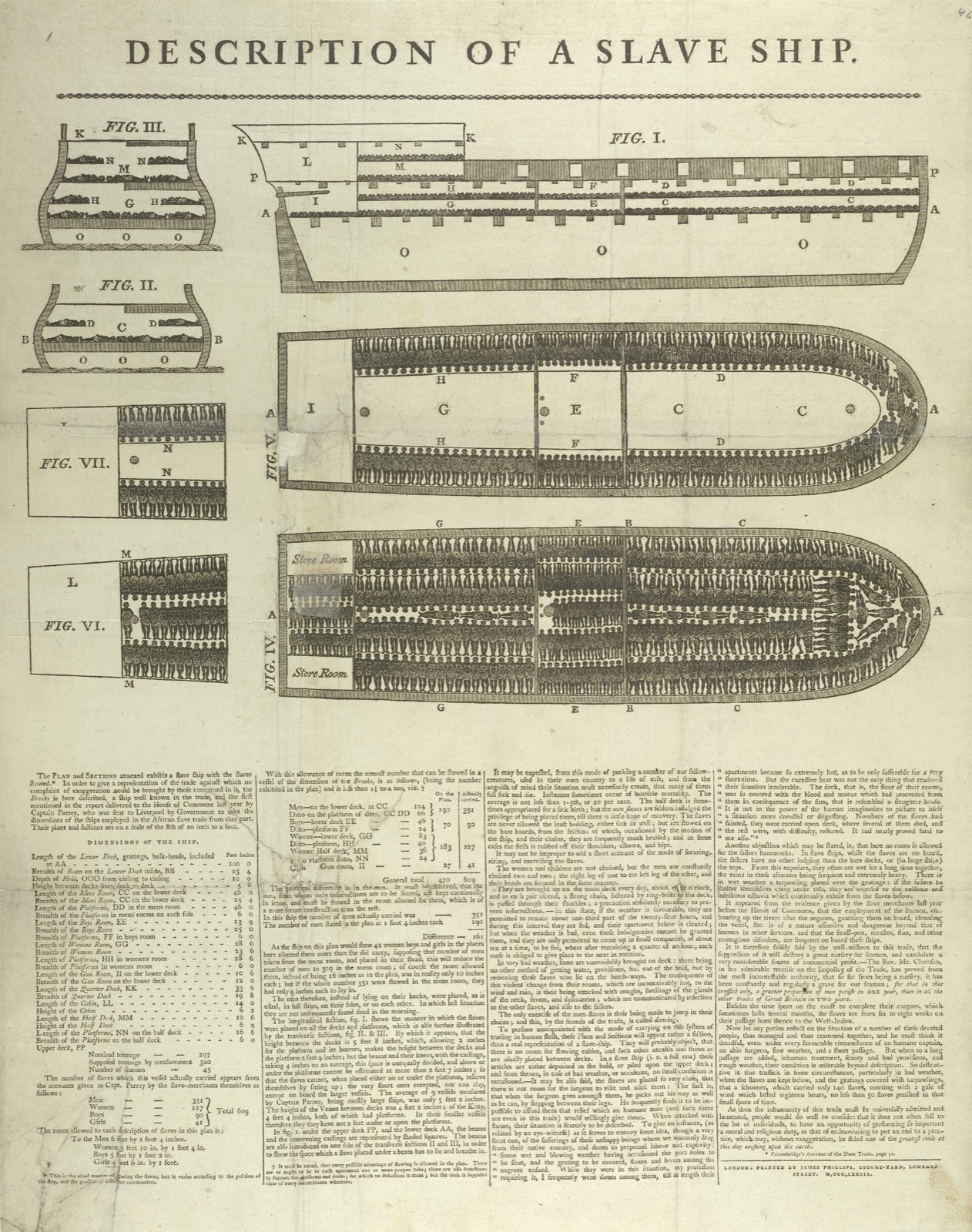
Diagram of the British slave ship Brookes, published in 1788. Public domain, British Library.
The Tariff of 1816 taxed imported cloth and iron so mills built during the war would not be undersold by Britain.
A household buying cloth paid more at the shop so a domestic mill could stay open.
A small shop that competed with imports gained some shelter and still paid more for dutied iron and materials.
Mill owners who had invested while British goods were shut out gained protection, and some southern members of Congress voted for this tariff before later ones turned their section against it.
The Tariff of 1816 was the first American tariff passed mainly to protect manufactures rather than only to raise money.
British goods were flooding in after the war and selling cheap.
Duties on cotton cloth, woolen cloth, and iron lifted the price of those imports so American mills could compete, and the custom house became a tool of industrial policy.
Tariff Act of 27 April 1816; F. W. Taussig, The Tariff History of the United States