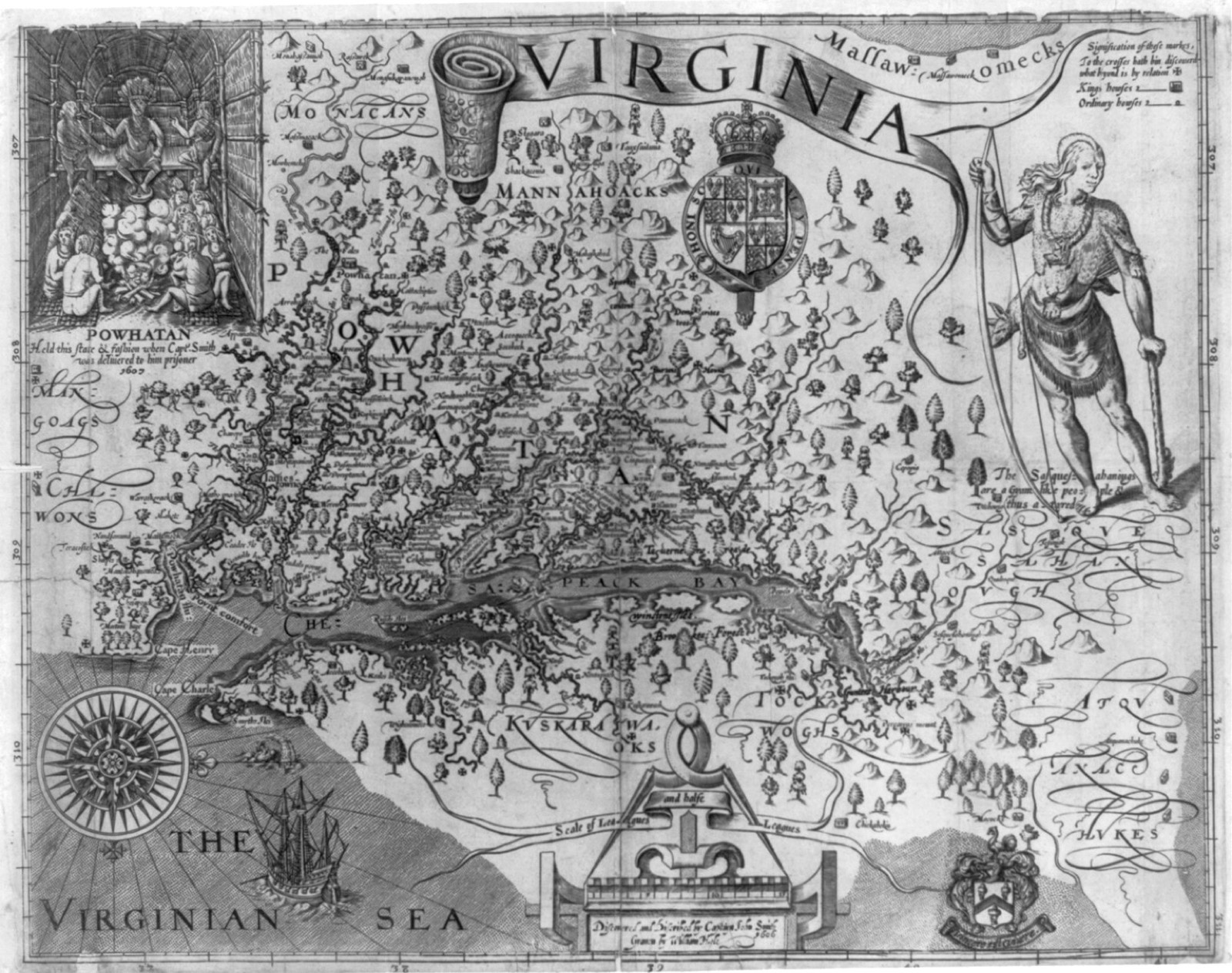
John Smith’s map of Virginia, engraved by William Hole and published in 1612. Public domain.
New York State borrowed money, dug a canal from the Hudson to Lake Erie, and made western grain cheap to deliver at the city.
A farm family living off the canal gained no new market, and still lived under a state that had pledged taxes behind the bonds.
A farmer close enough to wagon his crop to the canal could reach a city price that the road had made impossible.
Bondholders who financed the state, and merchants in New York City who received the grain, took the trade of the lakes.
In 1817 New York authorized the Erie Canal after the federal government declined to build it.
The state borrowed about seven million dollars and cut some 363 miles of canal from Albany to Buffalo, opened through in 1825.
Tolls carried the debt, the port pulled ahead of its rivals, and moving flour from the lakes to tidewater cost far less than hauling it by road.
New York canal law, 15 April 1817; Carol Sheriff, The Artificial River (1996)