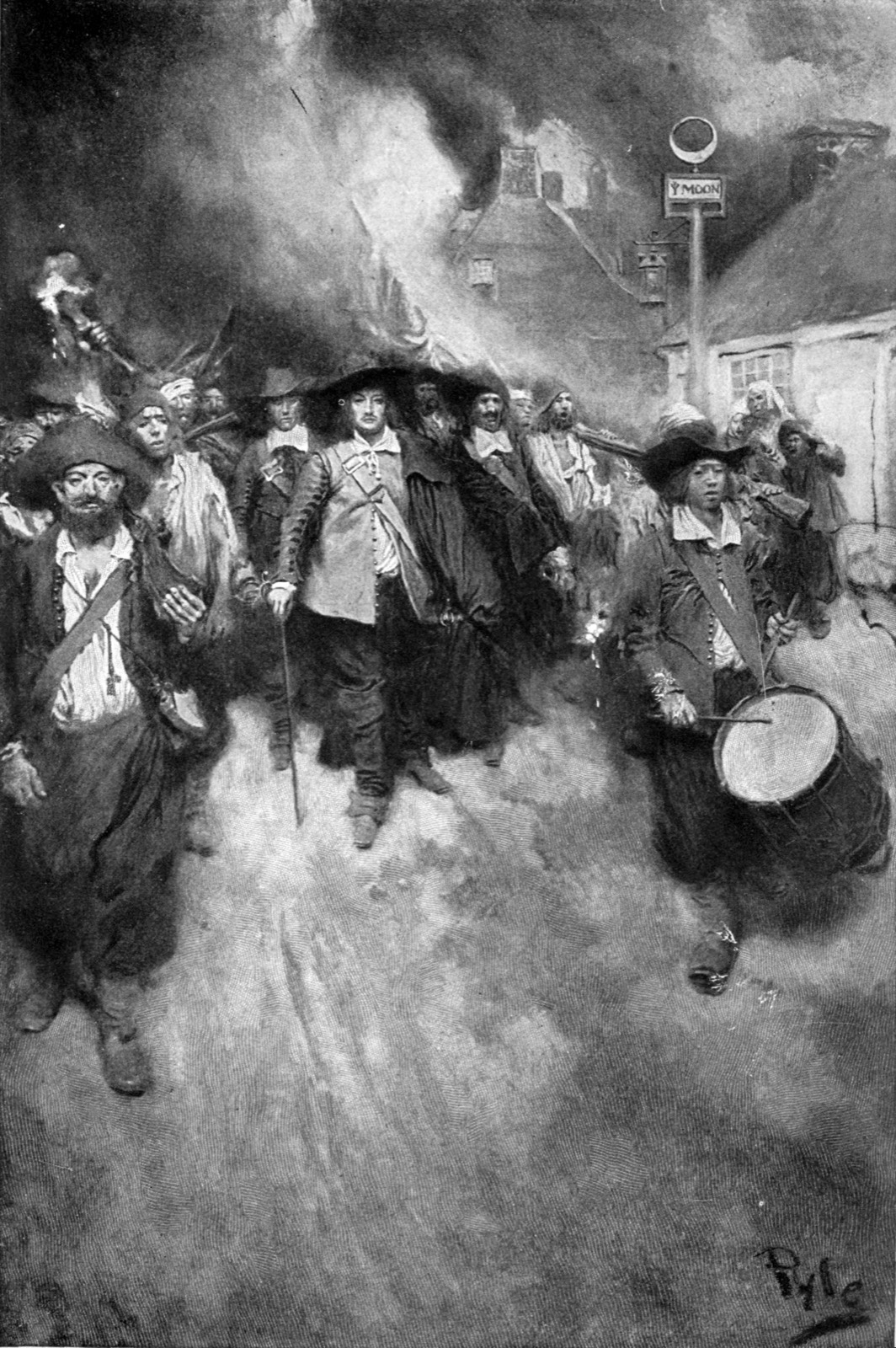
Howard Pyle, The Burning of Jamestown, an early-twentieth-century illustration, not an eyewitness view. Public domain.
In 1819 the price of cotton broke and credit tightened, and people who had bought land with borrowed money lost it.
A family that had bought public land on installments missed a payment and lost the claim.
A shopkeeper in a western town who had trusted rising lots and high cotton could not collect what he was owed, and his own notes came due.
Speculators who had taken large tracts on credit were pressed by the same bankers who were trying to save their own institutions.
After 1815, high cotton prices and easy loans from state banks and the Second Bank had bid up western and southern land.
In 1819 cotton fell, and the Second Bank, correcting its early mismanagement and guarding its silver, demanded repayment and refused weaker notes.
Foreclosures spread, and the anger at the national bank lasted long after prices steadied.
Andrew H. Browning, The Panic of 1819 (2019)