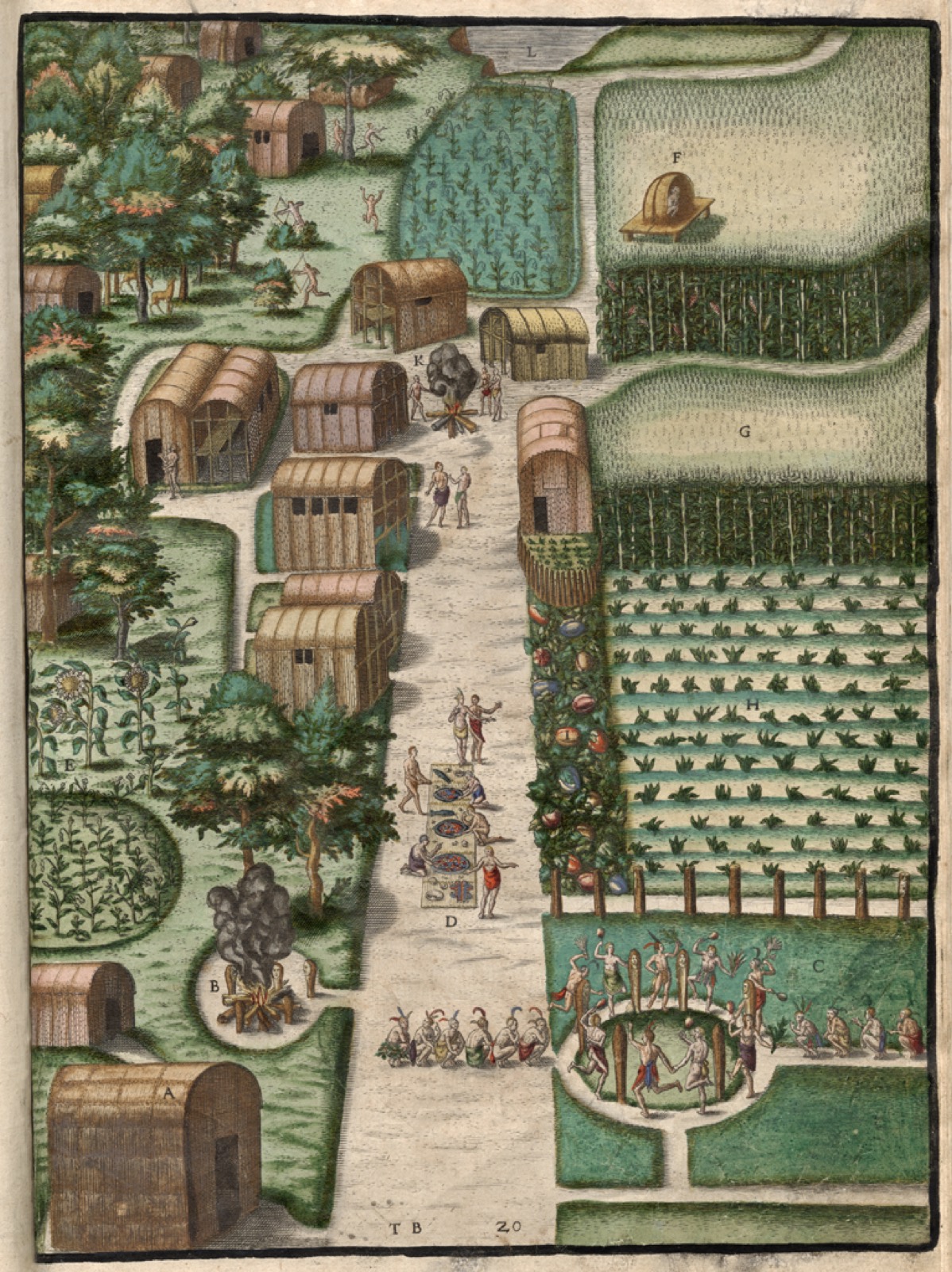
Theodor de Bry’s 1590 engraving of Secoton, from John White’s watercolors. Public domain.
Boston merchants built mills that spun and wove cotton in one building and hired farm daughters to run the machines for wages.
A daughter from a cash-poor farm could earn money her family had no other way to raise, inside a boardinghouse the company controlled.
A farm household that was getting by sent a daughter for a few years of wages and expected her back, with the farm still the real living.
The Boston merchants who supplied the capital owned the dams, the mills, and the housing, and the tariff helped their cloth face British prices.
The Boston Manufacturing Company at Waltham had already joined spinning and power weaving in a single mill.
In the early 1820s the same circle of merchants opened a larger works at the falls of the Merrimack and built a mill town there, soon named Lowell.
They recruited young women from the countryside, paid wages, housed them under company rules, and measured the day by the clock.
Thomas Dublin, Women at Work (1979)