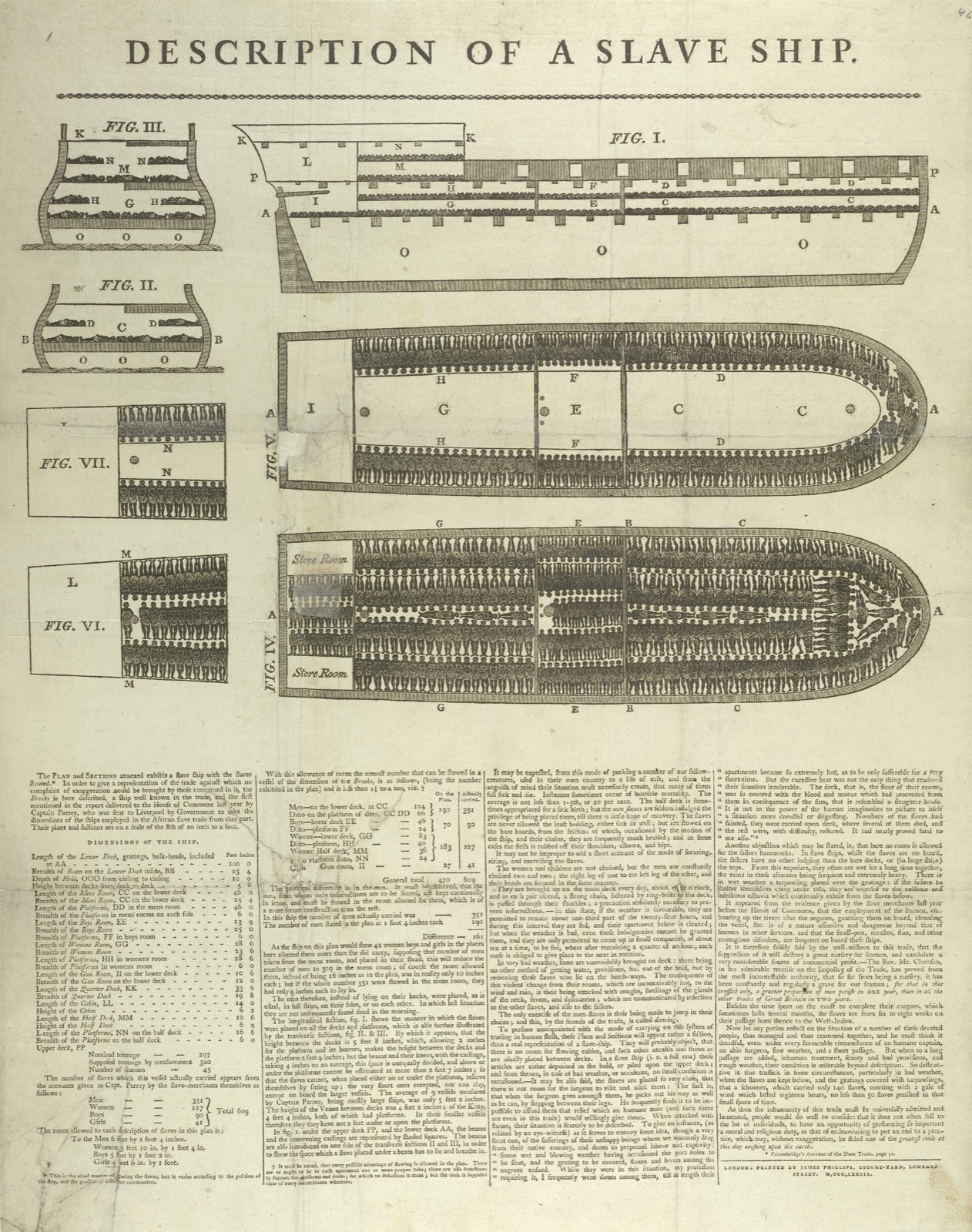
Diagram of the British slave ship Brookes, published in 1788. Public domain, British Library.
The Tariff of 1828 raised duties so sharply that cotton planters called it a tax collected from their section for northern mills.
A poor household in the South paid more for cloth and iron, and had no mill wage and no protected crop to earn the duty back.
A small northern manufacturer gained cover against foreign goods and paid more for materials the same law taxed.
Planters who sold cotton on an open world market, and bought manufactures with the proceeds, treated the custom house as a drain on their receipts.
The Tariff of 1828 raised rates on a wide list of imports, including goods mills bought as well as goods they sold.
South Carolina answered with the doctrine of nullification, written out in Calhoun’s Exposition and Protest.
The standoff eased only with the compromise tariff of 1833, which put the rates on a path downward.
Tariff Act of 19 May 1828; William W. Freehling, Prelude to Civil War (1966)