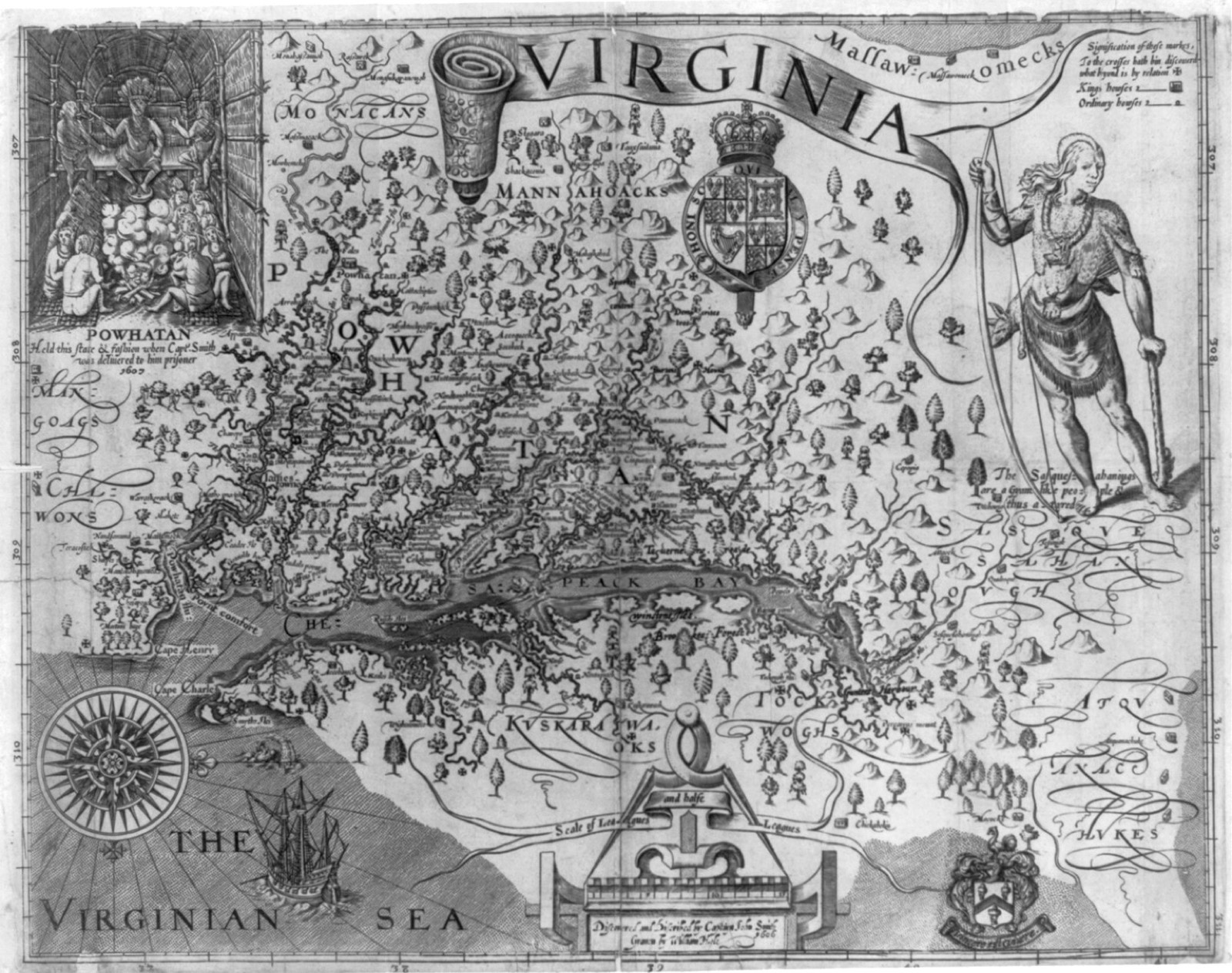
John Smith’s map of Virginia, engraved by William Hole and published in 1612. Public domain.
The Indian Removal Act swapped land west of the Mississippi for Native homelands, which the government could then survey and sell.
A Native family was told to leave houses, fields, and graves for a tract farther west, and the statute called the loss an exchange.
A white settler with little money could hope to buy a piece after the land office surveyed it and offered it.
Speculators, cotton planters, and states that wanted the tax base gained a route to title they could not legally purchase from the nations living there.
The Indian Removal Act of 28 May 1830 authorized the president to grant western land in exchange for Native title inside the states.
Georgia, Alabama, and Mississippi wanted cotton country, and Jackson’s administration refused to uphold Cherokee government against Georgia.
The Treaty of New Echota, signed by a minority of Cherokee leaders, supplied the paper for a forced removal in which thousands died, and the vacated ground went to surveyors and land offices.
Indian Removal Act, 28 May 1830; Claudio Saunt, Unworthy Republic (2020)