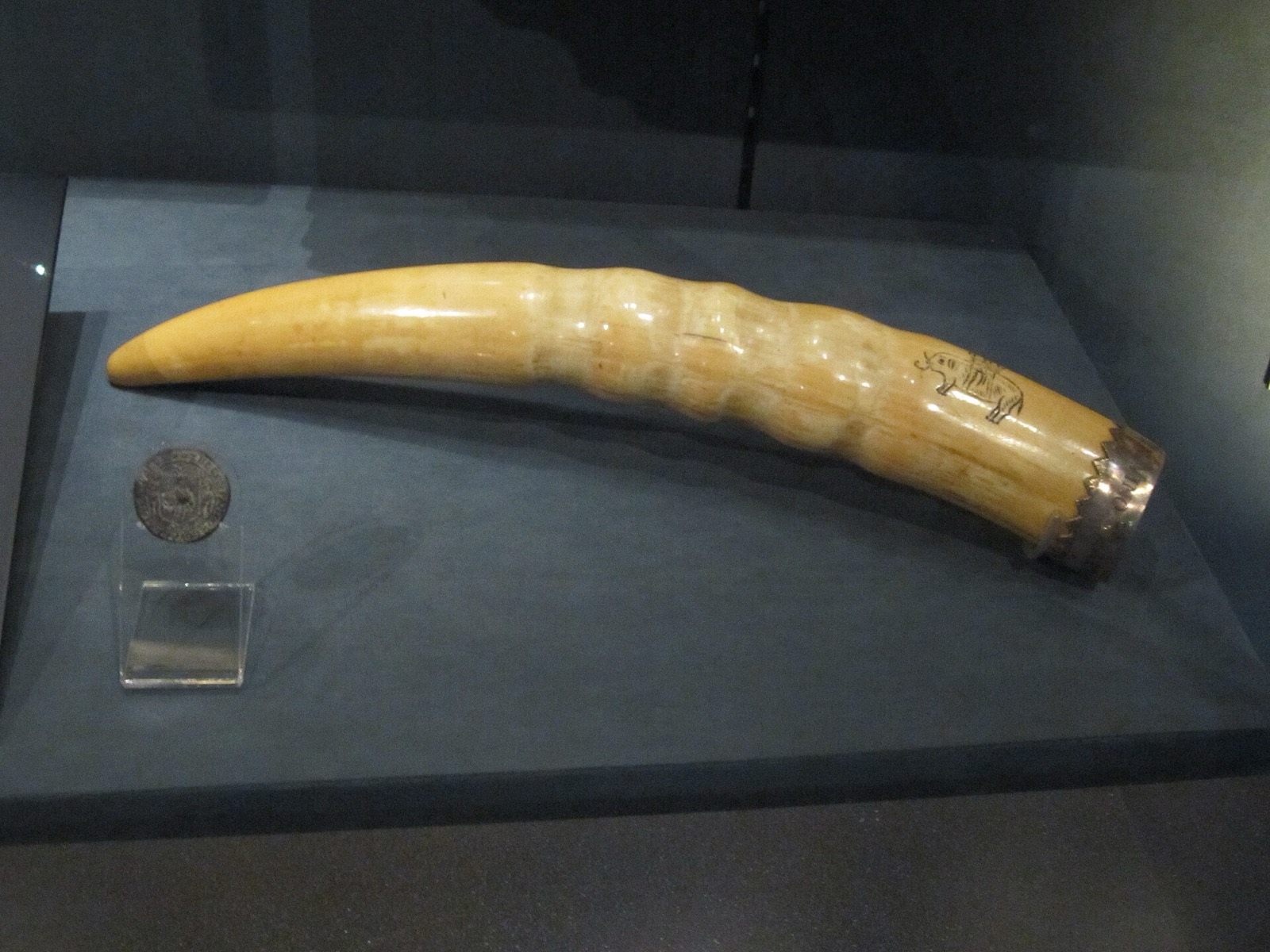
Ivory marked by the Royal African Company. International Slavery Museum, Liverpool. Wikimedia Commons.
Jackson vetoed a new charter for the Second Bank, so the bank would die when its old term ran out.
A household that spent bank notes was told the institution behind much of that paper was a monopoly the president would not allow.
A merchant who moved money through the bank’s branches had to plan for a country of state banks only.
Shareholders, including investors abroad, lost the chance of a renewed federal charter, and Nicholas Biddle lost the bid to settle the question early.
In the summer of 1832 Henry Clay and Nicholas Biddle drove a renewal of the Second Bank through Congress, four years before the charter expired.
Jackson vetoed the bill on 10 July.
The message attacked the bank as a monopoly for the wealthy, foreign shareholders included, and his reelection that fall left the veto in place.
Andrew Jackson, Bank Veto Message, 10 July 1832