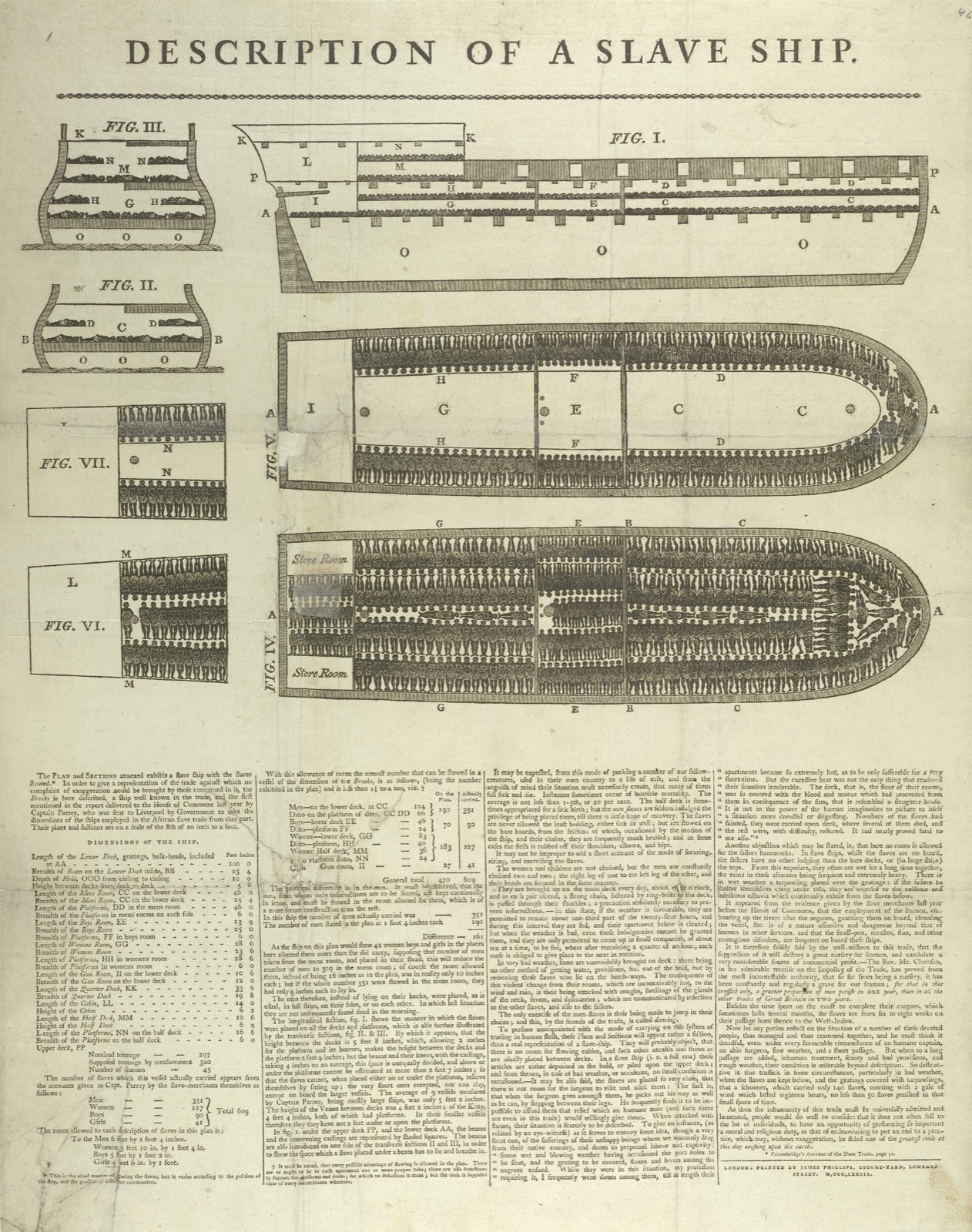
Diagram of the British slave ship Brookes, published in 1788. Public domain, British Library.
Congress ordered the federal surplus deposited with the states, which forced the Treasury to haul money from bank to bank.
A household never saw that surplus as a check, but it felt the jolt when a nearby bank was loaded with public funds or drained of them.
A state receiving a share could back a canal, a bank, or a tax cut, and then had to do without the money when the transfers stopped.
State politicians and the banks they named gained a sudden stock of federal cash built from tariffs and land sales.
The Deposit Act of June 1836 sent the federal surplus, above a sum kept in reserve, to the states in proportion to electoral votes.
The payments were labeled deposits and were not expected back, and they moved in quarterly transfers.
Gold and silver had to be shifted among banks to make those payments, in the same season the boom in land was at its height.
Deposit Act, 23 June 1836; Peter Temin, The Jacksonian Economy (1969)