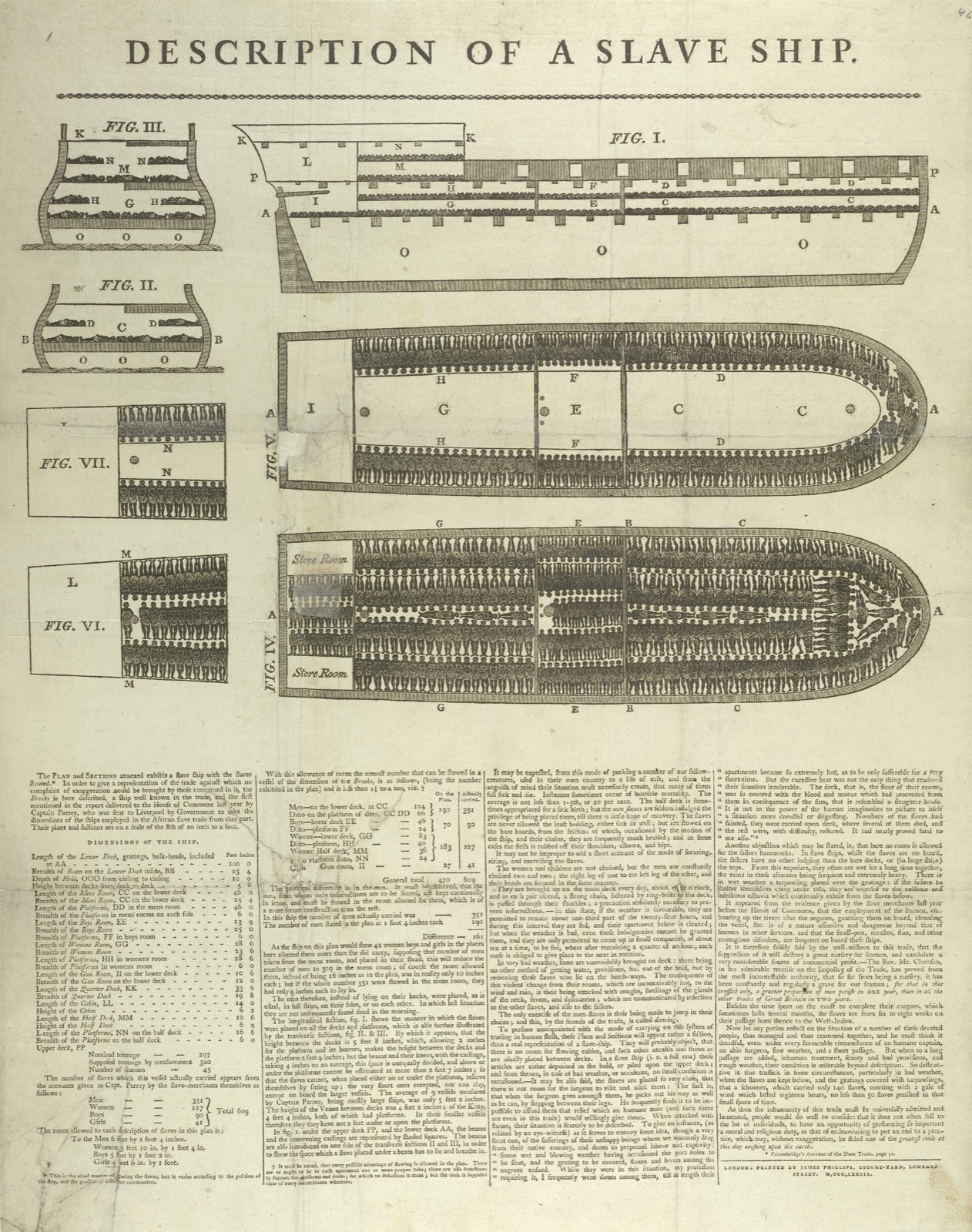
Diagram of the British slave ship Brookes, published in 1788. Public domain, British Library.
Jackson ordered that public land be paid for in gold or silver, not in the bank notes that had been feeding the boom.
A settler who had borrowed local bank notes for a tract could no longer lay those notes on the land-office counter.
A buyer who could assemble some silver still had a path to a patent, and a buyer holding only paper did not.
Speculators who had lined up easy loans in state-bank notes lost the ability to turn that paper directly into public land.
The Specie Circular of 11 July 1836 told land offices to accept only gold and silver for public lands, with a short delay for smaller purchasers.
Jackson meant to break a loop in which people borrowed notes, bought land, and borrowed again on the land.
Coin was drawn toward western offices, and city banks lost reserves they would need when credit tightened the following year.
Specie Circular, 11 July 1836; Peter Temin, The Jacksonian Economy (1969)