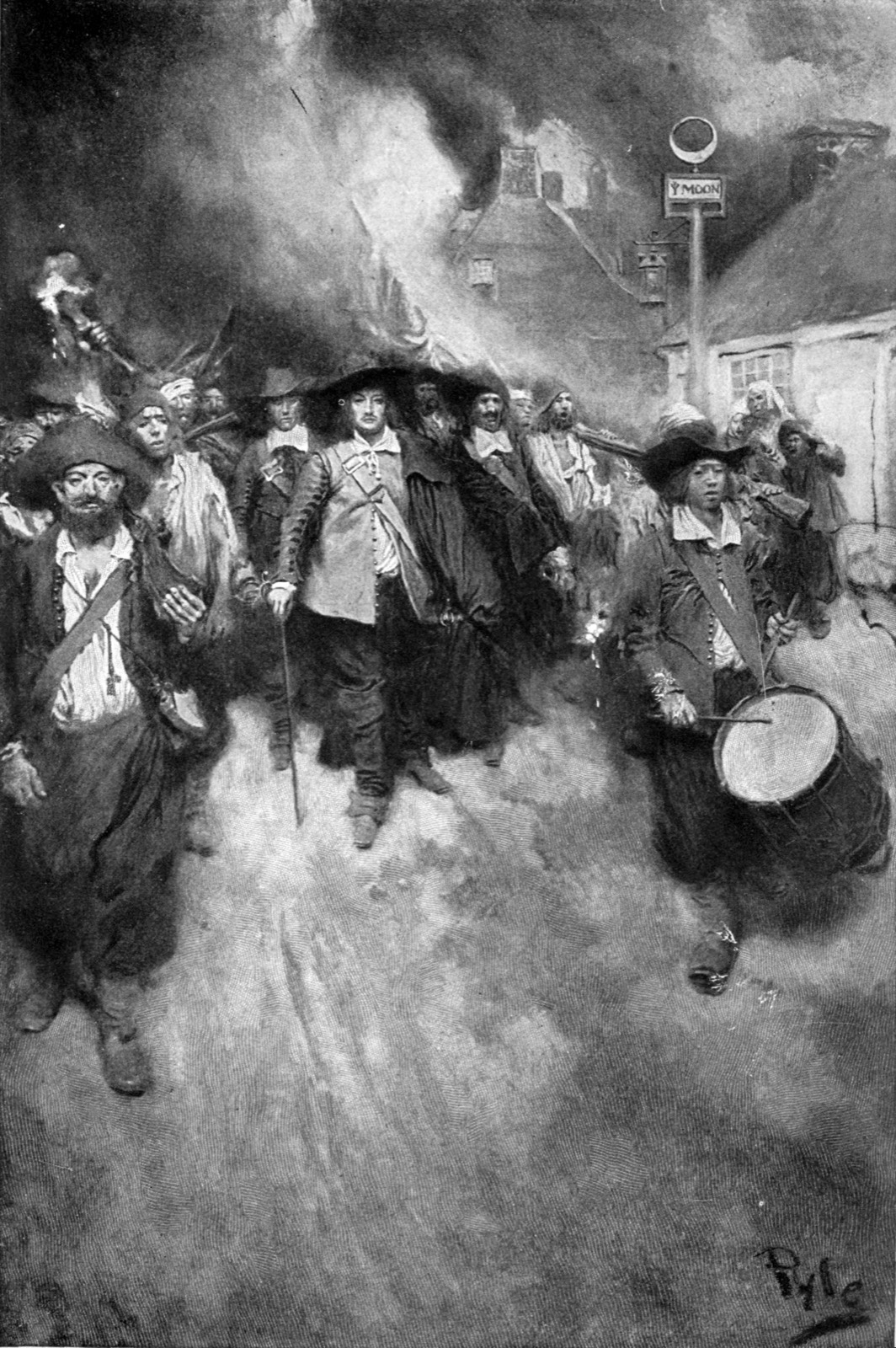
Howard Pyle, The Burning of Jamestown, an early-twentieth-century illustration, not an eyewitness view. Public domain.
In the spring of 1837 the land and cotton boom broke, and New York’s banks stopped redeeming notes in silver.
A city worker was paid late or not at all when construction stopped, and the notes in his pocket might not be cashed.
A farm household that had bought land or supplies on credit faced a lender who now wanted coin, and a crop that brought less than the debt assumed.
British lenders who had financed cotton, and American banks that had lent on land, called in what they could, and states that had borrowed for canals were left with bonds they could not service.
Cotton prices fell, the Bank of England had already tightened, and in May 1837 the New York banks suspended specie payment.
The rise had rested on easy bank notes, heavy sales of public land, and British credit, and those supports failed together.
Public works stalled, and within a few years several states stopped interest on the bonds they had sold to build canals and banks.
Jessica M. Lepler, The Many Panics of 1837 (2013)