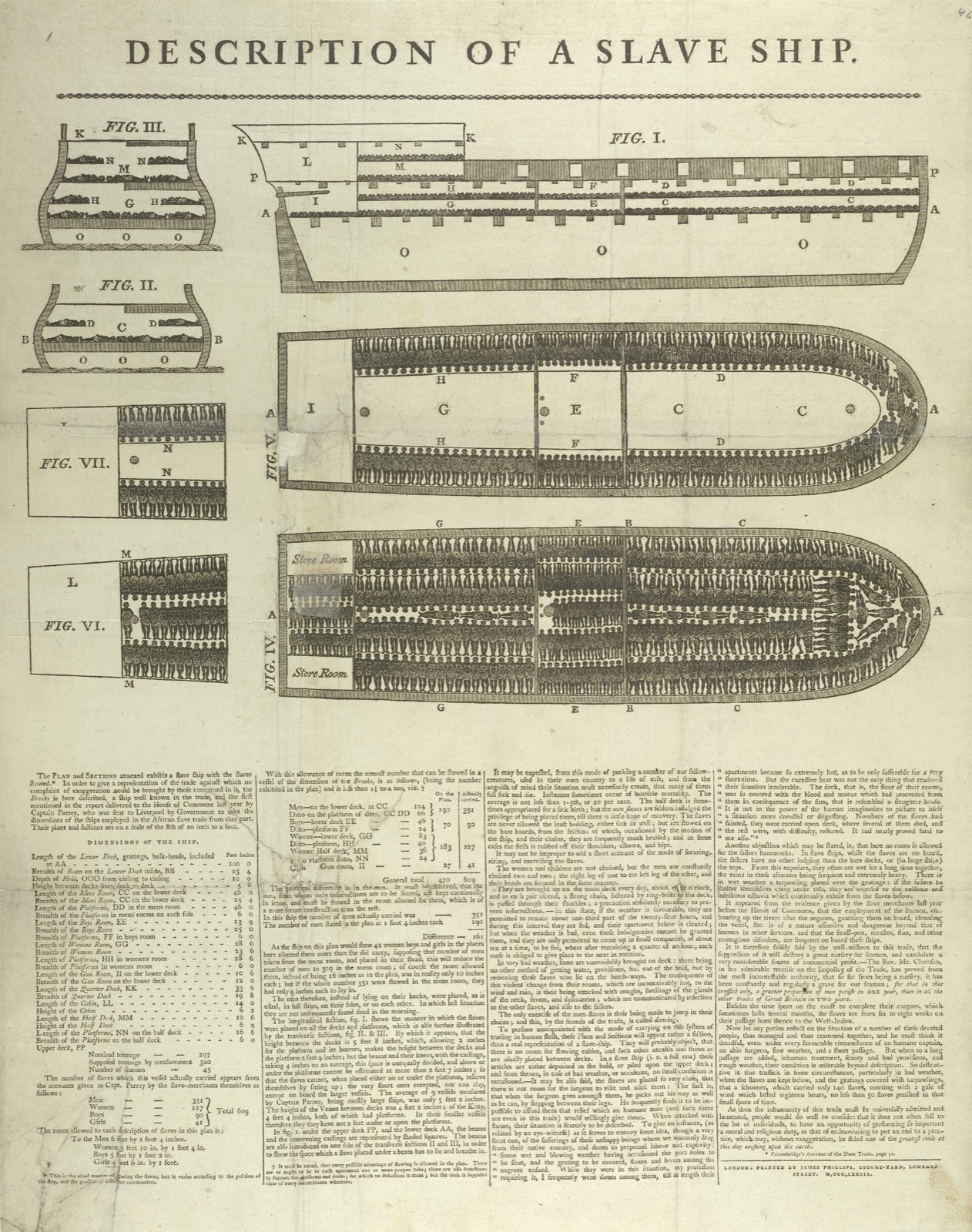
Diagram of the British slave ship Brookes, published in 1788. Public domain, British Library.
A bank panic in 1837 left the country short of cash for years, and 1840 was still that slump.
A family that worked for wages or rented a patch found coin scarce and store credit tight.
A shopkeeper or small farmer waited longer to be paid and feared the local bank would close its window.
Merchants and land speculators who had borrowed against rising prices in the 1830s were still sorting wrecked debts.
The Panic of 1837 began when cotton prices fell and banks that had financed a land boom could not pay out gold and silver.
By 1840 many state banks had suspended specie payment, and Congress passed the Independent Treasury Act to keep federal money out of those banks.
Whigs repealed that law in 1841, and a Democratic Congress restored a similar system in 1846.
Bray Hammond, Banks and Politics in America (1957); Independent Treasury Act of 1840